Afghanistan seeks to cut economic dependence on Pakistan

• Kabul wants to bolster trade with C. Asia states
• Afghan traders say Islamabad still shortest, cheapest route to seaports
• Uzbek president proposes new bloc
AFGHANISTAN is seeking to significantly bolster trade with the oil-rich countries of Central Asia as it attempts to end its economic dependence on Pakistan, which has historically been Kabul’s biggest trading partner.
However, experts warn that geography, high costs, and political constraints will hinder efforts by Afghanistan’s cash-strapped and unrecognised Taliban government to shift trade to Central Asia, according to a Radio Free Europe/Radio Liberty report.
Kabul’s attempts to find new trade partners come after the worst outbreak of hostilities with Islamabad in years. The neighbours exchanged military attacks last month, killing dozens of people and leading to Pakistan closing its border with Afghanistan.
The month-long border closure has inflicted some $200 million in losses for Afghan traders, who rely on Pakistani seaports to access international markets.
Similarly, Pakistan had been exporting fresh fruits, cement, medicines, surgical items, agricultural tools, fabrics, shoes, plastic pipes and sanitary items, cosmetics, and a variety of other locally manufactured products valued at around $100–200m per month to the neighbouring country.
‘Trade alternatives’
Senior Taliban officials have urged Afghan traders and investors to end their activities in Pakistan and find new business and trade opportunities in Central Asia. “We are actively working with our northern neighbors to find reliable trade alternatives,” Taliban Commerce Minister Nooruddin Azizi said last week.
Abdul Ghani Baradar, a Taliban deputy prime minister, accused Islamabad of using trade as a “tool of political pressure” and framed the ongoing border closure as evidence that Kabul must reduce its reliance on its neighbour.
Swiss-based Afghan expert Torek Farhadi said the Taliban’s new emphasis on trade with Central Asia is “largely political posturing”.
Central Asia is landlocked, and Afghanistan must rely on long-distance overland corridors to reach markets. The region’s tariff structures impose high costs on many Afghan exports, especially agricultural goods. The logistics of handling, storing, and transporting perishable goods such as fruits and vegetables remain underdeveloped.
“To make the northern route commercially viable, Afghanistan would need to remove tariffs and offer incentives to its Central Asian partners,” Mr Farhadi told RFE/RL.
“But for the government in Kabul, customs revenue is one of their primary income sources.”
Meanwhile, several railway projects, crucial for scaling cross-border trade, remain unfinished or lack financing.
The Taliban’s lack of international recognition also prevents it from accessing funds from global institutions like the World Bank and IMF, limiting investment in the infrastructure needed to support northbound trade, Farhadi said.
Those factors have ensured that Afghanistan’s trade with Central Asia, although growing, has remained modest.
Trade between Afghanistan and the five Central Asian states — Uzbekistan, Kazakhstan, Turkmenistan, Kyrgyzstan, and Tajikistan — has grown steadily, reaching nearly $1.7 billion, according to Afghan officials.
Still dependent
Despite Afghanistan’s growing trade with Central Asia, Kabul remains dependent on Pakistan as Islamabad has long provided its neighbor with the fastest and most affordable access to global markets.
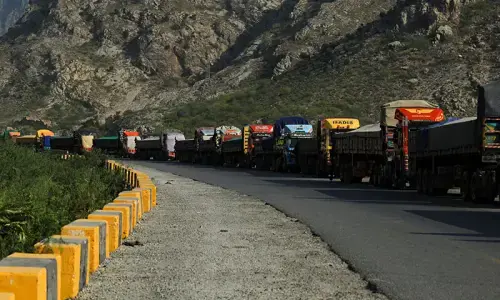
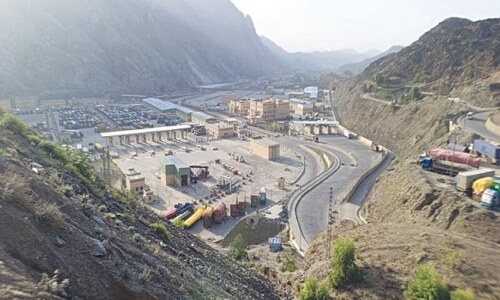
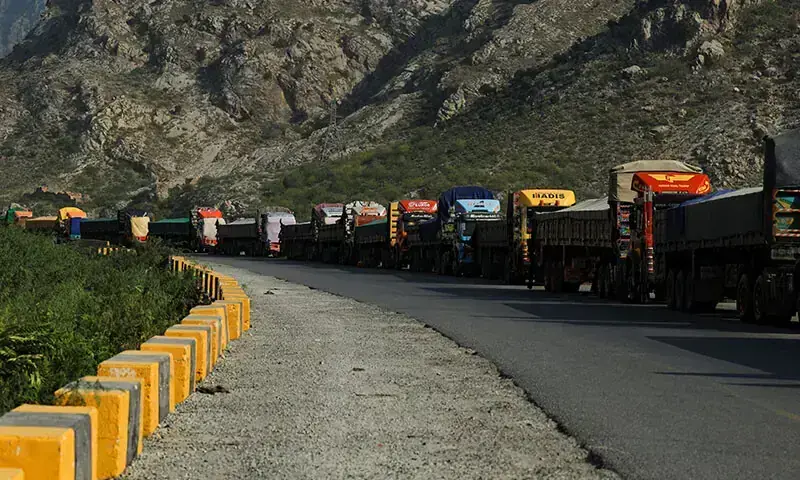
The border crossings at Torkham and Chaman remain the backbone of Afghanistan’s commercial lifelines, but the repeated skirmishes in recent months caused frequent border closures. The most recent closures following armed clashes between Pakistani and Taliban forces left thousands of trucks stranded for weeks.
But for Afghan traders, few alternatives can match Pakistan’s proximity or port infrastructure. Shifting trade away from those routes means higher transport costs, longer transit times, and increased logistical risks, experts say.
“The reality is that Afghanistan’s shortest and cheapest route to seaports as well as India and other South Asian markets is through Pakistan,” said Azarakhsh Hafizi, the former head of the Afghanistan Chamber of Commerce.
“We need all transit routes to remain open. It would benefit not only Afghanistan and Pakistan, but it is also important for the regional economic integration,” said Hafizi, who previously held membership in the Chamber of Commerce and Industry of the Saarc.
Regional bloc proposed
Uzbek President Shavkat Mirziyoyev proposed on Sunday forming a regional co-operation organisation he called the “Community of Central Asia”, in what he said was a bid to promote economic integration in the region of more than 80 million people, Reuters reported.
In a speech at a meeting in Tashkent of the leaders of the five post-Soviet republics of Central Asia, as well as Azerbaijan, Mirziyoyev suggested transforming regular meetings between the leaders of the five former Soviet republics of Central Asia into a formal regional bloc.
He also stressed the need to boost economic, security and environmental cooperation.
There was no immediate indication of the other countries’ response to the Uzbek proposal, but all five countries have in recent years said they want greater regional integration, where ties were sometimes testy in decades past.
All five leaders visited Washington in unison for talks with US President Donald Trump earlier this month.
Two of the countries, Kyrgyzstan and Tajikistan, earlier this year settled a longstanding border conflict that had claimed hundreds of lives.
Published in Dawn, November 17th, 2025