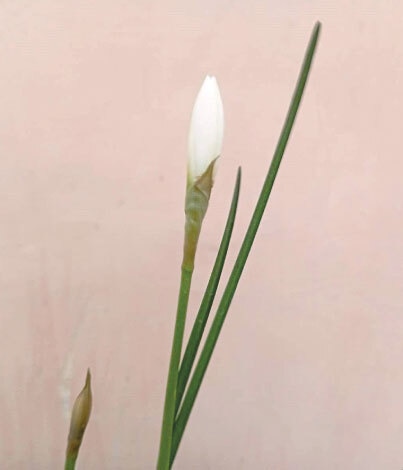
The white rain lily is a popular, easy-to-grow flowering plant that is easy on the eye, making it a favourite among gardeners. The simplest way to propagate the plant is through bulbs, planted vertically and three inches into the soil, while following basic planting guidelines.
As the white rain lily flower blooms during and after the rainy season, its bulbs are planted three to four months before the arrival of the monsoon, to ensure flowering coincides with the rain. The bulbs should be sown in a cluster of three to four bulbs, placed in a four-inch container, which results in voluminous growth and a lush display. When planting the bulb, a good ratio is one part compost and four parts well-drained nursery soil.
Soon enough, the shiny green leaves begin to sprout. These long and slender dark-green leaves resemble those of bunching onions and garlic chives, as these three plants hail from the same Amaryllidaceae family. As the leaves grow, they begin to flop over to one side due to their unbalanced height and weight. Unlike its edible look-alikes, the white rain lily’s parts are toxic, particularly its bud and flowers. Therefore, the plant should be kept out of the reach of pets and children.
In favourable conditions, the leaves of the white rain lily plant begin to appear as the bulb sprouts. If the plant is grown in a portable container, the container should be shifted to a location with indirect sunlight exposure. When grown in open space, the sprouting bulbs and nascent plants should be kept in a shaded area. This can be done using a green shade net.
The white rain lily offers a lush display, but its beauty conceals a poisonous secret and a unique botanical structure that sets it apart from its lookalikes
The sunlight requirement of the white rain lily plant changes once it enters the maturity phase: afternoon sunlight becomes strictly off-limits. The plant should be exposed to four to six hours of early morning direct sunlight before it reaches the flowering stage. This requirement increases by two hours after the flowering phase commences. While it benefits from more light during flowering, protection from the intense afternoon sun is the highest priority, especially when temperatures exceed 40 degrees Celsius.
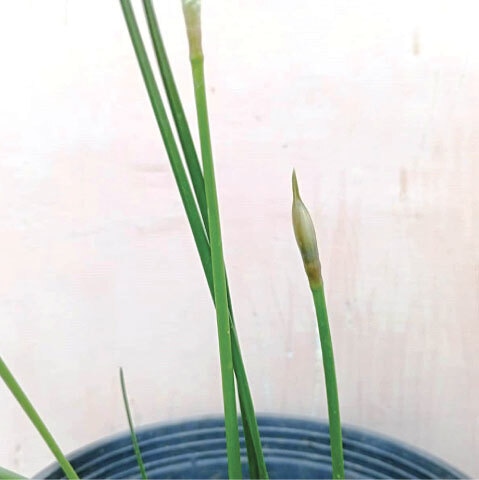
To novices and onlookers, it might appear that the white rain lily flower grows at the tip of the green leaves. That is not the case. Instead, the buds and the flowers grow on a separate, leafless, hollow stalk called a scape, or scapus. The scape usually emerges from the centre of the white rain lily plant and grows to the same length as the surrounding leaves. Initially, the flower buds are hidden within this scape. Just before flowering, the buds become visible at the tip of the scape and gradually swell.

For the upcoming bloom, use a balanced fertiliser with equal parts nitrogen, potassium and phosphorus, which may be added to the soil once a month. A thin layer of fully decomposed cow manure, mixed gently into the topsoil, is an excellent organic alternative to provide the plant with the required nutrients.
Please send your queries and emails to doctree101@hotmail.com. The writer is a physician and a host for the YouTube channel ‘DocTree Gardening’ promoting organic kitchen gardening
Published in Dawn, EOS, November 16th, 2025