Sindh High Court to hear petitions against e-challan system enforcement on Nov 25
KARACHI: The Sindh High Court has issued notices to the provincial authorities concerned on two more identical petitions impugning the recently introduced electronic challan (e-challan) system in the metropolis.
One of the pleas also questioned authority of the respondents to introduce the system by amending the Provincial Motor Vehicles Ordinances 1965.
Four identical petitions have been submitted in the SHC so far and the high court has put the respondents as well as the provincial law officer on notice on all these petitions for Nov 25 when it will take up these matters again for a joint hearing and the respondent authorities are likely to file reply / comments at the next hearing.
All the petitioners have urged the SHC to declare the impugned notification illegal and unlawful and pleaded for interim relief to suspend the operation and implementation of the e-challan system till final disposal of these petitions.
Petitioners insist on provision of essential facilities, repair of damaged roads first; question respondents’ authority to amend relevant law
A two-judge bench of the SHC comprising Justice Mohammad Iqbal Kalhoro and Justice Syed Fiaz-ul-Hassan Shah on Tuesday and Monday issued notices on two similar petitions filed by a leader of Pakistan Markazi Muslim League and the Karachi Bus Owner Association, respectively.
Citing chief secretary, provincial and regional transport authorities and deputy inspector general (traffic police) as respondents, the transporters’ body asserted that the respondents have no authority to introduce the impugned system by amending the Provincial Motor Vehicles Ordinances 1965.
The counsel for the petitioner Munsif Jan argued that as per recently enacted Section 121-A of the ordinance, the respondents have no power to amend the law while the impugned system was launched without consultation with transporters’ unions and other stakeholders violating principles of fairness, transparency and participatory governance.
He also contended that according to fresh amendment, the respondents have increased fines / penalty for public service vehicle / buses from Rs15,000 to Rs1,00,000 on different violations while changes had been made to the Sindh Motor Vehicle Rules, 1969 by inserting new rules 35-B, 57-B and 164-A and the same were violation of the basic fundamental rights enshrined in the Constitution.
The counsel further contended that the impugned notification had been enforced without any clear legislative authority under an ordinance which made the entire exercise ultra-vires of the law and the whole exercise suffered from procedural defect as no prior consultation or public notice had been made nor had clear rules been framed regarding evidence, appeal or data handling.
He maintained that the system in question, enforced on Oct 27, was a form of economic punishment rather than reasonable deterrence thereby violating Articles 9 and 25 of the Constitution while it had also deprived citizens of their fundamental rights to fair trial and due process under Article 10-A of the Constitution as no opportunity was being provided to the alleged offenders.
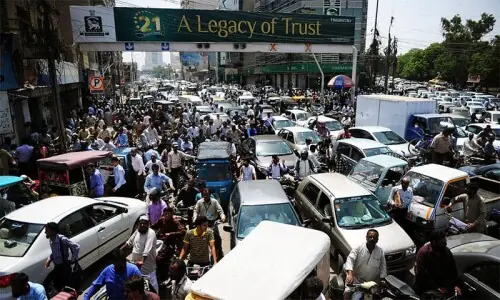
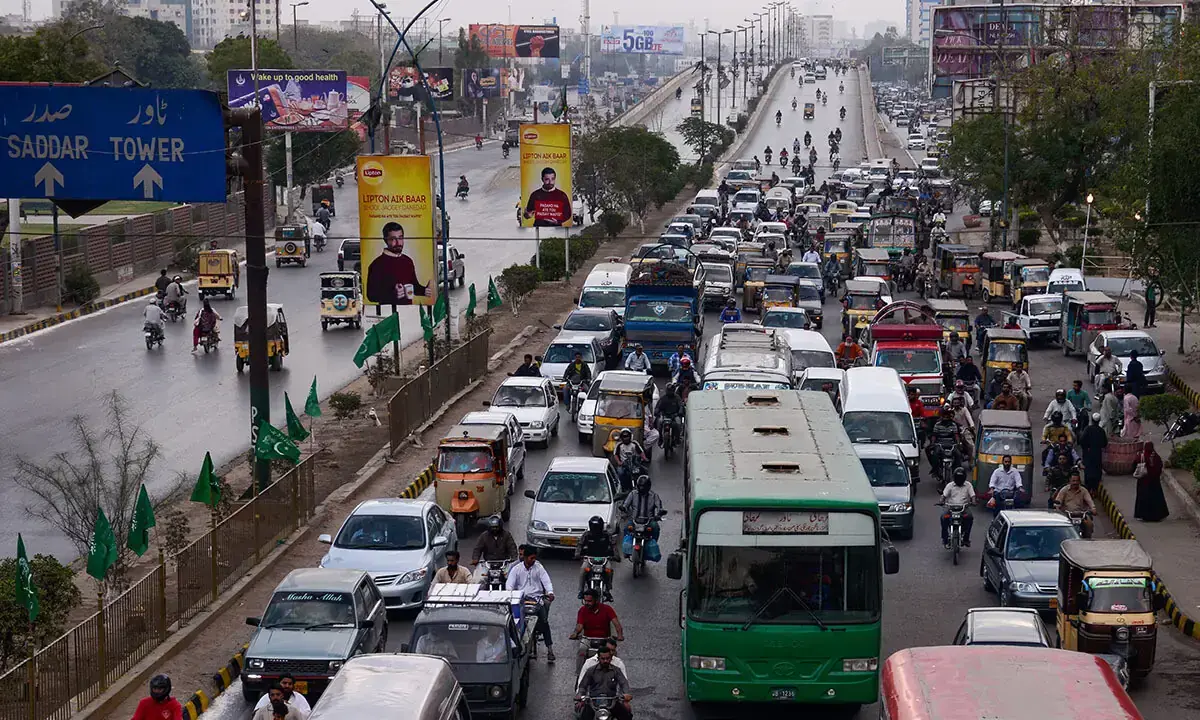
The lawyer also asserted that e-challan system being enforced without providing basic road infrastructure needed for safe driving and other allied facilities as thoroughfares have been turned into streets due to heavy encroachments while the move was aimed at pressurising and blackmailing the public at large to just gain heavy amounts of money in the shape of fines.
He further argued that despite providing better facilities along motorways and highways, the federal government was not imposing such hefty fines on public transports there.
Ahmed Nadeem Awan, a leader of Pakistan Markazi Muslim League, through his counsel Muddasir Iqbal Chaudhry has also petitioned the SHC and argued that the state could not demand compliance and impose heavy pecuniary sanctions while failing to provide basic infrastructure necessary for lawful driving and the impugned e-challan system was arbitrary, oppressive and discriminatory.
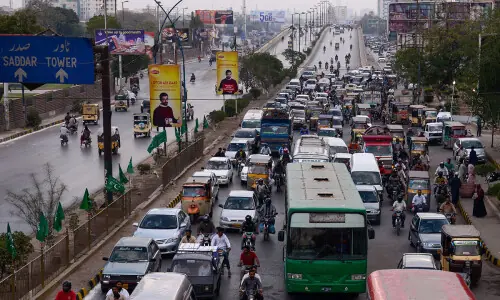
The petitioner also asserted that despite deteriorated infrastructure, faded road lane markings, non-functional traffic signals and lack of visible signage, the respondents have begun slapping heavy fines ranging from Rs5,000 to Rs100,000 as if citizens were driving on the international-standard thoroughfares.
He further maintained that such disproportionate penalties, particularly in the context of dilapidated roads and unregulated traffic conditions offended the principles of proportionality, fairness and reasonableness as guaranteed under Articles 4, 9, 24 and 25 of the Constitution.
The petitioner submitted that heavy financial penalties were being imposed upon vehicles’ owners without considering deteriorated road conditions of Karachi as many thoroughfares including University Road, M.A. Jinnah Road, Sharea Faisal and Korangi Industrial Area Road were broken, unmarked and under continuous excavation.
He further asserted that the respondents have violated Article 25 (equality before law) of the Constitution by enforcing the impugned e-challan system only in Karachi while other districts of Sindh remain exempt and such unequal and selective implementation constituted hostile discrimination against people of Karachi. In Punjab, the petitioners submitted, similar traffic violations under the e-challan system has attracted comparatively nominal penalties demonstrating that effective enforcement can be achieved without excessive financial burden.
Earlier, the same bench had put the respondents and advocate general of Sindh on notice on two other petitions filed by the Jamaat-i-Islami’s city chief Monem Zafar Khan along with two other leaders and Syed Johar Abbas Rizvi, a resident of Karachi.
They also submitted that the Al-based e-challan system was implemented in Karachi without ensuring necessary road infrastructure, vehicle ownership verification mechanism and installation of proper speed limit and other essential traffic signboards.
Published in Dawn, November 12th, 2025