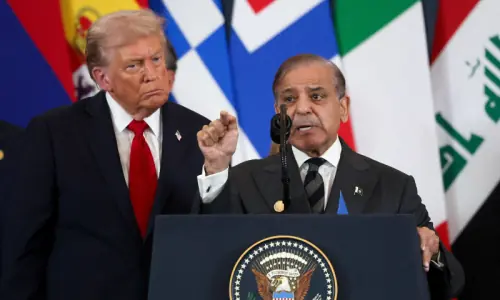

In recent months, Pakistan has entered a renewed phase of engagement with the United States, characterised by expanding bilateral economic cooperation and commitments of investment in the country’s mining and energy sectors.
Islamabad’s participation in the Gaza peace accord brokered by Washington has also strengthened political and diplomatic collaboration between the two nations.
Pakistan’s renewed outreach to the US is hardly surprising given its trade dynamics. The US remains its single largest export market after Europe, where Pakistan maintains a consistent trade surplus; for a long time, it also was a major source of foreign direct investment in the country alongside the European Union and the United Kingdom until China replaced it with large investments in energy, port and transport infrastructure under the China Pakistan Economic Corridor (CPEC) during the last decade.
Not just that, analysts say, Washington’s support has traditionally been considered crucial, given Islamabad’s continued reliance on financial support from multilateral institutions like the International Monetary Fund (IMF) and the World Bank, controlled by the western powers, for repeated bailouts for its external sector stability.
Islamabad’s new balancing act is being closely monitored in Beijing, where Pakistan’s apparent tilt towards Washington has raised questions, if not caused unease
The goodwill of the country’s present military and political leadership with the current US administration of President Donald Trump has helped Islamabad secure a slightly better tariff deal compared to regional competitors, enabling Pakistan to retain and expand its export share in the world’s single largest market of consumer goods.
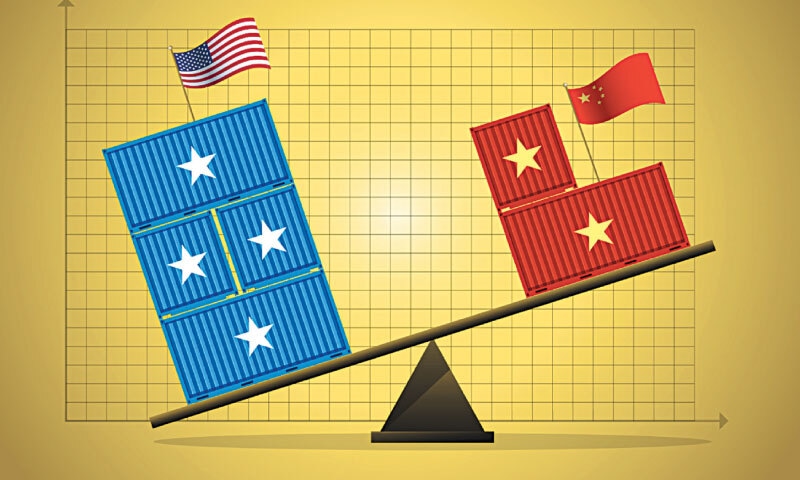
While analysts view Pakistan’s renewed economic and diplomatic engagement with the US after more than a decade as a positive development, they also caution that it could pose a new foreign policy challenge for Islamabad given its deepening strategic alliance with China. They note that the reset in ties with Washington will be tested by Pakistan’s close relations with Beijing, which could pull the country in conflicting directions and require a careful diplomatic balancing act.
Besides direct investment in infrastructure, Pakistan’s dependence on China for finished goods as well as raw and intermediary materials has increased manifold over time. Today, China stands as Pakistan’s largest trading partner and principal source of imports — excluding energy and edible oil — of around $20 billion or more.
It is the country’s single largest investor and bilateral creditor, extending critical balance-of-payments support through currency swap arrangements, deposits kept with the central bank and debt rollovers. More than half of Pakistan’s bilateral external debt, nearly $24bn, is owed to China. Beijing also remains indispensable for Pakistan in technology transfer and as the primary supplier of military hardware and support.
Though the country’s civil and military leadership has pledged not to “sacrifice one friend for another”, analysts argue that it is easier said than done. Some China watchers, including Dr Mahmood-ul-Hassan Khan, President of the Centre for Knowledge and Public Policy, say Islamabad’s new balancing act is being closely monitored in Beijing, where Pakistan’s apparent tilt towards Washington has raised questions, if not caused unease.
Dr Khan maintains that Pakistan’s alleged offer to the US to build a new deep-sea port at Pasni, barely a hundred kilometres from the Gwadar Port developed by China under the CPEC initiative, and Islamabad’s silence on the matter have fuelled speculation in Beijing. He further points out that the expanding Pakistan-US cooperation in rare earth minerals and China’s growing concerns over the security of its workers in Pakistan have raised serious doubts about the future development of Gwadar and the next phase of CPEC.
This became evident from the outcome of last month’s meeting of the CPEC Joint Cooperation Committee (JCC) in Beijing, which ended without resolving key issues related to the security of Chinese personnel and payments to Chinese Independent Power Producers (IPPs), two major irritants hampering fresh Chinese investment in the country.
Commitments for major projects such as the ML-1 railway upgrade also remain pending. The dispute over payments to Chinese IPPs persists, as Islamabad has sought to extend the repayment schedule. On the ML-1 project, Beijing has demanded a firm financial commitment from Pakistan before moving ahead with any agreement, particularly in light of the ongoing IMF programme.
Even so, the meeting was hailed as a milestone for marking the formal start of CPEC Phase II. Yet, attracting fresh Chinese investment will remain difficult unless these long-standing concerns are addressed, Dr Khan cautions.
Planning Minister Ahsan Iqbal’s proposal to hold JCC meetings every six months and convene Joint Working Groups quarterly during the first three years of CPEC Phase II underscores the delays and bottlenecks that continue to impede the corridor’s progress. Analysts argue that institutional strengthening, the resolution of pending issues, and enhanced security for Chinese personnel remain essential to sustain momentum and move Phase II forward.
Dr Khan advises that Pakistan must take the Chinese policymakers into confidence to urgently dispel growing concerns that Islamabad is warming up to Washington at the expense of its strategic partnership with its time-tested friend.
“Pakistan has to navigate its foreign policy challenges in a global geopolitical environment that is marked by growing multipolarity but weakening multilateralism and increasing US-China competition. The durability of this China-Pakistan partnership hinges on Islamabad’s ability to address these pressing concerns.”
Analysts say Pak-US ties have been transactional and cyclical in nature, often fluctuating between estrangement and benign engagement. Washington has viewed Islamabad through a transactional lens, one largely shaped by its interests in the region, and has not hesitated to impose sanctions whenever those interests diverged.
The most consequential factor today is America’s policy of containing China and its strategy to rally countries behind efforts to counterbalance Beijing’s growing global influence, analysts observe.
“Pakistan’s relationship with China, by contrast, is strategic, historic, trouble-free and remains pivotal to the country’s foreign policy. While Islamabad may seek to strike a balance between the two powers, it cannot afford to be part of any anti-China strategy. This constraint limits the scope for expanding relations with Washington beyond a certain threshold,” concludes Dr Khan.
Published in Dawn, The Business and Finance Weekly, November 10th, 2025