Tehran to restrict water as Iran battles drought
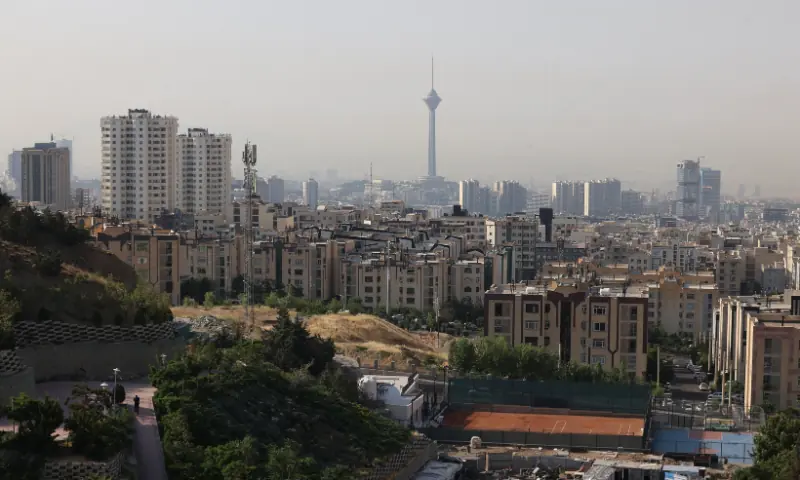

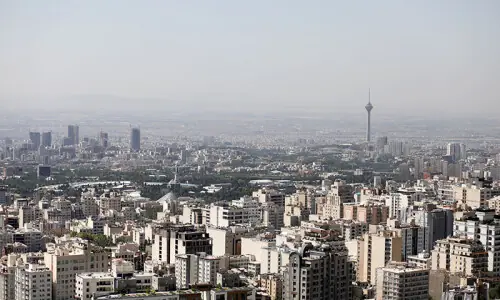
Iran was laying plans on Saturday to cut off water supplies periodically to Tehran’s 10-million-strong population as it battles its worst drought in many decades.
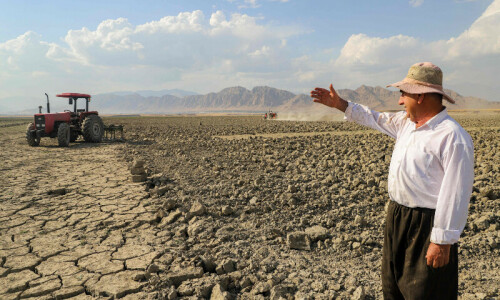
Rainfall in the capital has this year been at its lowest level in a century, local officials say, and half of Iran’s provinces have not seen a drop fall in months.
Now, to save water, the government is planning water cuts in Tehran — and several local news outlets have already reported pipes running dry overnight in some areas.
“This will help avoid waste even though it may cause inconvenience,” Iran’s Energy Minister Abbas Ali Abadi said on state television.
In a speech broadcast on Friday, Iran’s President Masoud Pezeshkian had warned that Tehran might have to be evacuated if no rain falls before the end of the year.
But he gave no details about how such a vast operation would be conducted.
Tehran nestles on the southern slopes of the Alborz mountains and has hot, dry summers usually relieved by autumn rains and winter snowfall.

Reservoirs run dry
Tehran is by far the country’s biggest city and its inhabitants use three million cubic metres of water per day, according to local media.
The main Amir Kabir dam on the Karaj river, one of five reservoirs serving the capital, is running dry and holds only 14m cubic litres, according to Behzad Parsa, director general of the Tehran water company, cited by the official news agency IRNA.
During the same period last year, the reservoir held 86m cubic metres, he added, but now it only has enough to maintain supplies to the Tehran region for less than two weeks.
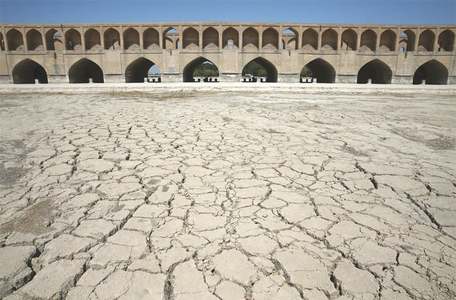
On Saturday, state television broadcast images of several dams, serving the central city of Isfahan and Tabriz in the northwest, showing significantly lower water levels compared to previous years.
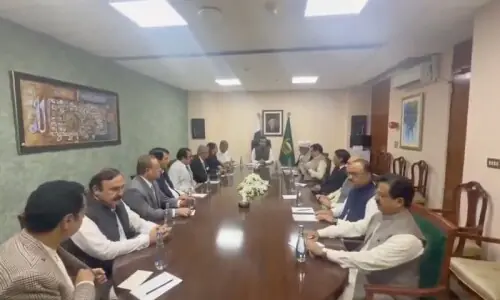
Hassan Hosseini, the deputy Iran’s second-largest city Mashhad, told IRNA agency on Thursday that night-time water cuts were being considered to address the water shortage.
And over the summer on July and August, two public holidays were declared in Tehran to save water and energy, at a time when power outages were almost daily during the intense heatwave.