THE government’s decision to deregulate the wheat and sugar sectors marks one of the most consequential market reforms in Pakistan’s agriculture in recent years. For too long, the state has had tight control over farm markets through price regulations and fiscal incentives, ostensibly to protect smallholder farmers and urban consumers from price volatility, ensure food security and reduce food and raw material imports. Yet none of these aims have been meaningfully achieved and these policies have ended up serving the interests of a politically connected rural elite, powerful millers, commission agents and the agribusiness input industry. Over time, protections and subsidies have entrenched inefficiencies in the supply chain and distorted market signals, thus weakening the sector’s global competitiveness. They have also slowed down farm mechanisation, discouraged investment in modern farming and deepened rural poverty and food insecurity. The distortions have deterred farmers from shifting to higher-value or export-oriented crops.
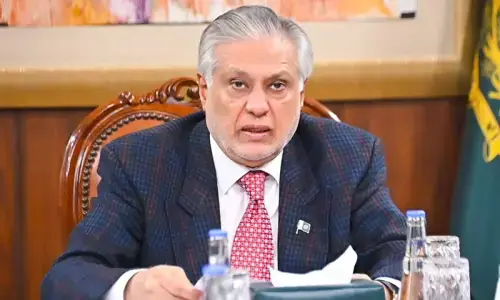
It is against this backdrop that the finance minister’s declaration that the plans to deregulate the wheat and sugar sectors must be welcomed as an effort to end rent-seeking in these vital agro economy sectors. Although a formal timeline for the reforms has not been announced, the minister stated that both sectors would be fully deregulated. His assertion that “deregulation has to be end-to-end” captures what has been missing from our farm policy: the political will to let markets function freely. Successive governments have flirted with agricultural reforms — lifting some controls, tightening others, and reversing course whenever convenient, thereby perpetuating the distortions they seek to fix. While taxpayers have funded a bloated food bureaucracy, decades of state intervention through procurement, subsidies, import controls and price fixing have fostered corruption and market capture by vested interests in both the wheat and sugar sectors. Genuine deregulation could expose inefficiencies, curb rent-seeking and align domestic prices with global trends, benefiting both farmers and consumers. Yet it is this withdrawal of state patronage that makes reform politically perilous. Politicians have long used such interventions as electoral tools — raising support prices to woo farmers, granting subsidies to placate consumers and banning exports to manage public anger. The government’s recent reversal of its decision to exit the wheat market shows that the real obstacle to a deregulated market will be the absence of political will.
Published in Dawn, November 7th, 2025