World leaders convene in Brazil to address climate crisis

• Leaders from China, US, India and Russia are absent from the gathering
• UN chief says corporate interests are leading the world to ruin
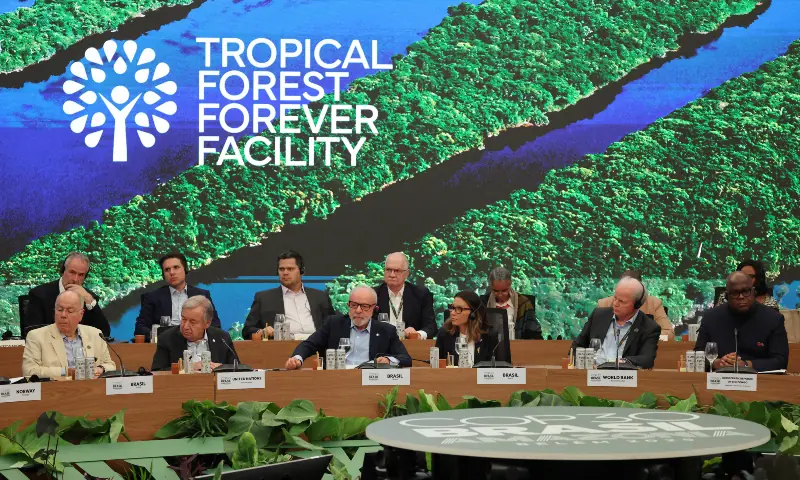
BELEM: UN Secretary-General Antonio Guterres tore into nations for their failure to limit warming to 1.5 degrees Celsius, delivering a blistering critique as Brazil hosted world leaders for a summit ahead of the COP30 climate conference.
Speaking at a high-level summit, Mr Guterres said that too many political leaders had become “captive” to fossil fuel interests, while companies continued to profit from environmental destruction.
“Too many corporations are making record profits from climate devastation, with billions spent on lobbying, deceiving the public and obstructing progress,” he said. “We can choose to lead — or be led to ruin.”
The summit opens at a stark moment. Scientists now expect the world to cross the 1.5C warming limit as early as 2030, a threshold long described as a line between severe climate disruption and irreversible harm. Yet governments still spend more than $1tn a year subsidising fossil fuels.
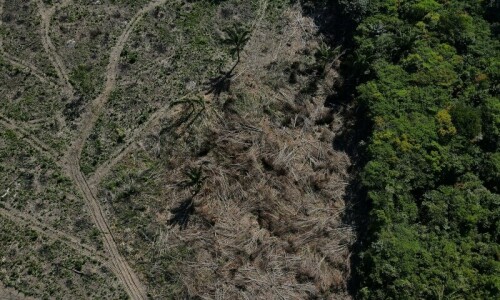
Outside the venue, indigenous communities sang and marched, urging delegates to protect the Amazon and other critical forests. A larger flotilla of indigenous leaders travelling down Amazon river routes was delayed and is expected to arrive next week.
Around 150 heads of state, regional leaders and international organisations are addressing the gathering on Thursday and Friday. But the leaders of the US, China, India and Russia — four of the world’s top polluting countries— are notably absent.
Only the European Union president is scheduled to attend, prompting some observers to suggest the summit may allow more candid exchanges in their absence.
Brazilian president Luiz Inácio Lula da Silva, the summit host, used the session to call for a “just transition” away from fossil fuels and the restoration of damaged ecosystems.
“We need a roadmap to undo deforestation, overcome fossil fuels and mobilise the resources needed for those aims,” he said.
Lula also warned that extremist political movements were undermining climate action for electoral advantage, trapping societies in outdated economic systems that fuel inequality and environmental collapse.
Calls for shared responsibility and financial fairness were echoed throughout the summit.
China’s vice premier, Ding Xuexiang, urged states to “strengthen solidarity” and maintain commitment to multilateral climate cooperation, while Britain’s Prince William described the moment as “pivotal in human history”, demanding courage and cooperation to safeguard the planet.
Chile’s president, Gabriel Boric, criticised the resurgence of climate denial, referencing a recent false claim by the US president at the UN that contradicted scientific consensus.
‘Second or third hottest year on record’
The summit coincided with a grim assessment from the UN’s weather and climate agency, warning that this year will likely be the second-or third-hottest ever recorded — part of more than a decade of extraordinary heat. Concentrations of greenhouse gases continue to hit record highs, “locking in” future warming.
Together, the developments “mean that it will be virtually impossible to limit global warming to 1.5C in the next few years without temporarily overshooting the Paris Agreement target”, WMO chief Celeste Saulo told leaders in Belem in northern Brazil.
The 2015 Paris climate accords aimed to limit global warming to well below two degrees Celsius above pre-industrial levels — and to 1.5C if possible.
Mr Guterres, on the other hand, underscored the urgency. Every year above the 1.5C threshold, he warned, would deepen inequality, damage economies and lead to irreversible losses in ecosystems.
Published in Dawn, November 7th, 2025