Opium cultivation down 20pc in Afghanistan, UN says
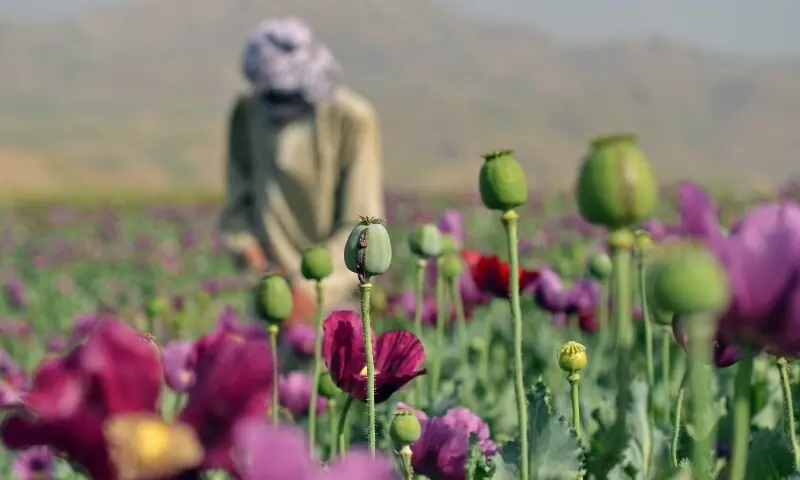
KABUL: Opium cultivation in Afghanistan dropped by 20 per cent in 2025, the United Nations said on Thursday, while warning of a simultaneous surge in synthetic drug production and trafficking.
The Taliban authorities banned opium poppy cultivation nationwide in 2022, the year after they returned to power in Kabul.
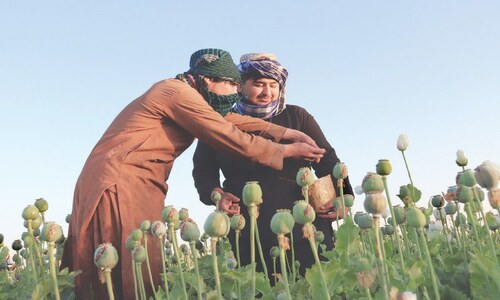
The area dedicated to poppy farming fell from 12,800 hectares (around 31,600 acres) in 2024 to 10,200 hectares in 2025, a new report released by the United Nations Office on Drugs and Crime (UNODC) said.
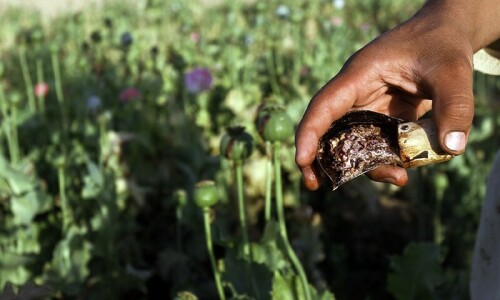
Opium cultivation in 2022 covered around 232,000 hectares, according to the UNODC. Output of opium, the core ingredient in heroin, was estimated at 296 tons in 2025, a 32pc drop compared to the previous year.
Farmers’ income from opium sales fell by nearly half, from $260 million in 2024 to $134 million this year. Prices of dry opium remain five times higher than the pre-ban average despite a decline in 2025, the UNODC said.
Report warns of sharp rise in synthetic drug activity, particularly methamphetamine
The agency also warned of a sharp rise in synthetic drug activity, particularly methamphetamine.
“Synthetic drugs appear to have become the new business model for organised crime groups due to the relative ease of production, the greater difficulty in detection and relative resilience to climate changes,” it said. “After the ban, many farmers shifted to growing cereals and other crops.
Worsening weather conditions, such as droughts or low rainfall, however, resulted in over 40pc of farmland laying barren,” the agency said. The 20pc reduction in the area under cultivation follows a 19pc rebound in 2024. Those fluctuations are a mere fraction of the massive drop in 2023 that followed the Taliban’s announcement in 2022 that it was outlawing narcotics production.
At the same time, despite the smaller harvest, the price for dry opium fell 27pc to $570 per kilogram, it added.
That “suggests a shift in market dynamics and might trigger an increase in attempts to cultivate illicit opium in other countries,” it said, adding: “Cultivation data, together with prices and seizures, signal fundamental changes in drug markets and trafficking in and around Afghanistan.” The production of synthetic drugs, particularly methamphetamine, has continued to increase since the ban, the UNODC said.
“As agricultural-based opiate production declines, synthetic drugs appear to have become the new business model for organised crime groups due to the relative ease of production, the greater difficulty in detection and relative resilience to climate changes,” it added.
The UN has repeatedly called on the international community to help Afghan farmers transition away from opium to other crops and livelihoods, a request also made by the Taliban government.
The 2022 ban caused a shift in cultivation areas to Afghanistan’s northeast, away from Taliban strongholds in the south where it was previously cultivated. Several people were killed in clashes in May 2024 between farmers and law enforcement forces sent to destroy poppy fields in the northeastern region of Badakhshan, which has resisted the opium ban.
Published in Dawn, November 7th, 2025