Govt ‘strongly rejects’ Afghan claims of Pakistan initiating firing on border


 0
0
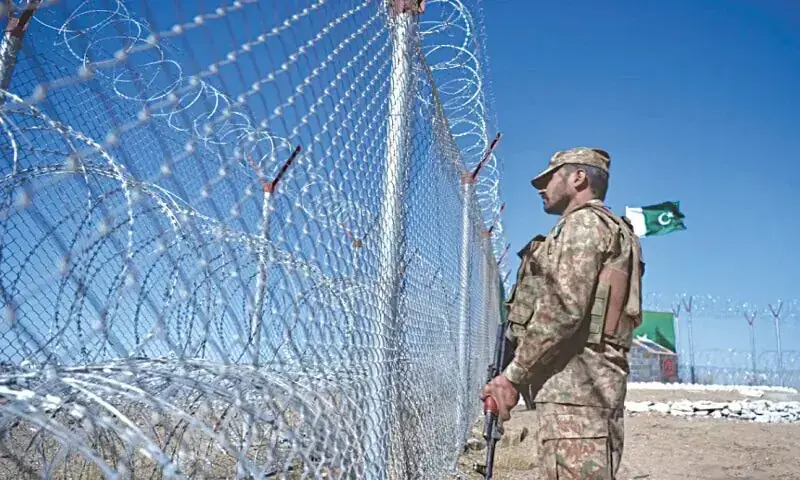

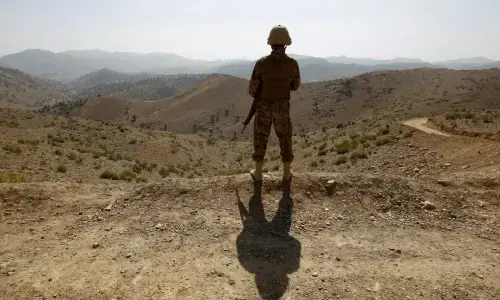
Pakistan on Thursday “strongly rejected” claims made by Afghanistan that Islamabad instigated a border clash in the Chaman area, stating that firing started from the Afghan side and that the situation is under control.
This development comes as Islamabad and Kabul are having talks in Istanbul to expand a ceasefire called after five days of border clashes last month.
In a post on X, the Ministry of Information and Broadcasting strongly rejected the allegations coming from Kabul.
“Firing was initiated from the Afghan side, to which our security forces responded immediately in a measured and responsible manner,” the ministry wrote.
It added that the situation was brought under control thanks to the “responsible action by Pakistani forces” and emphasised that the ceasefire remains intact.
“Pakistan remains committed to ongoing dialogue and expects reciprocity from Afghan authorities,” the post concluded.
Afghan Taliban spokesperson Zabihullah Mujahid levelled allegations that Pakistani forces opened fire in the Spin Boldak area while delegations from both countries were having talks in Istanbul.
“While the third round of negotiations with the Pakistani side has begun in Istanbul, unfortunately, this afternoon Pakistani forces once again opened fire on Spin Boldak, causing concern among the local population,” the spokesperson wrote.
“The Islamic Emirate’s forces, out of respect for the negotiation team and to prevent civilian casualties, have so far shown no reaction,” he added. “It is worth noting that in the previous round of negotiations, both sides had agreed to extend the ceasefire and prevent any acts of aggression.”
Border clashes and talks
Talks between Pakistan and the Afghan Taliban follow weeks of shuttle diplomacy after deadly border clashes last month plunged relations between the two neighbours to their lowest point since the Taliban seized power in Kabul in 2021.
The hostilities began when an attack was launched on Pakistan from Afghanistan on the night of October 11. The attack had followed an allegation from the Taliban of airstrikes by Pakistan into Afghanistan — an accusation which Islamabad has neither confirmed nor denied.
For its part, Islamabad has long demanded that Taliban stop terror groups from using its soil against Pakistan. Taliban, however, deny the allegation of allowing terrorists to operate from Afghan soil.
Meanwhile, Pakistan continues to grapple with the issue of terrorism and has suffered multiple casualties among security forces in intelligence-based operations.
After the initial skirmish on October 11, multiple others took place along the Pakistan-Afghanistan border. Meanwhile, strikes by Islamabad also targeted Gul Bahadur group camps in Afghanistan.
A ceasefire was then agreed upon on October 15 in the evening, and eventually, the two sides came together for dialogue in Doha.
Since the skirmishes between October 11 and 15, Pakistan and Afghan Taliban representatives have held two rounds of talks — first in Doha and then in Istanbul — but a final agreement has not yet been achieved.
After the Doha talks, a temporary ceasefire continued to prevent border hostilities while the two sides committed to reconvene in Istanbul to work on mechanisms for lasting peace and stability between the two countries.
On October 25, the second round of talks between the two sides began in the Turkish capital. But, Information Minister Attaullah Tarar announced in a post on X on October 29 that the talks “failed to bring about any workable solution”. He also asserted that Pakistan would continue to take all possible measures to protect its citizens from terrorism.
However, mediators Turkiye and Qatar intervened and managed to salvage the dialogue process, with an October 31 joint statement released by Turkiye stating that “further modalities of the implementation will be discussed and decided” during a principal-level meeting in Istanbul on November 6.
For the third round, under the joint mediation of Turkiye and Qatar, delegations from both sides arrived in Istanbul on Wednesday. The talks are expected to continue for two days.
In this round, Pakistan’s delegation is being led by Lt Gen Asim Malik, director general of the Inter-Services Intelligence, and includes senior officials from the military, intelligence agencies, and the Foreign Office.