Pakistan among nations using water ‘inefficiently’


 1
1

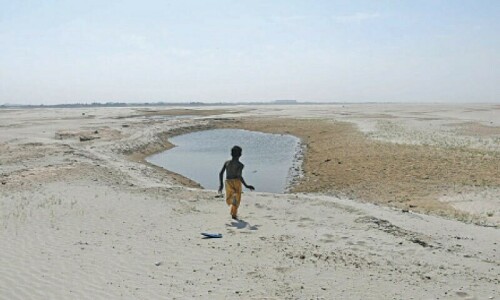
ISLAMABAD: Pakistan is one of six countries with the highest levels of inefficient agricultural water use amid increasingly arid conditions, contributing to the annual global loss of 324 billion cubic metres of freshwater, according to the first edition of the global water monitoring report by World Bank.
The report, “Continental Drying: A Threat to Our Common Future,” says about one-quarter of inefficient water consumption in rain-fed agriculture and one-third in irrigated agriculture are concentrated in regions experiencing declining freshwater availability.
These hot spots, where water inefficiency coincides with drying trends, are most pronounced in Western Asia, Eastern Europe, and North Africa.
On a national level, the highest share of inefficient agricultural water consumption under drying conditions is observed in Algeria, Cambodia, Mexico, Pakistan, Thailand, Tunisia and Romania, the report says.
WB report reveals world is losing 324 billion cubic metres of freshwater every year
Drawing on two decades of satellite data enhanced through new modelling techniques, the report provides an unprecedented view of how land and water management decisions are shaping water availability.
The past two decades have seen a global shift toward the cultivation of more water-intensive crops. Among drying countries, 37 have transitioned to more water-intensive agriculture, including 22 located in arid and semi-arid regions. This structural shift, coupled with inefficiency, further intensifies water demand in already water-stressed countries.
More than two-thirds of the inefficient irrigation in drying areas is linked to the cultivation of water-intensive crops, underscoring the need for smarter crop choices that align agricultural practices with water sustainability.
The report reveals that the world is losing 324 billion cubic metres of freshwater every year, enough to meet the needs of 280 million people annually. These losses are driven by worsening droughts and unsustainable practices, including poor pricing policies, weak coordination, deforestation and wetland degradation.
Global water use has risen 25 percent since 2000, with a third of that increase occurring in areas already drying out.
Published in Dawn, November 6th, 2025