One in every five heavy vehicles in Islamabad violates emission standards: report
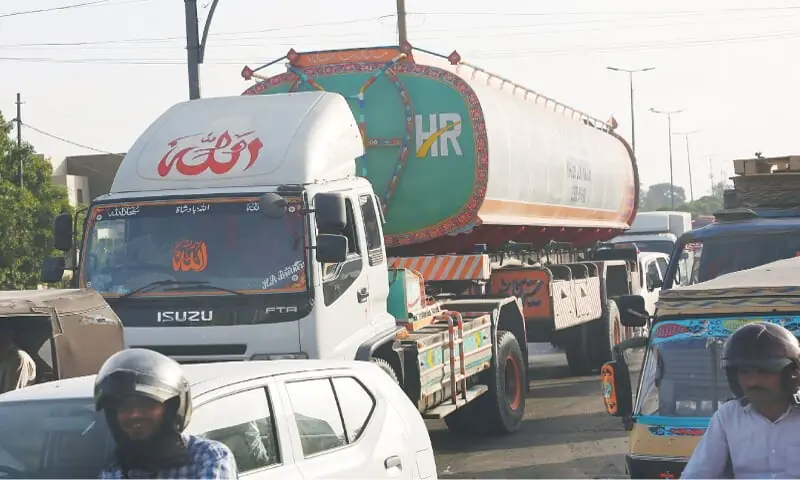

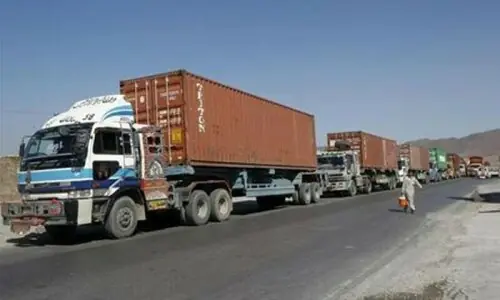
ISLAMABAD: Nearly one in every five heavy transport vehicles (HTVs) operating in the federal capital has been found violating national emission standards, according to a report by the Pakistan Environment Protection Agency (Pak-EPA).
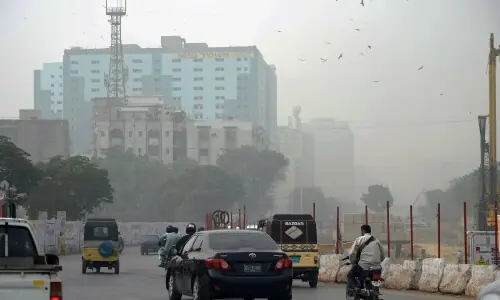
The “Consolidated Report on Vehicular Emission Monitoring and NEQS Compliance within Islamabad Capital Territory” released on Sunday highlighted the growing challenge of air pollution fuelled by rapid urbanisation, industrial activity and the increasing number of vehicles on city roads.
The findings, based on a week-long enforcement drive which concluded on October 30, identified aging diesel trucks, long-haul trailers, loaders and diesel-powered passenger buses as the primary violators. These vehicles were found emitting pollutants well above the National Environmental Quality Standards (NEQS) limits, largely due to poor engine maintenance and substandard fuel use, said Mohammad Saleem Shaikh, spokesperson for the Ministry of Climate Change and Environmental Coordination, in a statement.
“Emissions from ageing diesel-fueled heavy vehicles are a major contributor to smog formation and respiratory illnesses in Islamabad,” he said.
Aging diesel trucks, long-haul trailers, loaders and diesel-powered passenger buses found primary violators in capital
A total of 100 heavy-duty vehicles, including diesel trucks, loaders and public buses, were inspected for smoke opacity, an indicator of incomplete combustion and particulate pollution.
The enforcement operation was conducted by teams led by Dr Zaigham Abbas, Deputy Director (Labs/NEQS) at Pak-EPA. Sharing the findings of the report, Dr Abbas said the emission testing drive carried out at multiple locations showed alarming levels of non-compliance among heavy transport vehicles.
“Our analysis shows that 20 per cent of the 100 heavy transport vehicles tested — roughly one in every five — fail to meet the permissible NEQS limits,” he said, adding the results highlight the urgent need for stricter maintenance and more frequent monitoring of diesel-powered vehicles operating in the capital to protect health of the public and environment.
“Non-compliance was primarily due to poor engine condition, inadequate maintenance and the use of low-quality fuel,” he said.
“The smoke opacity levels in these vehicles were well above acceptable thresholds, indicating incomplete fuel combustion which remains a key cause of fine particulate emissions.”
According to Pak-EPA officials, fines were imposed on 21 violators, while three vehicles were impounded for severe non-compliance. Owners of the offending vehicles were directed to undertake immediate engine maintenance to bring their vehicles in line with environmental standards.
Dr Abbas noted that several non-compliant vehicles belonged to both public and private sector organisations, reflecting what he termed “a systemic neglect of vehicle maintenance and environmental responsibility”.
Meanwhile, the ministry’s spokesperson said vehicular emissions remained among the major sources of deteriorating air quality in Islamabad with diesel-powered transport identified as the single largest emitter of black carbon and particulate matter.
“These emissions pose serious risks to human health and the city’s environment,” he said.
The report has also recommended a comprehensive review of the current vehicle fitness certification system, urging federal authorities concerned to align its standards with NEQS for motor vehicle exhaust and noise, ensuring uniform compliance across inspection stations and automobile workshops.
Reaffirming Pak-EPA’s commitment to curbing vehicular pollution, DG Nazia Zeb Ali announced that similar emission monitoring drives would be conducted regularly. She added that public awareness initiatives and coordination with the Islamabad Traffic Police (ITP) would be strengthened to promote roadworthy and environmentally responsible transport operations.
“Clean air is a fundamental right and it cannot be achieved as long as all stakeholders work together to achieve the ambitious goal ‘clean air quality for all’,” she said. “Ensuring compliance with environmental standards is not just a regulatory duty. In fact, it is essential for protecting public health and preserving Islamabad’s ecological integrity.”
Published in Dawn, November 3rd, 2025