Hurricane Melissa smashes through Caribbean, accelerates towards Bermuda
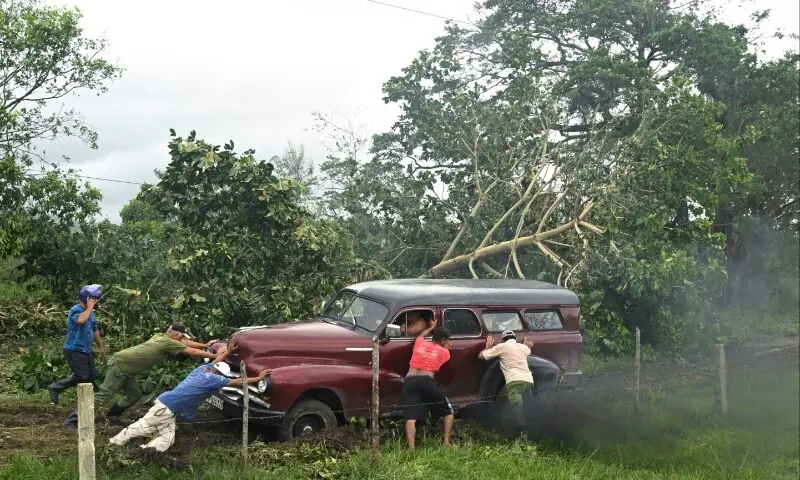
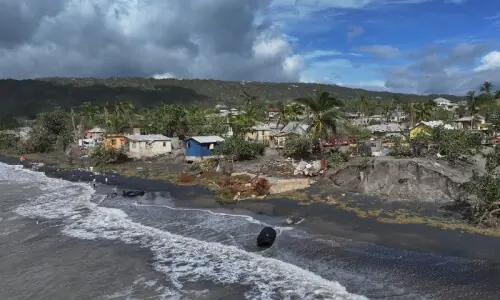
Hurricane Melissa smashed through the northern Caribbean and was seen picking up speed as it churned across open ocean towards Bermuda on Thursday, leaving a trail of high winds and destruction from Jamaica to Cuba and Haiti in its wake.
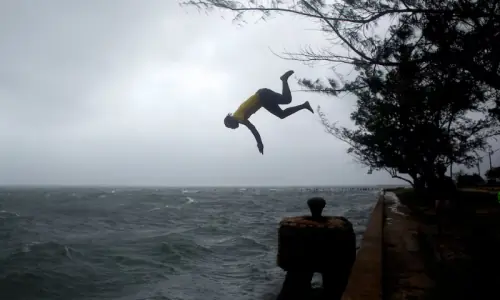
People across the Bahamas and nearby Turks and Caicos hunkered down as the passing storm pummelled them with dangerous gusts and rain. Around 600 miles (970 km) northeast of the storm’s last position, Bermudans prepared for its approach, expected by the evening.
Authorities across the region, struggling to keep track of the devastation, confirmed 25 deaths in Haiti - 10 of them children - and four in Jamaica. As of 1200 GMT (5pm PKT) Melissa was packing winds of close to 105 miles per hour (165 kph), according to the US National Hurricane Centre, downgraded from its peak to a Category 2 hurricane.
Wading barefoot through mud
It was expected to keep accelerating northeastward and “pass to the northwest of Bermuda” later on Thursday, before likely weakening on Friday, the Florida-based forecaster said.
Bermuda will close its causeway on Thursday night and all schools and ferries on Friday, among other measures, “out of an abundance of caution,” National Security Minister Michael Weeks said in a statement.
“I implore all residents to remain vigilant while we navigate another natural threat to our way of life,” he said. People should check on their neighbours and stay off roads until further notice, he added.
Melissa struck Jamaica on Tuesday as the strongest-ever hurricane to directly hit its shores, with sustained winds of 185 mph, far above the minimum strength for a Category 5, the strongest classification for hurricanes.
In a neighbourhood of the island’s Montego Bay, 77-year-old Alfred Hines waded barefoot through thick mud and debris as he described his narrow escape from the rising floodwaters.
At one stage, I see the water at my waist and (after) about 10 minutes time, I see it around my neck here and I make my escape,” he told Reuters on Wednesday.
“I just want to forget it, and things come back to normal.” The capital Kingston, was spared the worst damage, and its main airport was set to reopen on Thursday.
But US forecaster AccuWeather estimated Melissa could cost $22 billion in damages and economic loss, and that rebuilding could take a decade or more. “DEVASTATION,” read the front page headline on Thursday’s Jamaica Observer newspaper.
Evacuations and floods
Melissa was the Caribbean’s third-most intense recorded hurricane, as well as its slowest-moving, which made it particularly destructive, AccuWeather said. Across the Bahamas archipelago, the government flew out nearly 1,500 people as the storm approached, in what it called one of its largest evacuation operations.
High winds shook palm trees and whipped up waves at a resort near George Town, video showed on Wednesday.
The storm did not directly hit Haiti, the Caribbean’s most populous nation, but lashed it with days of rain. Authorities reported at least 25 deaths, largely due to floods in Petit-Goave, a coastal town 64 km west of the capital, where a river burst its banks.
At least 10 children were killed and 12 people are missing there, Haiti’s disaster management agency said, adding that more than 1,000 homes have been flooded nationwide and nearly 12,000 people moved into emergency shelters.
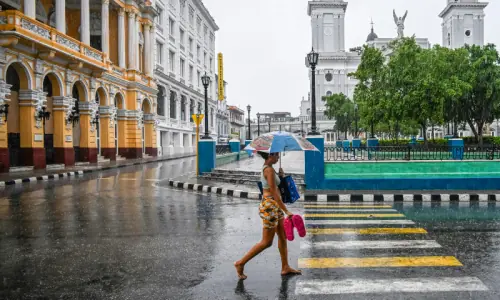
In Cuba, at least 241 communities remained isolated and without communications on Wednesday following the storm’s passage across Santiago province, according to preliminary media reports, affecting as many as 140,000 residents.
Across eastern Cuba, authorities evacuated around 735,000 people as the storm approached.
Scientists say hurricanes are intensifying faster with greater frequency as a result of warming ocean waters caused by greenhouse gas emissions. Many Caribbean leaders have called on wealthy, heavy-polluting nations to provide reparations in the form of aid or debt relief.