Window for fast marathons closing because of climate change, report finds
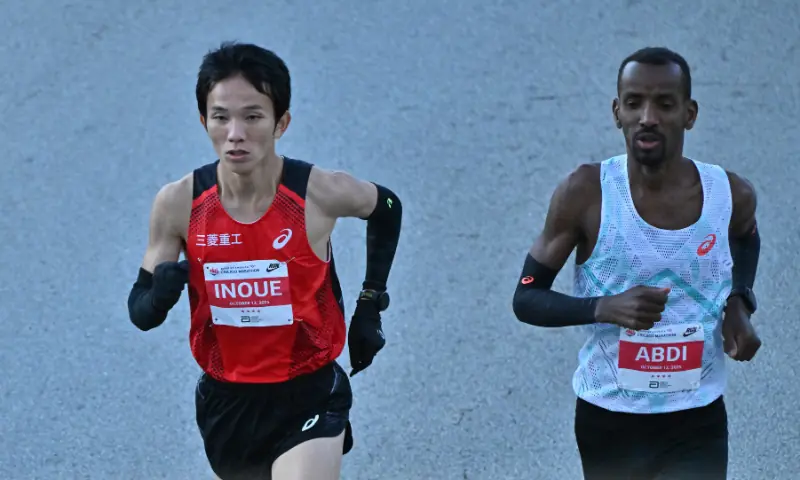
Climate change is narrowing the window for record-breaking performances at the world’s top marathons, according to new research released ahead of Sunday’s New York City Marathon.
Concerned elite athletes say rising temperatures are reshaping the sport with some city marathons more impacted than others.
Berlin’s event last month was raced in unseasonal temperatures of 75 degrees Fahrenheit.
A report by US-based non-profit Climate Central finds that 86 per cent of 221 global marathons analysed on their 2025 dates are expected to see a decline in the odds of optimal running conditions by 2045, including all seven Abbott World Marathon Majors.
Mhairi Maclennan, the fastest British female finisher at the 2024 London Marathon, said the findings reflect a growing challenge for elite runners.
“At the elite level, conditions make or break a performance,” Maclennan said.
“We train day in, day out for years and manage every aspect of our lives to race our best, only for that elusive target to drift further away as ideal temperatures become rarer.
“Climate change isn’t just about races becoming harder; it’s about knowing that record-breaking performances could soon be out of reach if conditions keep getting hotter.”
The report identifies a ‘sweet spot’ for marathon temperatures that supports peak performance.
For elite runners, men do best in cooler conditions (on average, 4 degrees Celsius or 39 degrees Fahrenheit) and women do better at warmer temperatures (10 C, 50 F).
The report, however, warns that global warming is making those conditions increasingly hard to find.
Tokyo currently offers the highest likelihood of ideal temperatures for elite male runners (69pc), but is also projected to see the steepest decline by 2045.
The 2025 Berlin and Tokyo Marathons were cited as examples of how heat waves have already pushed race-day temperatures beyond peak performance thresholds, although starting races earlier in the day can modestly improve conditions.
Former world record holder Catherine Ndereba said the sport was already adapting.
“Climate change has altered the marathon,” said Kenya’s Ndereba, a two-time world champion and four-time Boston winner.
“Dehydration is a real risk, and simple miscalculations can end a race before it begins. Every step now carries a message that if we don’t take care of our planet, even our strongest strides will fall short.”
Ibrahim Hussein, the first Kenyan to win both the New York and Boston Marathons, echoed the sentiment.
“The climate is part of the course now,” Hussein said.
“If we don’t protect it, the records of the future and the enjoyment for all become less and less likely.”