Lahore tops pollution charts as air quality turns hazardous


• Citywide AQI hits 412; PM2.5 concentrations far above safe limits
• Citizens urged to wear masks, avoid unnecessary outdoor activity
• PDMA says smog intensity expected to rise from Nov to mid-Dec
• Govt imposes blanket ban on stubble, solid waste, plastic burning
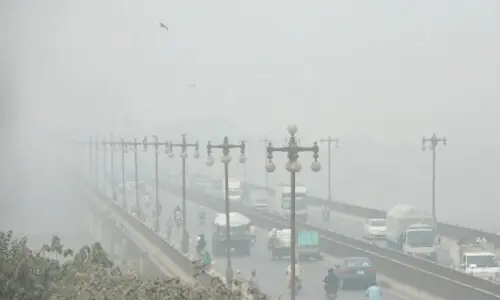
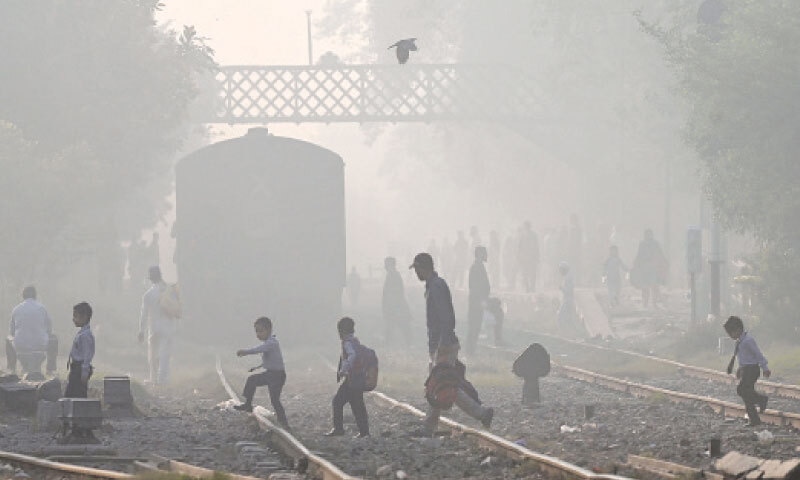
LAHORE: Lahore has ranked as the world’s most polluted city for the past three days, with air quality plummeting to hazardous levels as smog blanketed the city and the overall Air Quality Index (AQI) hitting 412, prompting health warnings and a province-wide crackdown on pollution sources.
Data revealed that Lower Mall was the worst-affected neighbourhood, with an AQI of 680, followed by Iqbal Town (577), Syed Maratib Ali Road (543), Shadman (507), the Punjab University area (506), and Shalimar (495).
Environmental experts have urged residents to avoid unnecessary outdoor activity, particularly in the morning and evening, and to wear masks when outside. PM2.5 concentrations in Lahore’s air are multiple times above global safety thresholds, raising risks of respiratory and cardiovascular illness among other serious health issues, especially for children and the elderly.
The Punjab Disaster Management Authority (PDMA) issued a high alert across eastern districts of the province, including Lahore, Gujranwala, Sheikhupura, Kasur, Nankana Sahib, Faisalabad, Multan, Bahawalpur, Rahim Yar Khan and Khanpur.
“The intensity of smog is expected to increase from November to mid-December,” warned DG PDMA Irfan Ali Kathia, citing forecasts from the Meteorological Department. The PDMA has directed all commissioners and deputy commissioners to ensure the implementation of government measures to combat smog.
The authorities have announced a strict, multi-pronged strategy to tackle the pollution at its source. A comprehensive ban has been imposed on the burning of crop residues, solid waste, tires, plastic and rubber.
Mr Kathia stated that a case would be registered for any violation, including the burning of crop stubble and garbage.
Simultaneously, the Punjab Safe Cities Authority (PSCA) has intensified its anti-smog operations, using advanced drone cameras to monitor industrial zones, agricultural land, and urban areas.
In the last 24 hours, this tech-driven initiative identified over 460 smog-related violations. More than 200 e-challans were issued to smoke-emitting vehicles, with real-time data shared with departments for immediate action.
While enforcement is critical, the government is also pushing for long-term, sustainable solutions. At a seminar in the Kabirwala town of Khanewal district, the Department of Environmental Protection and Climate Change educated farmers on using modern machinery to manage crop residue, particularly rice stubble, without burning.
Officials and experts highlighted that this waste can be repurposed in biomass plants to generate steam and energy, turning an environmental problem into an economic opportunity.
“Smog is a serious environmental and public health issue, requiring collective and coordinated efforts to address it,” said Project Coordinator Dr Younus Zahid.
As the government leverages technology for enforcement and promotes alternative farming practices, the public has been urged to play its part.
Citizens have been asked to report smog-inducing activities on the emergency helpline 15, with authorities emphasising that only a collective effort can clear the hazardous air and protect public health.
Earlier, Punjab Senior Minister Marriyum Aurangzeb said that nine departments were conducting large-scale operations against smog.
The minister said that the environmental protection force and the department were fully mobilised, that all sectoral squads were present in the field, and that brick kilns were being monitored through drones, in addition to issuing a live report.
She added that anti-smog cannons and air-quality monitors are deployed and that AQI forecasting, which she said has been introduced for the first time in Punjab, has enabled earlier interventions to curb pollution spikes.
Published in Dawn, October 26th, 2025