

Imposition of tobacco excise duty by KP govt declared unconstitutional
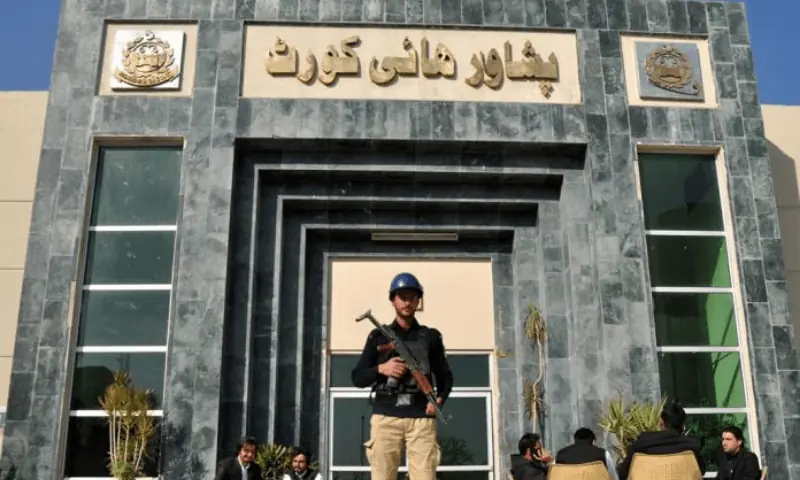

PESHAWAR: Peshawar High Court has declared the imposition of provincial excise duty on unmanufactured tobacco by the Khyber Pakhtunkhwa government as unconstitutional.
A bench consisting of Justice Syed Arshad Ali and Justice Dr Khurshid Iqbal accepted multiple petitions filed by some leading tobacco companies and ruled that relevant provision of KP Finance Act, 2024, was in conflict with the Constitution, therefore invalid.
The identical petitions were filed by M/S Pak Hills Threshing and Re-dying, Pakistan Tobacco Company and several other companies, challenging the law -- Provincial Excise Duty (Un-manufactured Tobacco) Act, 2024, which was incorporated through Finance Act, 2024.
The petitioners had challenged imposition of provincial excise duty at a rate of Rs50 per kilogram on un-manufactured tobacco by the provincial government. They had requested the court to declare as unconstitutional the relevant sections of Khyber Pakhtunkhwa Finance Act, 2024, through which the impugned law had been enacted for imposition of provincial excise duty on un-manufactured tobacco.
Finance Act in conflict with Constitution, court rules
They requested the court to declare that provincial legislature couldn’t legislate any item incorporated in Federal Legislative List of Fourth Schedule to the Constitution of Pakistan after the omission of the concurrent list therein.
They sought declaration of court that export of tobacco or local supply of excisable tobacco was a federal subject and already subjected to federal excise duty (FED) on unmanufactured tobacco levied by the federal legislature and provincial assembly/provincial government couldn’t control, administer and levy provincial excise duty (PED) on unmanufactured tobacco.
Several lawyers including Ishtiaq Ahmad, Barrister Ibrahim Khan Afridi, Lawangeen Khan, Isaac Ali Qazi and Babar Yousafzai etc appeared for the petitioners and contended that the levy of a provincial excise duty on unmanufactured tobacco was ultra-vires to the Constitution of Pakistan, since Article 141 was crystal clear on the domain granted to parliament and provincial assemblies in making laws applicable within their jurisdiction.
They stated that the main material being processed by the petitioners was tobacco, which was subjected to FED as per rate prescribed in First Schedule to Federal Excise Act, 2005. They added that Federal Excise Act (FEA) was administered by FBR being a revenue division of federal government.
They contended that the impugned law was not only in contrast to the provisions of the Constitution but also a parallel duty to FED duly legislated by parliament in exercise of its power under entry No.44 of Federal Legislative List of the Constitution.
They argued that “duties of excise” fell exclusively within the legislative competence of parliament under Entry No.44 of Federal Legislative List; therefore, it was an encroachment by KP Assembly into the domain of federation by imposing excise duty on tobacco.
They said that through the Constitution (Eighteenth Amendment) Act, the concurrent legislative list had been omitted from the Constitution and parliament had exclusive jurisdiction to legislate on matters appearing in Federal Legislative List.
The KP government representatives contested the plea by defending the law, stating that the Act had been enacted lawfully and was not in derogation of constitutional directives.
They contended that the Constitution didn’t bar provincial assemblies from imposing excise duties on certain items, such as tobacco for the instant case.
Published in Dawn, October 24th, 2025



























