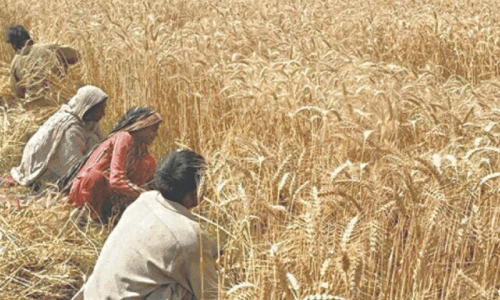
Farmers win wheat price hike, ask for more
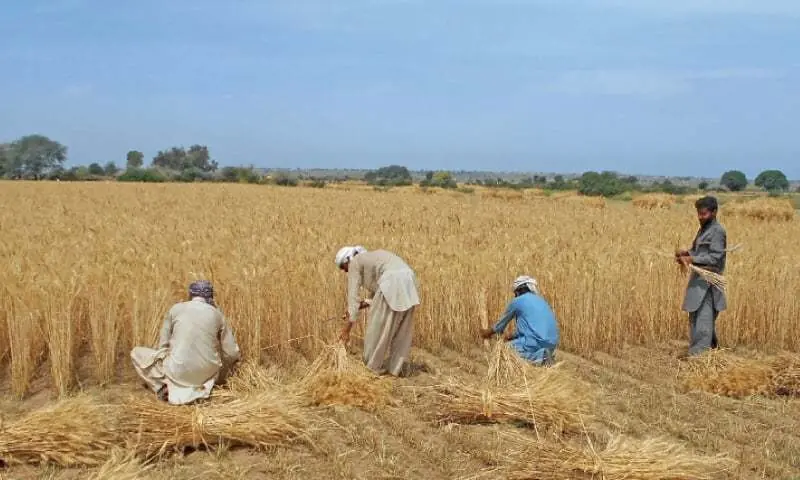

LAHORE: The government has been compelled to increase the minimum support price (MSP) for wheat to Rs3,500 per maund, a decision that the Pakistan Kissan Rabita Committee (PKRC) has hailed as a direct result of continuous farmers’ agitation and public pressure.
PKRC General Secretary Farooq Tariq said that the announcement was a clear indication that when farmers unite and run an organised movement, the government is forced to concede.
Despite the increase, the PKRC maintained that the new price remained insufficient. Their core demand was that the MSP be set at a minimum of Rs4,000 per maund to cover the escalating production costs and ensure that farmers earned a reasonable profit.
Mr Tariq criticised the government’s previous “anti-farmer policy,” which he claimed was adopted last year under instructions from the International Monetary Fund (IMF).
He noted that keeping the support price low, despite rising input costs — including fertiliser, seeds, diesel, and agricultural labour — inflicted severe losses on farmers. This led to a 9 per cent reduction in wheat cultivation this year, a dangerous sign for the nation’s food security, he added.
“The delay and apathy in determining the MSP is an admission of the failure of IMF-driven agricultural policies,” Tariq asserted. He warned that when agriculture is subjected to the logic of the market and profit, the heaviest burden falls on small and medium-sized farmers, who are already struggling with debt, inflation, and climate disasters.
The PKRC also demanded that the Sindh government immediately set the MSP for paddy (rice) at Rs4,000 per maund to protect millions of farmers in southern Punjab and Sindh from exploitation.
While welcoming the government’s move, Tariq called it a temporary win that must be seen as only the first step towards fundamental agricultural policy reform. He described the decision as an “acknowledgement of the government’s policy defeat,” realising that further ignoring farmers’ demands would only deepen the food crisis.
The PKRC also welcomed the government’s concurrent announcement to lift all restrictions on the inter-provincial movement of wheat, calling it a positive development and an admission that previous restrictions and hoarding measures had failed politically.
Published in Dawn, October 22nd, 2025