Germany’s Merz vows to take on ascendant far-right AfD
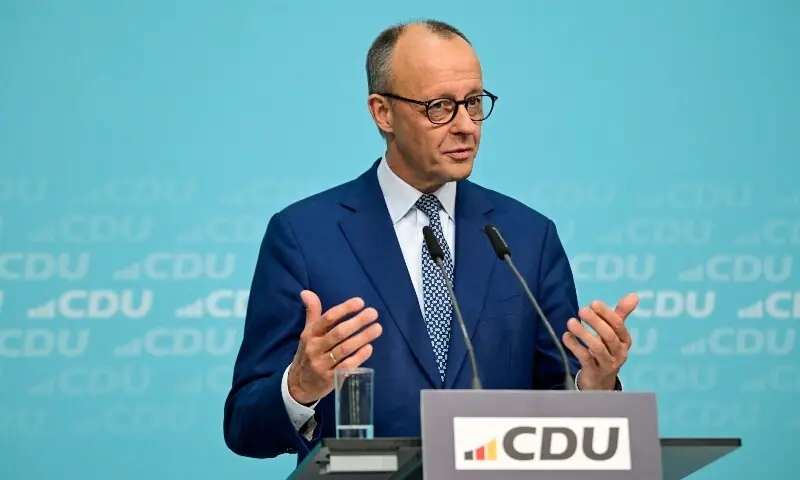
German Chancellor Friedrich Merz vowed on Monday to take on the far-right Alternative for Germany (AfD) ahead of five state elections next year as the party surges in the polls.
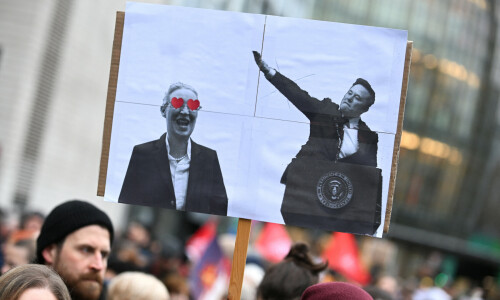
Alarm is growing in Germany over the rise of the anti-EU, anti-immigration AfD, which many see as a threat to the established democratic order.
The party scored a record 20.8 per cent in a general election in February and its ratings have since continued to rise, with many surveys now putting it as the biggest party.
Merz said the AfD would be the “main opponent” of his conservative CDU/CSU alliance at state elections in Saxony-Anhalt, Mecklenburg-Western Pomerania, Baden-Wuerttemberg, Rhineland-Palatinate and Berlin in 2026.
“We will now also be very clear and very explicit about where the AfD stands in terms of content, and we will distance ourselves from them very clearly and explicitly,” he said after a party conference in Berlin.
In the two former East German states of Saxony-Anhalt and Mecklenburg-Western Pomerania, the AfD is currently projected to win by a clear margin.
This has led some regional CDU officials to call for the party to drop its opposition to political alliances with the far right.
But Merz insisted that his party would not collaborate with the AfD, some of whose branches have been declared right-wing extremist by German intelligence services.
“This party has declared its intention to destroy the CDU. It wants a different country,” Merz said.
“It is not just details that separate us. We are separated from the AfD by fundamental issues and fundamental political convictions.”
Firewall
Referring to offers of collaboration from the party, Merz said “the hand that the AfD repeatedly extends is in reality a hand that wants to destroy us”.
The AfD last year became the first far-right party to win a regional election in Germany since the Nazis, in the eastern state of Thuringia.
One survey for the Bild newspaper on Sunday put the AfD at 27pc of voting intentions at the national level, ahead of Merz’s CDU/CSU at 25pc.
Germany’s mainstream political parties have long maintained a “firewall” against cooperation with the AfD.
But Alice Weidel, co-leader of the AfD, accused Merz and his colleagues of building a wall around their own party.
“With this policy, he is not only damaging the future of the CDU/CSU, but also recklessly ruining the foundation of our economy,” she said in a statement.
“While Chancellor Merz is waging a personal campaign against the AfD, the AfD is fighting for the good of Germany,” she said.
Markus Soeder, the leader of the CSU, which represents the conservatives in Bavaria, threw his support behind Merz.
It is “quite clear that the AfD is not just any competitor, but an enemy of the system”, Soeder said.
“Under no circumstances do I want the CDU/CSU to be the stepping stone for the AfD’s rise to power.”
‘Nothing to retract’
In the run-up to February’s general election, Merz promised a tough crackdown on migration in a bid to try to lure back AfD voters.
He even controversially accepted votes from the AfD to push a motion through parliament attacking the migration policy of the previous government — seen by many as a breach of the “firewall”.
Since coming to power in a coalition with the centre-left SPD, Merz has introduced stricter border controls, tougher residency and citizenship rules and even deported migrants to Taliban-ruled Afghanistan.
The chancellor has come under criticism in recent days for saying that migration is causing a problem with the “image” of some German towns.
But he defended his comments on Monday, saying he had “nothing to retract”.
Merz admitted that not everything had gone smoothly in the first few months of his government.
“Of course we have made mistakes,” he said, admitting that there had been “too many public discussions, which have been interpreted as disputes”.
The parties in the coalition have openly disagreed on several issues, including whether to bring back compulsory military service.