Judges barred from media engagement, political comment


 0
0

• SJC tightens code, bans social, diplomatic functions for superior court judges
• Sets protocol on allegations, places limits on foreign invites
• Reviews 74 complaints; 70 closed, three to proceed
ISLAMABAD: The Supreme Judicial Council (SJC) on Saturday approved far-reaching amendments to the Code of Conduct for superior court judges, barring them from engaging in public controversy or media interaction, particularly on political questions, and introducing new restrictions on social and diplomatic activity.
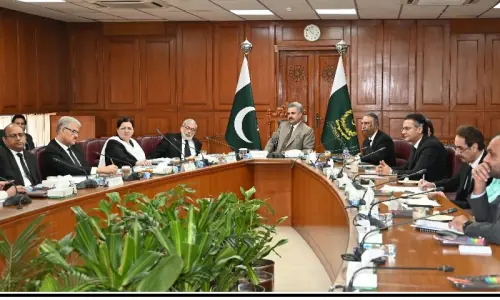
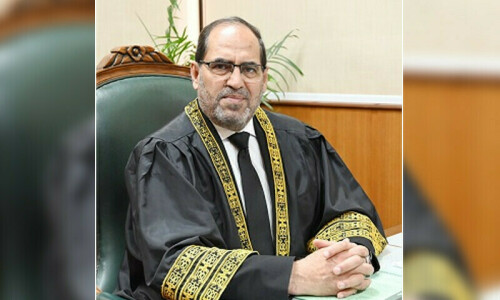
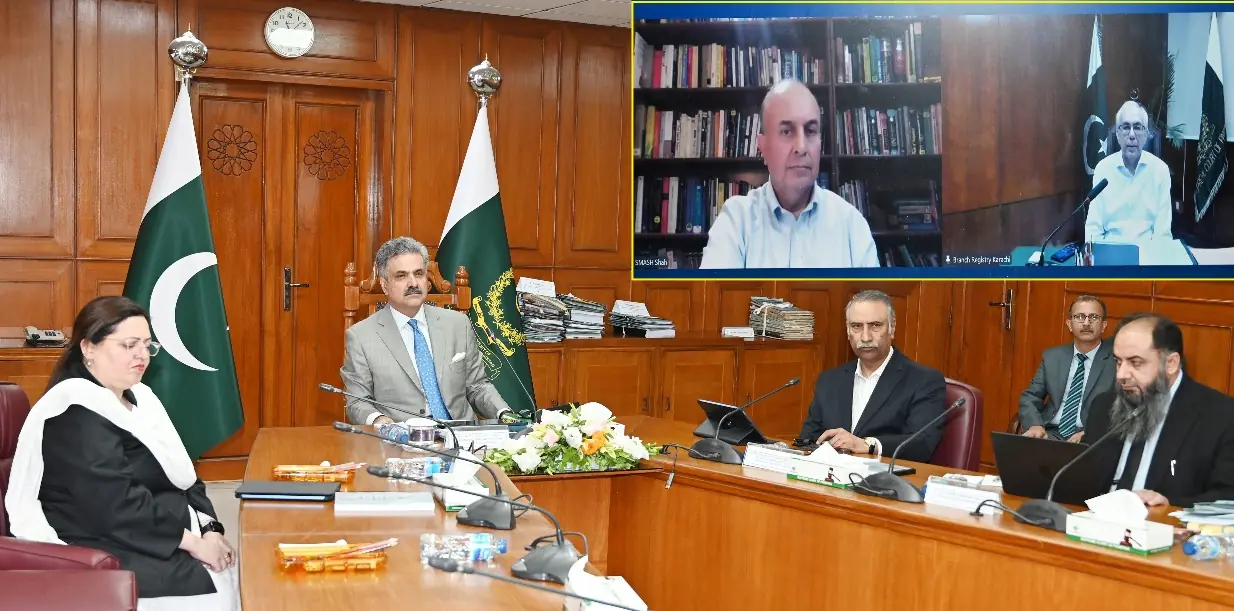
Chaired by Chief Justice of Pakistan (CJP) Yahya Afridi, the meeting was attended virtually by Justices Syed Mansoor Ali Shah and Munib Akhtar, while Lahore High Court Chief Justice Aalia Neelum and Justice Sardar Muhammad Sarfraz Dogar attended in person.
Under a substituted Article V, judges are prohibited from speaking, writing, debating or commenting publicly on controversial matters and on political questions, even where questions of law arise.
Judges are not to interact with the media, especially on issues liable to spark public debate or undermine institutional collegiality and discipline.
Where allegations are made public against a judge, the matter may be placed in writing before a committee comprising the CJP and four senior Supreme Court judges, through the registrar, for an institutional response. Judges may not publicly discuss judicial or administrative matters, nor disclose communications relating to personal or official affairs.
The council, acting on a decision first taken on July 12, deliberated on amendments proposed by the CJP. With some modifications, these were approved by the majority and ordered to be notified in the official gazette, circulated to all superior court judges and posted on the Supreme Court’s website.
The previous 2009 code had required judges to avoid publicity and political controversy, but did not contain the new media-interaction bar or response mechanism.
A new Article XII directs judges to abstain from presiding over or attending social, cultural and diplomatic functions.
Article XIII treats the soliciting of conference or meeting invitations from foreign or international bodies as misconduct; any such invitations received personally must be routed via the relevant chief justice. Article XIV bars judges from accepting dinners or receptions hosted in their honour by individual members of the bar.
Article XV says that judges must decide cases on merit alone, possess the moral integrity and intellectual capacity to resist internal or external influence, and, where legal powers are lacking, seek an immediate institutional response.
Judges must promptly inform, in writing, the CJP and the four most senior Supreme Court judges (via the registrar) of any such attempts; high court judges must also inform their respective chief justices.
High court chief justices are to place such reports before a three-judge committee within two days, with a decision due within a fortnight.
Matters sent for judicial determination are to be decided as early as possible by adhering to the principles of fair trial and due process. If a high court chief justice or committee fails to act within time, the CJP, with four senior Supreme Court judges, will take up the matter.
The code, originally framed by the SJC in 1962 and amended up to Oct 18, 2025, under Article 209 of the Constitution, is binding on all superior court judges.
Articles I to IV and VI to XI — covering personal conduct, recusals, financial dealings, extra-judicial roles, gifts, collegiality, timely judgements and fidelity to the constitutional oath — remain in place.
SJC on misconduct
Meanwhile, the SJC examined 67 complaints under Article 209 filed by different individuals, of which 65 were unanimously closed, one was deferred, and one was ordered to be processed further by the majority.
The council was later reconstituted under Article 209(3b) with the inclusion of Peshawar High Court Chief Justice S.M. Attique Shah joining, after the Islamabad High Court chief justice expressed an inability to attend for certain agenda items.
The reconstituted council reviewed seven more complaints, closing five unanimously and deciding by majority to proceed further on two.
According to an informed source, the SJC deferred the complaint against Justice Tariq Mahmood Jahangiri until Nov 20 and issued notice to another judge of the Islamabad High Court over allegations of delayed judgement.
After decisions on the 74 complaints taken up at Saturday’s sitting, 87 cases remain pending initial consideration. The SJC has dealt with 155 matters since October 2024.
Published in Dawn, October 19th, 2025