AKU conference declares raising children a societal imperative


 0
0
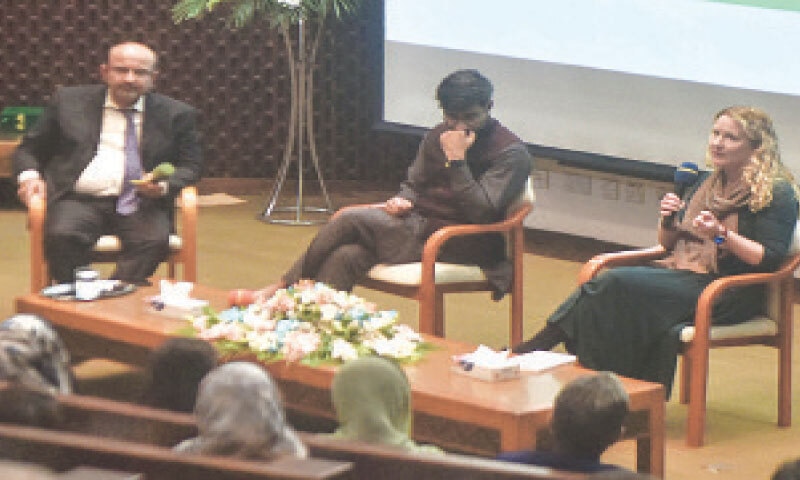

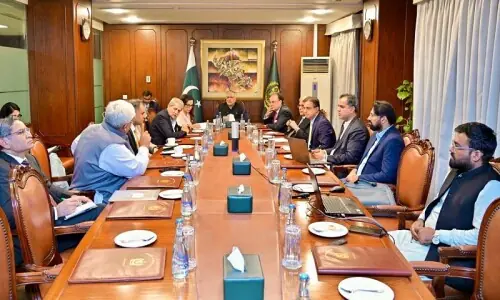
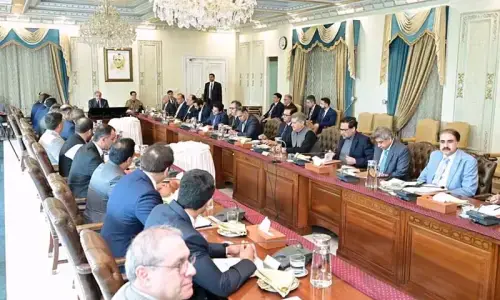
KARACHI: A critical global conversation on safeguarding and shaping the future of the next generation began on Wednesday as the 13th International Conference on ‘Raising Children in Our Times’ opened in Karachi.
The event is hosted by the Aga Khan University’s Institute for Educational Development (IED).
Speaking as the chief guest, Sindh Education Minister Syed Sardar Ali Shah declared the proper raising of children to be the “fundamental challenge of our era”.
He asserted that the future is built not in parliaments or factories, but in the “nurturing, protected, and enlightened spaces we create for our children today”.
Education minister says children should embrace modernity while staying connected with their cultural heritage, values
He said that he personally considers the topic of raising children a matter of great responsibility. “I have always supported the notion that it takes a village to raise a child,” he remarked, emphasising that in today’s complex times, every individual — both within and beyond this gathering—shares the responsibility of nurturing and guiding children.
As the education minister, he stressed that children must remain connected to their values and cultural heritage while also embracing modernity, technology and change with open minds.
He further stated that in order to raise enlightened children, it is essential to empower enlightened teachers.
Highlighting a key reform, he mentioned that the concept of a teaching licence has been introduced in Sindh, which will help professionalise the teaching field.
In his speech, IED Dean Dr Farid Panjwani noted: “We often put the onus of raising kids solely on parents, as if it was a private and individualistic responsibility. This also makes us ask ‘what kind of world are we raising our children in?’ Where is the responsibility of the media, corporations and the state?”
He hoped that the discussions in the conference will help reclaim the idea that raising children is a social act.
Keynote speaker Dr Lynne Wolbert, Associate Professor, Vrije University Amsterdam, captured this ethical dilemma by questioning how humans, having contributed to so many of the world’s problems, can justifiably aim to raise flourishing individuals, said a press release issued after the event.
Day one moved quickly to address these on-ground challenges.
‘Underpaid teachers’
A thought-provoking panel discussion on ‘Raising resilient learners in a digital and divided world’ brought together experts like Haroon Yasin, CEO of Taleemabad, and Bronwen McGrath, global programme manager at the Aga Khan Foundation, to explore concrete ways education systems and families can nurture resilience, empathy, and critical thinking. Speaking on the occasion, Mr Yasin said that although salaries in government schools had improved over the years, many teachers in low-fee private schools were still underpaid. Most of them were women who had few other job options. He said this lack of recognition had lowered the social value of the teaching profession.
“Low-fee private schools in the country have been exploiting young women. These are primarily women whom parents don’t allow working in other fields,” he said and added that people don’t appreciate when someone says they want to be a teacher.
He also mentioned examples of programmes that help raise teacher morale, such as Asaatza-i-Mohtaram, a medal to honour dedicated teachers. According to him, being publicly recognised gives teachers pride and confidence in their work.
He also said that many teachers across the country were under pressure because of a heavy curriculum and administrative load. “Sometimes less is better. This is what I tell the policymakers in the education system.”
Dr Bronwen Magrath spoke about the need for teachers to have more freedom to make decisions in their classrooms. She said that teaching was not only about delivering the curriculum but also about understanding and responding to students’ needs.
The Aga Khan Foundation, she said, was working with AKU-IED to promote teacher development based on empathy, care and reflection instead of rote methods.
Following this, the panel ‘Beyond survival: shaping safe and supportive spaces for the modern child’ addressed disability inclusion and supportive environments, featuring panellists including Omair Ahmed, CEO of NOWPDP, and renowned educationist Dr Mehmood Mughal, Dr Nargis Asad, interim Chair Department of Psychiatry and Dr Fozia Parveen, Environmental Scientist at AKU.
Published in Dawn, October 16th, 2025