0
0

THE scale of havoc wreaked by the dual crises of high inflation and stuttering growth, especially since 2021, is gradually taking on clear, quantitative form. The implications these crises pose for the country’s social development trajectory are alarming. This was confirmed by the results of the Pakistan Panel Household Survey (PPHS), conducted by the Pakistan Institute of Development Economics and released late last week.
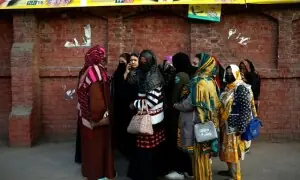
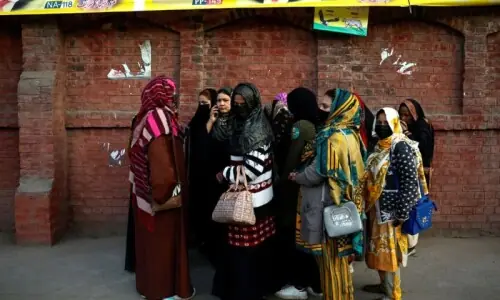
The headline findings make for regrettable reading. Food insecurity remains rampant, with up to 30 per cent of households reporting an inability to afford three meals a day. Nearly 20pc report constraints on fulfilling food-related desirability. This is quite alarming for a country where agriculture continues to provide the largest share of total employment, and where vast swathes of productive activity remain tied to agrarian output.
Closely associated with this issue is that of stunting and malnutrition, which remain stubbornly persistent over a 15-year period. While child stunting has declined by 17pc compared to 2010, the current rate — at 43pc — remains extremely high. The biophysical growth challenge is perhaps one of the most primal social development issues, and Pakistan’s track record in tackling it remains very poor on this front.
In recent research work carried out on the issue of nutrition and water quality in Lahore, this challenge has become a lot more apparent along the lines of socioeconomic inequality. Children born in higher-income areas just a few hundred metres away from dense, low-income settlements now have categorically different biological growth patterns.
Food insecurity remains rampant, with up to 30pc of households reporting an inability to afford three meals a day.
Researchers have also long documented the impact that early childhood nutrition and health challenges pose to cognitive ability and long-term learning. Some of this comes out in the PPHS results as well. Reportedly, 34pc of Grade 3-8 students still cannot solve Grade 2-level division problems. Compounded with stubbornly high dropout/out-of-school children rates, the socioeconomic landscape will show even further divergence in group inequality and the trajectory of life chances.
The trajectory operates in this manner: Poorer households, unable to afford basic nutrition and clean water, are likely to have children who will face cognitive impairments; will be less likely to afford remedial interventions; and will be more likely to have their children drop out of school at higher rates. Resultantly, these children’s ability to secure better-paid outcomes in the labour market during adulthood will suffer. In the meantime, children born to better-off parents will be able to avoid all of these issues, and will become part of the labour pool with education credentials that command a higher wage.
These patterns, already at work for quite some time, are likely to become more visible in the data, as the economy undergoes a structural transformation away from household-associated farm work, and towards waged employment in urban areas. This transformation comes with greater rewards for those who can demonstrate the right type of training/skill/credential, and penalises those who can’t. While the actual numbers haven’t been shared yet, the results announcement shows that occupational mobility has stagnated, ie, the number of people switching from blue-collar jobs to white-collar ones has not increased in any meaningful way.
Overall, the decline in the poverty rate — from 36pc to around 30pc — over a 15-year period is not very encouraging. While urban poverty has reduced more rapidly, rural poverty remains stubbornly high at 37.5pc. PPHS analysis also suggests that the inflationary episodes of the last 15 years, with the most severe one taking place between 2021 and 2024, have arrested the decline of poverty by an additional 7pc. That alone would be worth another 18 million people who might have been able to meet their basic needs had macroeconomic conditions not taken frequent turns for the worse.
There are some glimmers of progress in the results, mostly related to specific health indicators. Access to antenatal care, safe childbirth facilities and vaccinations have improved significantly. This is reflected in the decline in maternal and infant mortality rates, though the numbers are still fairly high.
A key question this poses is what is driving these improvements? At the provincial level, other survey data from Punjab at least have shown similar progress since 2007. Can this be attributed to government interventions in any way?
There is no doubt that the Lady Health Worker programme has played a role in bridging delivery and information gaps, especially in underserved communities. Similarly, the expansion of the Basic Health Unit infrastructure, provision of medicine, and even health insurance schemes have likely played a part as well. Provincial governments in all regions have generally prioritised health sector expenditure in various ways.
What requires further evaluation, though, is the extent to which the government can claim credit for improvements in indicators, and the extent to which these gains can be attributed to a burgeoning private healthcare market.
Either way, the lessons from the health sector will be instructive. The private sector’s role may be important, but ultimately paid access to a service excludes those who cannot pay. This means the public sector must step in to cater to the needs of those who fall at the bottom of the income distribution.
At the level of governance, I am reminded of a recent comment made by Dr Faisal Bari on how the public sector always falls short in areas where coordination of human agency is required. Failures in education outcomes are the clearest example of this, given how it involves managing human resources of teachers, supervisors, parents, children and the wider community to both increase enrolment and improve learning.
If we take effective coordination of multiple actors for a defined goal (reducing malnutrition, improving learning, etc) to be the central problem facing Pakistan, then we need to rethink of how the state is run, and where decisions are being made.
The writer teaches sociology at Lums.
X: @umairjav
Published in Dawn, October 13th, 2025