Reliable electricity is central to growth, prosperity and living standards. Yet Pakistan’s power sector remains a story of unfinished progress.
Nearly 25 per cent of Pakistan’s population still lack reliable power, highlighting that access must be defined by service quality, reliability and affordability, not mere connections, according to analysis based on the World Bank’s Pakistan Energy Access Survey 2024 and the Least-Cost Electrification Strategy 2024 study.
The unequal map of access
Despite Pakistan’s near-universal electrification rate on paper, with 98pc of households technically “connected”, the lived reality is far more sobering. For most families, connection does not mean reliable power.
The Pakistan Energy Access Survey 2024 finds that nearly four in five households receive only a few hours of supply each day. Just 3pc what could truly be called a reliable supply. At the other end, 7pc of the population remain virtually in the dark, surviving on less than four hours of power and relying on kerosene lamps, candles, or firewood.
The Pakistan Energy Access Survey 2024 finds that nearly four in five households receive only a few hours of supply each day
Provincial gaps are striking. Punjab, with 98pc coverage, looks strong at first glance, but rural villages still report long outages. In Sindh, the headline figure of 78pc access drops sharply to 68pc if Karachi is excluded. Khyber Pakhtunkhwa stands at 81pc, though many remote households rely on fragile micro-hydro or solar setups. Balochistan fares worst: barely half its households are connected, and one in five have no electricity at all.
On service quality, the picture is even more sobering. In Sindh and Balochistan, over 30pc of households sit at the bottom of the energy ladder, either cut off entirely or surviving on a trickle of supply. Even in Punjab and KP, where coverage is higher, only about one in 100 households enjoys a reliable service that meets modern needs.
This inequality in energy access is further worsened by the shadow economy of electricity. Nearly one in 10 households nationwide use informal connections, some bribing linemen, others simply tapping the grid without paying. In Sindh, these illegal hookups are rampant, used by a third of all households and nearly half outside Karachi. Where informality prevails, blackouts last nearly three times longer, up to 17 hours a day, compared to about six hours in paying communities.
The takeaway is clear: Pakistan’s power challenge is no longer about extending wires, but about ensuring that when families flip a switch, the light actually stays on, affordably, safely, and reliably. Until then, millions will remain “connected” only on paper, but still in the dark.
The cost of inequality
The cost of energy inequality is severe. Pakistani households spend over $2.3 billion annually on candles, kerosene, diesel and other substitutes, while power instability drains 7pc of GDP. Weak governance and inefficiencies have eroded grid reliability, pushing industries into costly self-generation and suppressing demand.
Small and medium firms face outages, high tariffs and poor voltage; in rural areas, businesses, schools and clinics are constrained, and unsafe fuels remain widespread. The result is a system failing both households and industry, undermining growth and inclusion alike.
A roadmap to 100pc electrification by 2030
The World Bank estimates that Pakistan can achieve universal electricity access by 2030, provided it invests approximately $13bn over the next few years. That sounds like a big number, yet it is roughly what the country spends on electricity subsidies and circular debt.
The roadmap breaks down the most cost-effective ways to nationwide electrification. For more than half of new connections, the cheapest option is to simply densify the existing grid, extending wires and strengthening supply in areas already connected. Another quarter will require stretching the grid outward to reach far-flung villages.
For about one in five new households, the most affordable solution will be solar mini-grids — small, local networks that can power entire villages at lower cost than waiting for the main grid to arrive. The World Bank’s mapping found over 1,000 villages where mini-grids are the cheapest solution, and in most of them, they will remain the best option even a decade from now. For the most remote households, standalone solar home systems will be the only viable lifeline.
The real challenge is execution. Circular debt has crossed Rs2.3 trillion, investment is squeezed, and losses in some distribution companies (Discos) exceed 37pc (against a 17pc national average), fueling unaffordable tariffs and eroding trust.
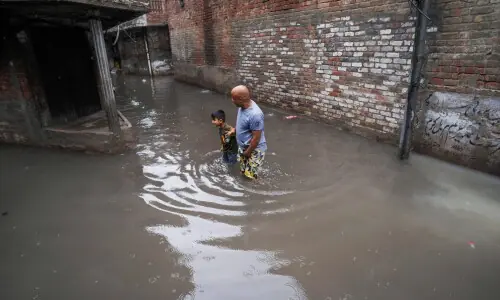
Affordability is already stretched — over 30pc of households spend more than 10pc of income on electricity, worsened by fuel price hikes and tariff adjustments. Yet licensing for decentralised systems is slow, tariff frameworks are unclear, and concessional finance is scarce, deterring private capital. Climate risks compound the strain, with floods and extreme heat repeatedly damaging fragile infrastructure. Without flood-proof substations, hybrid solar-storage, and diversified generation, any gains risk unravelling.
Policy pathway forward
Policy coherence across energy, finance, planning, and climate must align electrification with budgets and resilience. Public–private partnerships demand clear regulation, streamlined licensing, and risk-sharing tools. Tariffs should be cost-reflective yet socially fair, enabling mini- and off-grid operators to grow.
Subsidies must shift from blanket slabs to vulnerability-based targeting, protecting the poor while restoring industrial competitiveness. Grid reform is urgent — smart metering, automated billing, professionalised management and performance-based contracts in high-loss Discos can reduce theft and rebuild trust.
Financing must diversify through blended credit and bundled tenders to mobilise private capital for rural electrification. Above all, climate adaptation must be mainstreamed with flood-proofed networks, hybrid solar-storage in fragile areas, and locally tailored technologies.
Saadia Qayyum is a strategy consultant and former energy specialist for the World Bank, and Shafqat Hussain Memon is an academic and researcher in energy based in Jamshoro
Published in Dawn, The Business and Finance Weekly, October 13th, 2025