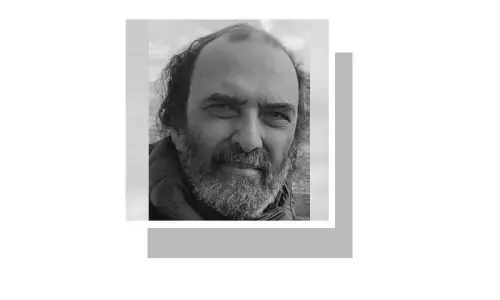
ISLAMABAD: Justice Sardar Ejaz Ishaq Khan of the Islamabad High Court (IHC) has likened the recent approval of the High Court Establishment (Appointment and Conditions of Service) Rules-2025 to the functioning of artificial intelligence (AI), lamenting that the rules were adopted without due discussion or deliberation as if they were “programmed” to do so.
In a strongly worded letter addressed to Chief Justice Sardar Mohammad Sarfraz Dogar, Justice Ejaz criticised what he described as the “mechanical” adoption of the rules, warning that such conduct undermines judicial independence and ethical decision-making.
Drawing an analogy with AI systems, the judge wrote that artificial intelligence operates on pre-fed data and programmed inputs, devoid of human morality or ethical discretion, and warned that the judiciary must not emulate such behaviour. “AI is programmable and acts according to what is fed into it,” he observed, adding that judges, unlike machines, are guided by conscience, reasoning, and ethical responsibility.
Justice Ejaz’s remarks came amid visible division in the IHC after the rules were passed by a narrow margin — with six judges supporting and five opposing them. The dissenting judges — Justice Mohsin Akhtar Kayani, Justice Tariq Mehmood Jahangiri, Justice Babar Sattar, Justice Sardar Ejaz Ishaq Khan, and Justice Saman Rafat Imtiaz — have finalised their dissenting notes, terming the approval process ‘hasty’ and ‘devoid of consultation’.
The newly framed rules significantly enhance the powers of the chief justice, allowing him to nominate any judge to the administration committee, while removing the senior puisne judge’s automatic inclusion as a member — a change that, according to critics, centralises authority within the office of the chief justice.
A day before the full court meeting, Justices Babar Sattar and Ejaz Ishaq Khan had circulated a letter among colleagues, alleging that administrative powers were being misused to ‘sideline dissenting judges’. They also objected to the limited time given to review the voluminous 600-page draft, calling the approval process a ‘mere formality’.
Justice Ejaz also took exception to the gazetting of the Practice and Procedure Rules (PPR) without full court approval, asserting that such unilateral moves violated the spirit of institutional consultation.
An IHC official, however, rejected these claims, insisting that all judges had been involved in the rule-making process since 2019 and that their input had been sought in line with the committee formed by then Chief Justice Athar Minallah.
The official maintained that only minor changes were made before final approval.
Justice Ejaz’s AI analogy underscored his broader concern about the erosion of human judgment in institutional decision-making. He cautioned that just as AI acts on pre-fed data without moral reasoning, judicial decisions made without debate or introspection risk becoming ethically hollow.
Published in Dawn, October 7th, 2025