0
0

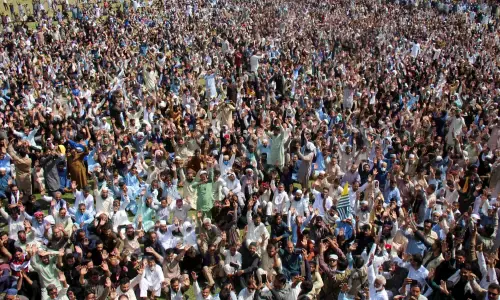
SWAT: A jirga held in Kalam here on Monday deplored the decades of neglect, exploitation, and exclusion in the Swat-Kohistan region, and demanded provision of basic facilities to the residents.
Aman Jirga Kalam organised the meeting, which was attended by elders, activists and representatives from Bahrain, Madyan, Kalam, and surrounding valleys, bringing together the Torwali, Gawri, Gujari, Ushoj, Khowar, and Pashto-speaking people, who have coexisted in the region for centuries.
Prominent among the speakers were MNA Dr Amjad Ali, Zubair Torwali, Habibullah Saqib, Malak Amir Said, Malak Mohammad Iqbal, Mumtaz Gujar, Raja Mumtaz, Malak Nawazish Ali, Malak Bakht Biland, Ghulam Ali, Rahmat Din Siddiqui, Aqil Zada, Malak Asif Shehzad and others.
In a declaration issued at the conclusion of the jirga, the participants said Swat-Kohistan, which makes up nearly 60 per cent of the Swat district, was rich in forests, water, minerals, and biodiversity, yet it remained deprived of basic administrative, educational, and health facilities.
Demands provision of basic administrative, educational and health facilities
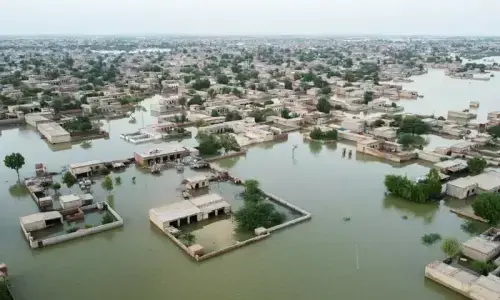
Despite its immense contribution to the province and the country, the region continues to suffer from poor infrastructure, unplanned development, and environmental degradation caused by deforestation, reckless tourism, and extractive hydropower projects imposed without community consent, they lamented.
The jirga demanded that the district headquarters of the newly-created Upper Swat should be established in Bahrain, Madyan, or Bagh Dherai for ease of access, and that key government offices be set up locally to save residents from long and costly travel for basic administrative services.
The participants also demanded the establishment of a University of Swat campus in Kalam, functional high schools in every union council, and separate educational institutions for girls to ensure gender equality.
The speakers expressed strong opposition to hydropower projects initiated without the consent or benefit of local communities, citing the 14-month-long resistance by the Torwali community against the Madyan hydropower project as an example of their determination to defend their rights. They demanded equitable revenue-sharing, priority employment for locals, and transparent environmental assessments for all future projects.
They demanded restoration of community ownership of forests and the creation of forest protection committees. The participants criticised the government’s tourism policies, particularly imposition of the Section 4 for land acquisition and the establishment of the Upper Swat Development Authority, which they said had dispossessed locals and excluded them from tourism planning and management.
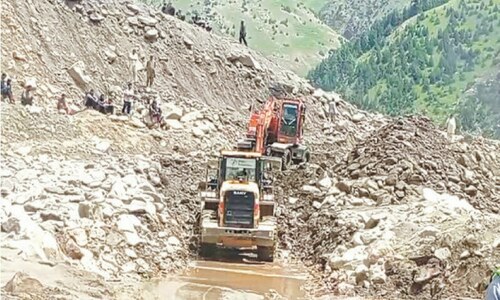
The jirga demanded revision of the Swat River Protection Act, 2014 as its indiscriminate implementation could wipe out entire riverside villages. They demanded the construction of modern hospitals in Bahrain and Kalam, rehabilitation of the long-damaged Bahrain-Kalam Road, and the inclusion of local languages such as Torwali, Gawri, and Gujari in the primary school curriculum.
The participants urged the provincial government to activate the Khyber Pakhtunkhwa Regional Languages Promotion Authority and establish a research institute on Swat’s languages and cultures at the University of Swat.
Published in Dawn, October 7th, 2025