In the breathtaking world of Pandora from James Cameron’s Avatar, the fate of entire civilisations is intertwined with the roots of sacred trees.
The Na’vi people connect to their deity, Eywa, and access the memories of their ancestors by physically linking with the hanging, bioluminescent aerial roots of the “Tree of Souls” and the “Tree of Life.” For the protagonist, Jake Sully, these roots are not just vegetation; they are a divine network that facilitates healing, learning and unity. While this is a work of science fiction, it powerfully mirrors a fascinating and very real botanical phenomenon: root sprawling.
In our world, while roots don’t transmit consciousness, their ability to grow in unexpected places — across the soil surface, over rocks and even through the air — is a critical survival strategy that echoes the adaptive, exploratory nature of Pandora’s flora.
To understand this phenomenon, we must first grasp the basics of root architecture. Most plants develop one of two primary root systems.
Every gardener hopes their plants will set down strong, deep roots. But what happens when they sprawl sideways instead?
The first is the taproot system, characterised by a single, dominant thick root that grows vertically downwards, acting as a deep anchor and a storage tap, with a few off-shoots. Think of a carrot or a dandelion; the main root you pull is the taproot.
The second is the fibrous root system, which consists of a dense, mat-like network of many thin, similarly sized roots that spread horizontally through the topsoil. Grass is a perfect example, and it’s this fibrous structure that is particularly prone to the behaviour called root sprawling.
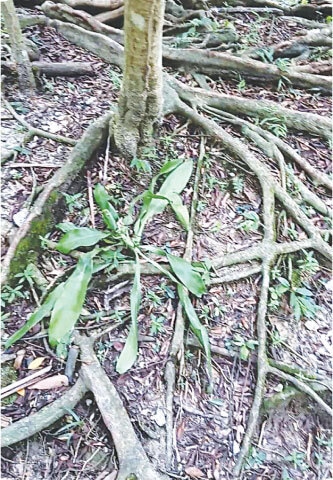
Root sprawling is, in essence, an opportunistic and aggressive form of growth, typically exhibited by fibrous root systems, where roots extend into unlikely spaces and unnatural places to secure vital resources. It is the plant’s response to environmental stress.
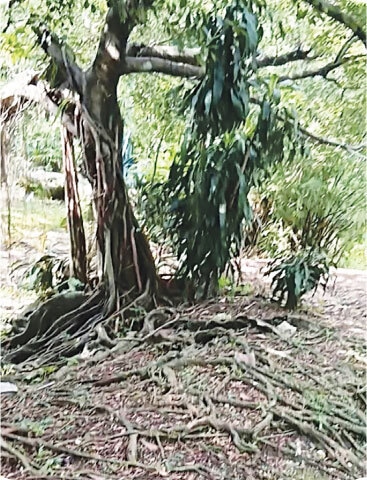
Root sprawling is triggered by deficient sunlight, especially in dense forest settings where bigger trees may block sunlight from getting to smaller trees, forcing the smaller plant’s roots to sprawl horizontally. A lack of water and moisture may also force the roots to spread elsewhere in search for any droplet of water from rain or dew, a common sight during drought.
Similarly, nutrient-poor soil will send roots crawling far and wide to find pockets of fertility to resources to fulfil their plant growth needs during different phases of the plant’s life cycle. Finally, physical restrictions of space, either due to a shallow bedrock, soil compaction or limitations of a container, can prevent the downward growth of roots, and force these roots, “gasping” for oxygen, to sprawl horizontally as the only viable alternative.
This adaptive strategy of root sprawling provides a multitude of benefits to the plant. It ensures the provision of scarce resources by extending the plant’s reach beyond its immediate, impoverished surroundings. Furthermore, plants growing in unstable grounds, such as a swamp or mud, benefit from the increased stability that a wide, sprawling root system provides, distributing weight and preventing the plant from toppling over.
However, when this ancient survival strategy collides with modern urban life, the results can be problematic. In metropolitan settings, the relentless force of growing roots has the potential to become a destructive nuisance. Root sprawling is a leading cause of damage to roads and pavements as well as underground water and sewerage pipes — both plastic and metal — requiring extensive excavations.

Managing root sprawling requires a discerning approach. Simply cutting off the roots is not a viable solution. Removing sprawling roots often leads to severe plant stress, decline or immediate death, as these roots emerged to fulfil dire needs.
Instead, the focus should be on boosting the soil with organic mulch, which improves moisture retention and nutrient levels. Improving the watering schedule also helps decrease the intensity of root sprawling. Choosing the right plant for the right location from the outset remains the single-most critical step to reduce any chances of such a root spread.
Please send your queries and emails to doctree101@hotmail.com. The writer is a physician and a host for the YouTube channel ‘DocTree Gardening’ promoting organic kitchen gardening
Published in Dawn, EOS, October 5th, 2025