Modi’s struggle with geopolitical chess cost him historic UN session
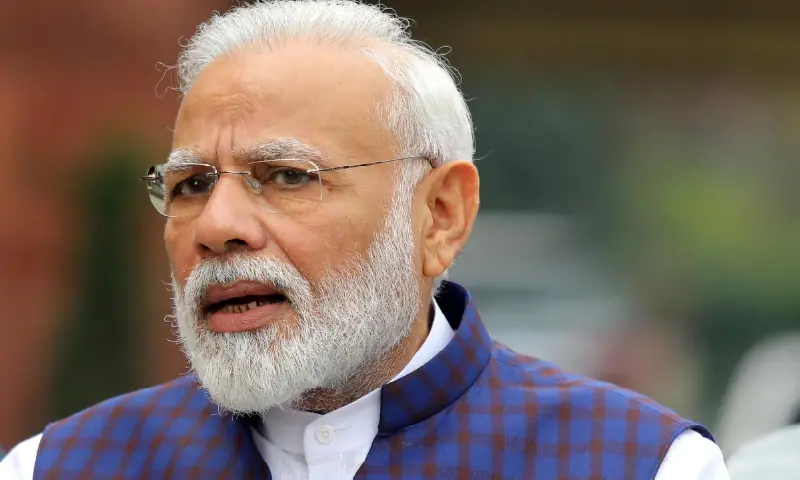
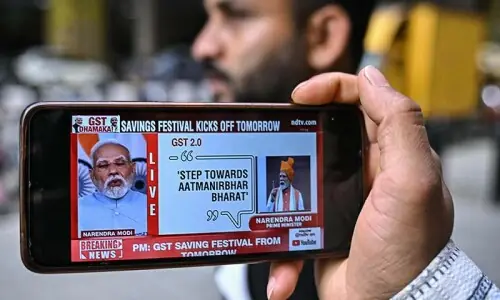
NEW DELHI: Until July this year, Indian Prime Minister Narendra Modi was listed on the UN roster of speakers, and scheduled to address the UN General Assembly on its 80th anniversary.
As it turned out External Affairs Minister S. Jaishankar spoke for India, stressing self-reliance, self-protection and self-confidence as his mantras. Mentioning all three in Sanskrit, Jaishankar insisted on using the name Bharat for India to stay with the fine point about Hindu nationalists.
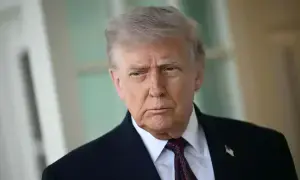
There was no official explanation given for Modi skipping the UN session this year, but clear evidence does indicate that it had to do with US President Donald Trump openly switching his preference from India to Pakistan as a closer friend in South Asia.
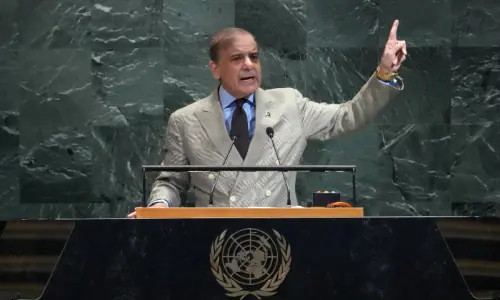
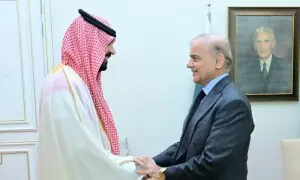
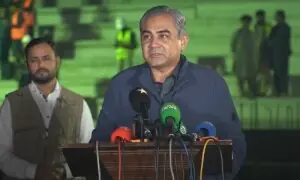
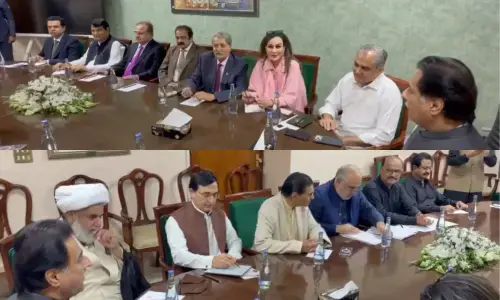
The standard rule of Modi always meeting the US President during his visits to the UN was in jeopardy. It was not necessarily because Trump may have signalled disinterest in such a meeting, but it was more likely the optics of Pakistan’s prime minister and army chief appearing in cosy frames with the US President that was the last straw to deter the Indian PM from the visit.
Modi had, however, shown his preparedness to go around the cloud of tariffs and verbal invectives hurled at him by Trump. India has kept its trade talks open with the US in the hope that the alternative of New Delhi moving closer to Beijing would dawn on US policy makers as an avoidable risk. But this seems to have been overestimated by India.
The Indian prime minister spared no effort to signal the alternative scenario. His meeting with Chinese President Xi Jinping at the SCO summit in Tianjin was not only warm but also effusive. Apart from the formal expression of gratitude for the hospitality, Modi spoke of their meeting in Kazan, saying: “We had very productive discussions, which gave a positive direction to our relations. After the disengagement at the border, an atmosphere of peace and stability is now in place. Our Special Representatives have also reached an agreement on border management. The Kailash Mansarovar Yatra has resumed. Direct flights are also being resumed between the two countries. Our cooperation is linked to the interests of 2.8 billion people of our two countries. This will also pave the way for the welfare of all humanity. We are committed to advancing our relations based on mutual trust, respect, and sensitivity.”
In his speech at the SCO summit, Modi did mention a thorny issue with China but without naming it.
“We believe that every effort towards connectivity must uphold the principles of sovereignty and territorial integrity,” he said.
“This is also enshrined in the core principles of the SCO Charter. Connectivity, that by-passes sovereignty, ultimately loses both trust and meaning.” The reference was clearly to the Karakoram Highway and the Shaksgam Valley that Pakistan ceded to China in 1962 and which India disputes.
Signalling a positive framework for working with China, Modi made a similar pitch with Russian President Vladimir Putin. “India and Russia have always stood shoulder-to-shoulder even in the most difficult situations. Our close cooperation is important not only for the people of both countries, but also for global peace, stability, and prosperity.”
He was looking forward to receiving Putin in New Delhi in December. Those are daring words if Trump is the audience. Modi added another challenge to the mix by mentioning India’s engagement with Iran’s Chabahar Port, which the US frowns on.
The twist in the tale, however, is that Pakistan is invested in flourishing ties with all three countries Modi is interested in, namely the US, Russia and China.
Published in Dawn, September 29th, 2025