DIY roof-mounted coolers in taxis
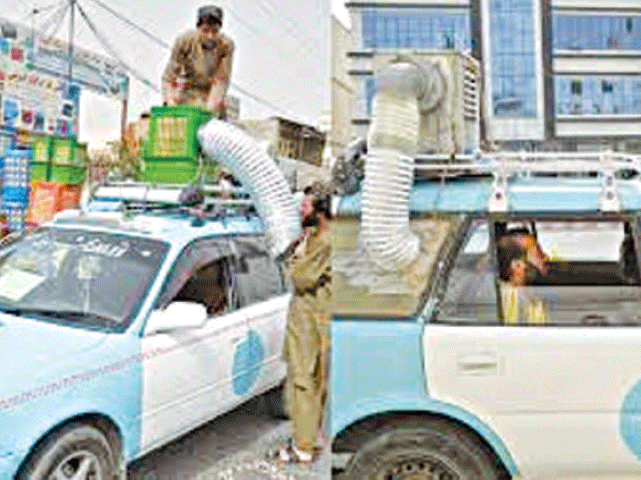
In Kandahar, Afghanistan, many taxi drivers rely on handmade roof-mounted cooling boxes instead of car air conditioners, which often break down and are costly to repair.
The devices work like evaporative coolers, lowering temperatures by up to 12°C using water evaporation.
They are cheaper, quieter and spread cool air throughout the car, though not designed for vehicles.
With summer temperatures topping 40°C, these DIY coolers have become a practical and reliable solution for keeping passengers comfortable.
Nine-volt battery-flavoured tortilla chips, anyone?

A new Dutch snack brand, Rewind, has released tortilla chips that mimic the metallic tang of licking a nine-volt battery — a nostalgic experience for many ’90s kids.
The flavour was created using citric acid, sodium bicarbonate and mineral salts to give a tongue-tingling, metallic taste. Rewind says the chips are completely safe and made with food-grade ingredients.
Inspired by childhood memories, the quirky snack is currently sold only in the Netherlands, but is expected to expand across Europe soon.
Rare Barbary lion cubs born in zoo
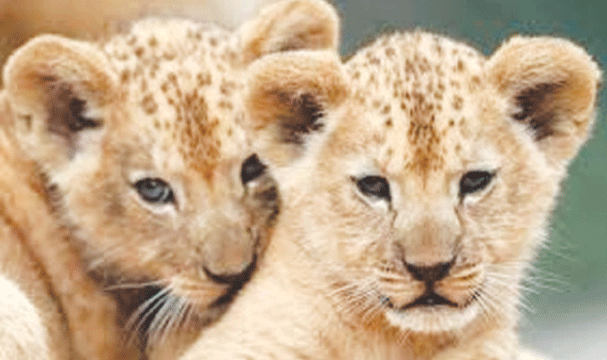
A Czech zoo has announced the birth of four Barbary lion cubs, a rare subspecies extinct in the wild. The three females and one male were born at Dvr Králové Safari Park to lions Khalila and Bart.
The cubs will soon be sent to other zoos, as part of an international programme to preserve the species in captivity. Fewer than 200 Barbary lions are believed to exist in zoos worldwide.
Experts are considering the long-term possibility of reintroducing the lions to their native northern Africa, though it would require major planning, protection measures and support from local communities.
Once roaming the Atlas Mountains, Barbary lions were driven to extinction by hunting, habitat loss and human activity. The last wild lion was killed in 1942, with small populations disappearing by the 1960s.
Aquarium guppies thriving in Kyiv’s sewers
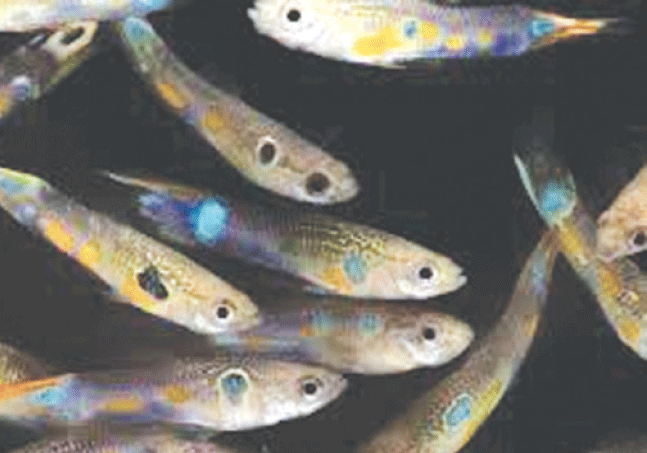
A colony of guppies, small tropical fish native to South America, has been living in Kyiv’s polluted sewer system since the 1980s. Despite the dirty conditions at the Bortnicheskaya treatment plant, the fish have adapted.
Guppies are popular aquarium pets known for their ability to survive in a wide range of environments, but scientists say their success in the sewers shows an extraordinary level of resilience. They prefer the faster-flowing upper canals, where the water is less stagnant, but avoid downstream areas where pollutants settle.
The discovery highlights how some species can thrive even in extreme human-made environments.
Published in Dawn, Young World, September 27th, 2025