0
0

THIS is with reference to the report ‘Riyadh-Islamabad defence becomes a shared concern’ (Sept 18). The signing of the Strategic Mutual Defence Agreement between Pakistan and Saudi Arabia marks a watershed moment in regional security cooperation.
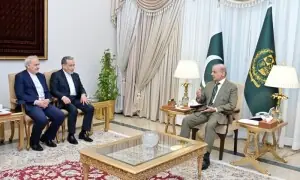
This landmark pact, signed by Prime Minister Shehbaz Sharif and Crown Prince Mohammad Bin Salman (MBS), establishes that any aggression against either nation will be considered an attack on both countries.
This agreement represents far more than a bilateral defence arrangement; it signals the emergence of a new paradigm in terms of solidarity within the Muslim world. The timing is particularly significant, coming at a moment when security challenges demand coordinated responses and collective deterrence mechanisms.
However, for this agreement to achieve its transformative potential, it must transcend symbolic gestures, and translate into concrete action. The success of this initiative will be measured not by the fanfare of its signing, but by its practical implementation and eventual expansion to include other regional partners.
In fact, there are several critical steps that should follow this initial breakthrough. The first and foremost is its expansion and integration. The agreement should serve as a foundation for broader regional security cooperation, potentially incorporating other Gulf states, Turkiye and regional partners into a comprehensive defence framework.
Further, for Pakistan to be an effective security partner, addressing its economic challenges is essential. As such, wealthy oil-rich Muslim nations should consider establishing mechanisms to help alleviate Pakistan’s debt burden, enabling it to focus resources on defence cooperation rather than debt servicing. The pact should also include the larger disaster response cooperation.
Recent flooding across Pakistan has caused rather immense devastation. A joint disaster response fund could demonstrate the practical benefits of this partnership by addressing humanitarian needs.
Besides, the architects of the current agreement should also consider leveraging this cooperation to address crucial and long-standing regional challenges, inclu- ding facilitating dialogue on counter-terrorism cooperation between Pakistan and Afghanistan.
MBS has initiated what has the potential to become a transformative chapter in Muslim world cooperation. The challenge, however, now lies in ensuring that this strategic agreement evolves from a promising beginning into a comprehensive framework for regional security and prosperity.
The Muslim world has long needed such unity of purpose. In this backdrop, this agreement offers hope that practical cooperation can replace rhetorical solidarity, creating lasting benefits for all partici- pating nations and contributing to broader regional peace and stability.
Muhammad Faizan Ali
Karachi
Published in Dawn, September 20th, 2025