0
0

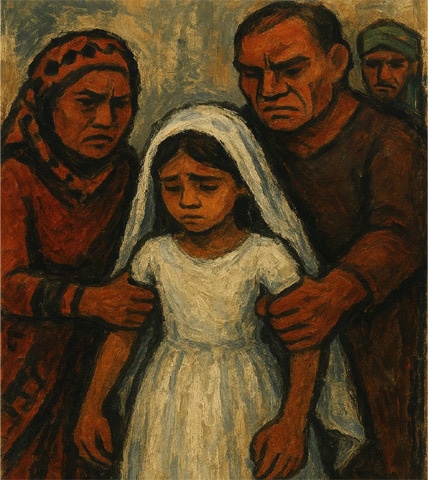
DESPITE having been declared an act of violence under Pakistan’s legal framework, the cruel tradition of Vani continues to be culturally legitimised in many rural, tribal and other regions of Punjab, Khyber Pakhtunkhwa (KP) and Sindh.
According to this centuries-old custom, young girls are forcibly married off to settle disputes between rival tribes or communities, often in the wake of murders or intense family feuds.
In such cases, an innocent girl, frequently a minor, is used as a bargaining tool, offered to the victim’s family as compensation. The practice persists in the same atrocious form under different names: Vani in Punjab, Swara in KP, and Sang Chatti in Sindh.
The victims of Vani endure a lifetime of silent suffering, punished for crimes they never committed. These girls, who are often in their early teens, are forced into hostile households where they are treated as symbols of revenge rather than as daughters-in-law.
Stripped of their childhood, education and freedom, they face constant emotional, physical and psychological abuse. Their voices are silenced, their pain normalised, and their freedom stolen.
In many cases, they are isolated from their own families, left to survive in environments that see them as compensation rather than human beings. For these girls, marriage becomes a lifelong sentence, not a union.
Stronger law enforcement, education and community awareness are vital steps to eradicate this barbaric practice and combat gender-based violence in tribal and rural areas.
Possible change demands both moral courage and the collective will to eliminate practices that are deeply detrimental, and replace them with those that ensure respect and dignity. A society must not sacrifice its daughters for false honour.
Mohammad Nabeel Abid
Lahore
Published in Dawn, September 20th, 2025