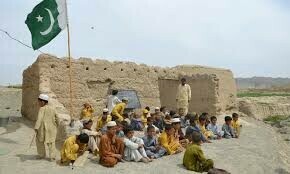
QUETTA: Balochistan is facing its “biggest challenge” from a massive number of out-of-school children and a lack of current data to tackle a serious student dropout rate, Provincial Education Minister Raheela Hameed Khan Durrani said.
The minister speaking at a policy roundtable, said strengthening the capability of policymakers through deep analysis is key to solving the crisis. She said her ministry is committed to reducing the dropout rate, especially for young girls, by using effective new tools.
The roundtable was convened by the Data and Research in Education-Research Consortium (DARE-RC) to synergise its research with Balochistan’s education policies.
“I am grateful to DARE-RC for approaching us and we hope that DARE-RC’s work will help us to achieve this,” Ms Durrani said.
The event brought together representatives from government, academia, and development partners to discuss emerging evidence and integrate research insights into provincial priorities.
Provincial education minister highlights lack of data to tackle the issue
The consortium is a partnership between Oxford Policy Management (OPM), Aga Khan University Institute for Educational Development (AKU-IED), and Sightsavers, with funding from the UK’s Foreign, Commonwealth and Development Office (FCDO).
Throughout the discussions, policymakers and researchers emphasised the critical need to build a practice of data utilisation within the education sector to improve access and quality of learning for all children.
Salim Salamah, an education policy adviser at the British High Commission, said a bridge is needed between research and reform.
“There is a lot of important and interesting research taking place by brilliant Pakistani academics and there are concerned policymakers working to advance critical reforms in the education system especially in the case of out-of-school children,” Mr Salamah said.
Balochistan School Education Department Secretary Asfandyar Khan Kakar said such dialogues are essential to connect government work with academic insights.
“Research isn’t generally encouraged in the public sector and this gap between academia and government needs to be bridged with the help of such dialogues,” Mr Kakar said. “I encourage the promotion of research in our work and the involvement of Balochistan’s local resources in driving change.”
The consortium’s program director, Saima Anwer, said the organisation’s mission is to make academic work more relevant to officials on the ground.
“The spirit of DARE-RC is how to bridge the gap between research and policymaking so that the research being carried out in universities is relevant to the realms of the government,” Ms Anwer said.
Published in Dawn, September 15th, 2025