Over 800 dead as 6.0-magnitude earthquake hits Afghanistan
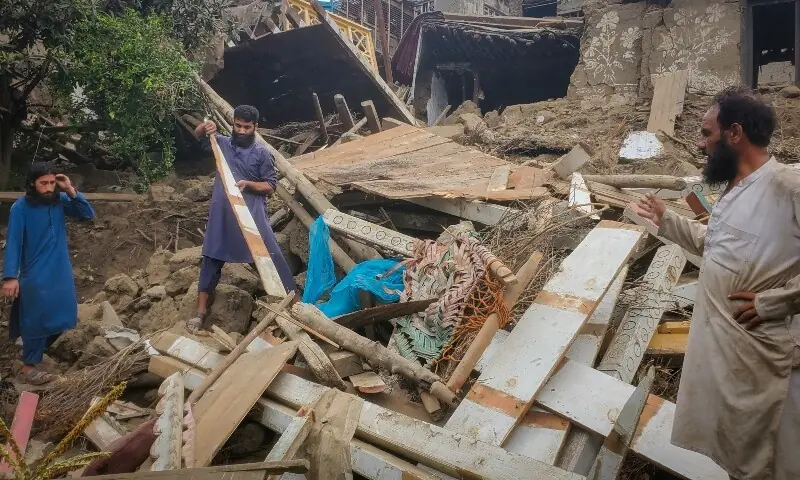


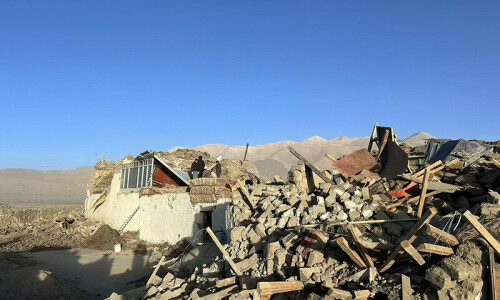
A massive rescue operation was under way in Afghanistan on Monday, after a strong earthquake and multiple aftershocks flattened homes in a remote, mountainous region, killing more than 800 people, the Taliban authorities said.
The quake, which struck at a relatively shallow depth of eight kilometres, was 27 kilometres from the city of Jalalabad in Nangarhar province, according to the US Geological Survey (USGS).
Nangarhar and Kunar provinces border Pakistan, with the Torkham crossing, the site of many waves of Afghan returnees deported or forced to leave, often with no work and nowhere to go.
The earthquake struck just before midnight, shaking buildings from capital Kabul to Islamabad. After the initial quake, a series of at least five aftershocks followed throughout the night, with the strongest being one of magnitude 5.2 just after 4am (2330 GMT on Sunday).
More than 1.2 million people likely felt strong or very strong shaking, according to the USGS.
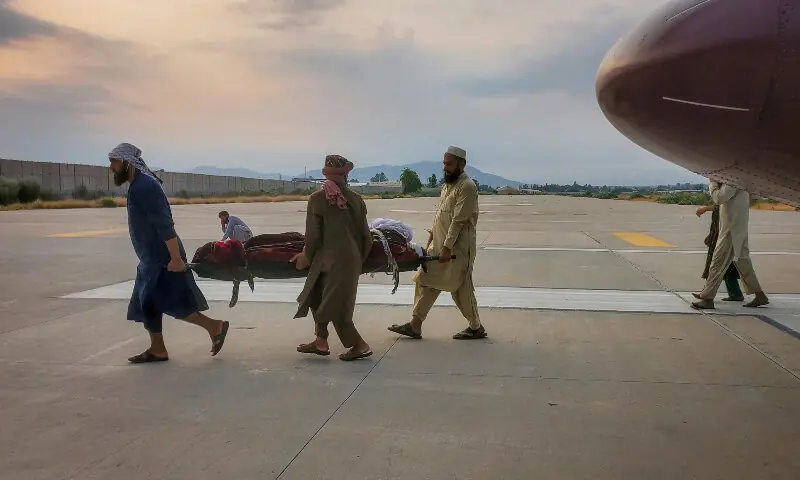
Casualties and destruction swept across at least five provinces and rescuers were still pulling people from destroyed homes and evacuating the injured by helicopter as evening approached.
“The search operation is still going on. Many people are stuck under the rubble of their roofs,” the disaster management head in eastern Kunar province, Ehsanullah Ehsan, told AFP, warning the death toll could rise.
Near the epicentre in the east of Afghanistan, around 800 people were killed and 2,500 injured in remote Kunar province alone, chief Taliban government spokesman Zabihullah Mujahid said.
Another 12 people were killed and 255 injured in neighbouring Nangarhar province, he added.
“Numerous houses were destroyed,” interior ministry spokesman Abdul Mateen Qani told AFP.
The majority of Afghans live in low-rise, mud-brick homes that are vulnerable to collapse.
Some of the most severely impacted villages in remote Kunar provinces “remain inaccessible due to road blockages”, the UN migration agency warned in a statement to AFP.
Afghanistan’s government-run Bakhtar News Agency reported citing officials from the Disaster Management Department in Kunar that “the most severely impacted districts include Noor Gul, Chawkay, Watapur, Mano Gai, and Chapa Dara”.
Three villages were razed in the province of Kunar, with substantial damage in many others, the health ministry earlier said.
The Taliban authorities and the United Nations mobilised rescue efforts to hard-hit areas. The defence ministry said 40 flight sorties had so far been carried out.
A member of the agricultural department in Kunar’s Nurgal district said people had rushed to clear blocked roads to isolated villages, but that badly affected areas were remote and had limited telecoms networks.
“There is a lot of fear and tension … Children and women were screaming. We had never experienced anything like this in our lives,” Ijaz Ulhaq Yaad told AFP.
He said that many living in quake-hit villages were among the more than four million Afghans who have returned to the country from Iran and Pakistan in recent years.
“They wanted to build their homes here.”
In Wadir village in Kunar’s Nurgal district, dozens of residents of the surrounding area helped rescuers to pull people from the rubble of flattened homes, sometimes with their bare hands, AFP journalists saw.
Many injured were transported to hospitals in Jalalabad city, such as 22-year-old Zafar Khan Gojar, who was evacuated from Nurgal along with his brother, whose leg was broken.
“The rooms and walls collapsed … killing some children and injuring others,” he told AFP.
Some of the most severely impacted villages in Kunar “remain inaccessible due to road blockages”, the UN migration agency warned in a statement to AFP.
Roads remained blocked nearly 20 hours after the earthquake, despite residents’ efforts to clear the way.
Images from Reuters Television showed helicopters ferrying out the affected, while residents helped soldiers and medics carry the wounded to ambulances.
Rescuers were scrambling to find survivors in the area bordering Khyber Pakhtunkhwa, where homes of mud and stone were levelled by the midnight quake that hit at a depth of 10km.
The disaster will further stretch the resources of the South Asian nation already grappling with humanitarian crises, from a sharp drop in aid to a huge pushback of its citizens from neighbouring countries.
Condolences
UN Secretary General Antonio Guterres expressed grief over the incident and extended his condolences.
“I stand in full solidarity with the people of Afghanistan after the devastating earthquake that hit the country earlier today,” he said.
Delegation of the European Union to Afghanistan posted on X: “The EU extends its heartfelt condolences to all affected by the recent devastating earthquake in Afghanistan’s Kunar & Nangarhar provinces. Our humanitarian partners are actively on the ground, providing critical aid to the victims. We stand in full solidarity with Afghans.”
Prime Minister Shehbaz Sharif also extended condolences over the loss of life.
“Deeply saddened by the devastating earthquake in eastern Afghanistan, which shook Kabul & was also felt in various parts of Pakistan, including Islamabad. With reports confirming hundreds of precious human lives lost & villages destroyed, our hearts go out to the victims and their families. On behalf of the people and Government of Pakistan, I extend my heartfelt condolences & prayers to the bereaved families,” he said on X.
He added, “We stand in solidarity with our Afghan brothers & sisters in this hour of grief, and we are ready to extend all possible support in this regard.”
In his condolence message, President Asif Ali Zardari also said that “during this hour of grief and hardship, Pakistan stands firmly in solidarity with the people of Afghanistan.”
The statement issued by the President’s Secretariat said, “He prayed for the swift recovery of the injured and for strength and resilience of the affected communities. He further prayed that the departed souls may rest in eternal peace and that the Almighty may grant courage to the bereaved families to bear this immense loss.”
In his statement, Deputy PM and Foreign Minister Ishaq Dar offered prayers for those injured and impacted by the quake.
The Foreign Office said he later called Afghan counterpart Amir Khan Muttaqi to convey his condolences and assured readiness to extend all possible support as required by the Afghan side.
Following earlier reports of casualties, Planning Minister Ahsan Iqbal said he was “extremely saddened by the tragic loss of over 300 lives and the many injuries”.
“My deepest condolences go out to the families who have lost their loved ones and heartfelt prayers for full and quick recovery of those injured. This immense sorrow is felt by us all,” he said on X.
KP Governor Karim Kundi also expressed grief over the “loss of hundreds of lives and large-scale financial damages caused by a powerful earthquake”.
In his condolence message, Kundi extended heartfelt sympathies to the bereaved families and prayed for the early recovery of the injured. He said the people of Pakistan stood in solidarity with the Afghan government and people during this difficult time.
Deadly quakes
Afghanistan is frequently hit by earthquakes, especially in the Hindu Kush mountain range, near the junction of the Eurasian and Indian tectonic plates.
In October 2023, western Herat province was devastated by a 6.3-magnitude earthquake, which killed more than 1,500 people and damaged or destroyed more than 63,000 homes.
In June 2022, a 5.9-magnitude quake struck the impoverished eastern border province of Paktika, killing more than 1,000 people and leaving tens of thousands homeless.
Ravaged by four decades of war, Afghanistan is already contending with a series of humanitarian crises.
Since the return of the Taliban, foreign aid to Afghanistan has been slashed, undermining the already impoverished nation’s ability to respond to disasters.
Funding cuts to Afghanistan obstruct earthquake response
Humanitarian officials said that the shrinking of funding for Afghanistan, led by US aid cuts, was hampering the response to the powerful earthquake, with dozens of clinics closed and a helicopter out of use.
The Taliban administration and aid officials have a daunting task to rescue and help thousands of Afghans with a tinier budget than ever and an economy in crisis.
“The actual delivery of response has been badly hit by the funding cuts this year, but also the number of people we have on the ground is much less than we would have had six months ago,” said Kate Carey, deputy head of the UN Office for the Coordination of Humanitarian Affairs in Afghanistan.
Afghanistan has been badly affected since President Donald Trump’s administration in January began funding cuts to its humanitarian arm and aid programmes worldwide in what he casts as part of a broader plan to remove wasteful spending.
But even before that, funding was shrinking to Afghanistan due to competing emergencies in areas such as Ukraine, Gaza and Sudan, as well as frustration from donor governments over the Taliban’s policies towards women, especially its restrictions on the work of Afghan female NGO staff.
Humanitarian aid, aimed at bypassing political institutions to serve urgent needs, has shrunk to $767 million this year, down from $3.8 billion in 2022.
The impact of the cuts was starkly illustrated by the latest crisis, Carey said, with a creaking health system now dealing with thousands of patients hit by falling rubble.
Forty-four health clinics catering to over 363,000 people in Nangarhar and Kunar suspended operations or closed this year due to US aid cuts, according to World Health Organisation figures.
Where in the past a helicopter would have taken health teams and supplies to remote villages only accessible by foot, funding cuts to the World Food Programme, which runs a humanitarian air service, put the aircraft out of commission earlier this year, Carey said.
The Taliban has appealed for more aid in a country where half the population was already in need of urgent humanitarian assistance, according to UN estimates.
“Support from the international community is seen as essential,” said Abdul Rahman Habib, spokesperson for the Taliban-run Ministry of Economy, noting the fall in funds for food, healthcare, displaced people and communities hit by climate change.
Aid has been a lifeline during Afghanistan’s global isolation under the Taliban, whose government has only formally been recognised by Russia. Sanctions on some of its leaders have hampered the banking sector and the US has frozen billions in central bank assets.
Taliban authorities do not publicly release their annual budget. The World Bank noted in April that although authorities’ tax and revenue mobilisation had been relatively strong, it had not been enough to offset the sharp drop in aid.
As well as the global funding plunge, the UN and charities have to navigate a plethora of complex policies on operations under the Taliban, who say Afghan female aid staff should not work, though there are exemptions in health and education.
The Taliban, who have closed high schools and universities to female students and placed restrictions on their movement without a male guardian, say they respect women’s rights in accordance with their interpretation of Islamic law.
Sherine Ibrahim, the International Rescue Committee’s Afghanistan Director, said today that the funding cuts were a drag on the response to Afghanistan’s latest disaster.
“Although we have been able to act fast, we are profoundly fearful for the additional strain that this disaster will have on the overall humanitarian response in Afghanistan,” she said.
Additional reporting by Nadir Guramani.