MUZAFFARABAD: A day after a special parliamentary committee of the Azad Jammu and Kashmir (AJK) Legislative Assembly deliberated on different ideas — including foreign tours by lawmakers — to “highlight the Kashmir issue at international forums,” its members called on Foreign Secretary Amna Baloch on Tuesday to apprise and seek support for their outreach plans.
Led by Speaker Chaudhry Latif Akbar, who heads the special committee, the delegation comprised eight cabinet ministers from all three coalition partners, two legislators each from PTI and PML-N — including a former prime minister and the opposition leader — as well as two All Parties Hurriyat Conference (APHC) representatives.
According to a press release by his office, Mr Akbar informed the foreign secretary that the committee had been tasked with preparing a concrete strategy to project the Kashmir cause globally.
This, he said, included holding all-parties conferences in provincial capitals and seminars in Kashmiri refugee constituencies in Pakistan to forge unity and build international opinion for a settlement.
He added that MLAs and APHC representatives would also undertake visits abroad to counter India’s propaganda and present the Kashmiri perspective to the world.
While reiterating appreciation for Pakistan’s political, diplomatic and moral support, Mr Akbar said the sacrifices of Kashmiri martyrs had kept the movement alive and no power could weaken the “eternal bond” between Kashmiris and Pakistan.
According to the press release, Ms Baloch assured the delegation of “full support” and said Pakistani diplomatic missions would provide complete facilitation for the committee’s planned overseas engagements.
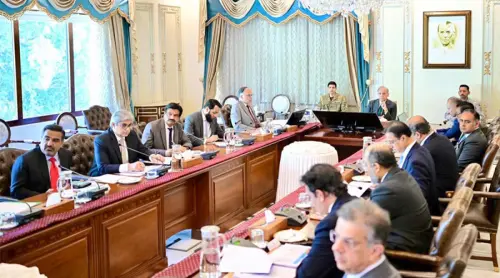
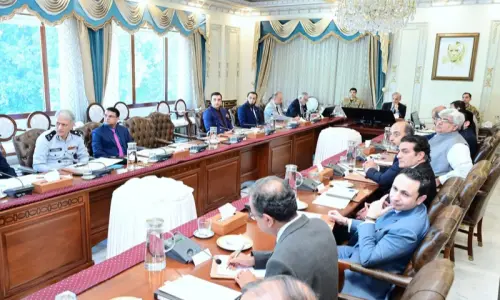
The meeting came a day after the committee’s sitting at Kashmir House, Islamabad, where members had considered a broader outreach plan, with foreign tours as one element.
Participants maintained that after the success of operationBunyan-ul-Marsus, the Kashmir cause had attracted unprecedented global attention, with even the US President reportedly offering to mediate. In this backdrop, they agreed that the government, opposition, and APHC would jointly evolve a strategy to project the issue at national and international level “more effectively.”
However, the prospect of sending delegations abroad immediately drew scorn on social media, where users derided the move as ‘political tourism at taxpayers’ expense.’
There was hardly a single post or comment in favour of the initiative.
Many users questioned whether AJK and Pakistani lawmakers had the capacity to present the case of Kashmiris convincingly in the face of language and knowledge barriers.
Hafsa Shah Masoodi, a PhD scholar specialising in peace and conflict studies with a focus on Kashmir, recalled a similar federal initiative launched after the 2016 killing of Burhan Wani, which, she said, “looked more like a lollipop handed out to political backbenchers with the weakest grasp of the Kashmir issue.”
“…These so-called delegations are nothing but joyrides at public expense. The tragedy is that those least acquainted with the nitty-gritty of the Kashmir issue claim to ‘project’ it abroad, while those who truly understand it are rarely given a seat at the table,” she remarked.
Kotli-based activist Abdul Qayyum Raja wrote: “How can those who have not yet understood the Kashmir issue themselves explain it to the outside world? Several legislators have publicly admitted they have neither studied the UN resolutions nor AJK’s Interim Constitution of 1974. All they know is which party to leave and which to join in every election.”
London-based businessman Habib Mir echoed similar sentiments: “If foreign trips by clueless lawmakers could resolve Kashmir, the dispute would have ended long ago. Unfortunately, those who truly understand its sensitivities are rarely consulted.”
Published in Dawn, August 27th, 2025