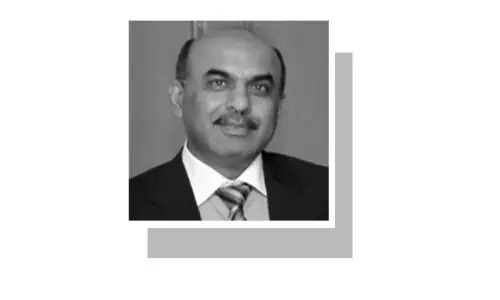
LAHORE: Trade agreements actually led to lower trade in many economies in the world, causing suffering for workers, so we should write agreements that have clauses promoting labour-intensive exports and protecting the workers.
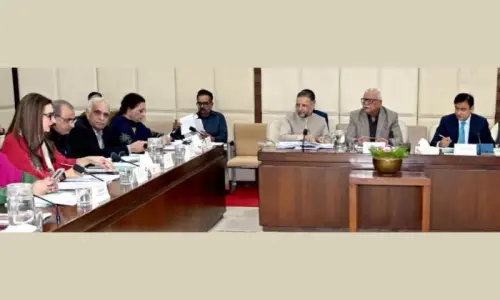
Prof Raymond Robertson of Bush School of Government and Public Service at Texas University said this while addressing the 7th International Applied Development Conference, held at theLahore School of Economics, focusing on expanding educational frontiers through science and civic participation.
Dr Naved Hamid, Director, Centre for Research in Economics and Business (CREB), chaired the last session on Wednesday.
Dr Azam Chaudhry read his paper on industrial policy in Pakistan, emphasising the critical role of productivity in driving long-term economic growth. He noted the resurgence of industrial policy globally and underscored the need for Pakistan to strike the right balance, ensuring that such policies target sectors with high growth potential.
Sinthavanh Chanthavong, a PhD candidate in International Development at Nagoya University, assessed the impact of market access expansion via tariff liberalisation under free trade agreements on export performance. The findings revealed causal evidence that tariff reduction in the destination market substantially boosts the export with an average treatment effect on the treated exports.
Shagufta Sultana, a PhD scholar at the Pakistan Institute of Development Economics (PIDE), studies the effect of terrorist attacks on women’s decision making within the household in case of Pakistan. It examined the impact of terrorist attacks on women’s decision making power during the surge and after the surge in the violent conflict.
The study selected the three rounds of the data from Household Integrated Economic Survey (HIES) 2005-06, 2013-14 and 2018-19. The record of terrorist attacks was taken from Global Terrorism Database (GTD). The results indicate an average increase of approximately 25 percent in women’s participation in indecision-making, which is notably higher than previously reported magnitudes in the literature.
Nasir Iqbal, Associate Professor at the PIDE, assessed the National Poverty Graduation Programme (NPGP), focusing on its effectiveness in enhancing resilience against climate-induced shocks, particularly flooding. He found that while asset transfers significantly improve food security, consumption and savings among non-flooded households, these gains are not sustained during flood events.
LSE Rector Dr Shahid Chaudhry, in his closing remarks, thanked the speakers attendees and the organisers for their contributions in making this conference a success.
Published in Dawn, August 21st, 2025