ISLAMABAD: The city managers have decided to dig 20 water tanks and 100 recharge wells in various areas as groundwater level in the capital city is decreasing rapidly.
The issue of the falling groundwater level in Islamabad was also raised in the National Assembly last week, where Member National Assembly (MNA) Anjum Aqeel Khan voiced his concern.
Islamabad has been facing shortage of water as no new source has been added during the last three decades, despite the city witnessing rapid population growth.
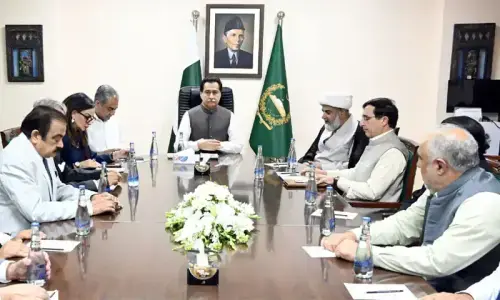
Sources said on Friday, while presiding over a meeting, Capital Development Authority (CDA) Chairman Mohammad Ali Randhawa directed Director General Water Sardar Khan Zimri to construct the proposed tanks and recharge wells.
Islamabad faces worsening water crisis with groundwater level depleting fast
“Yes, I have been directed to construct 20 water tanks and 100 water recharge wells,” the DG water said, adding that the tanks would be built at the foothills of the Margallas, while the recharge wells (15 feet in diameter and 25 feet deep) would be constructed in various areas of the city.
He said the tanks would have the capacity to store between 200,000 and 500,000 million gallons per day. The tanks will also have adjacent lakes, he said.
“Our survey is in progress and estimates are being finalised. Soon, we will call tenders for this project,” the DG said, adding that the project is expected to start within a month.
“The basic purpose of these tanks is to recharge the groundwater table and also control flooding, as recharge wells not only replenish the aquifer but also help store water to avoid floods,” he said.
It is relevant to note that the water table in the capital continues to drop by at least four feet every year. Last week, Minister of State for Interior Talal Chaudhry informed the National Assembly that, to resolve the water shortage in Rawalpindi and Islamabad, the federal government is going to launch the mega Ghazi Barotha/Tarbela project.
Under this project, Islamabad and Rawalpindi will each receive 100 mgd. Prime Minister Shehbaz Sharif is aware of the water shortage in the twin cities and recently formed a task force to address the issue.
Earlier, on July 17, while chairing a meeting on the water issue, he had directed the authorities concerned to take immediate steps to ensure an adequate water supply to citizens.
During the meeting chaired by the PM, the task force formed in May on water issues, headed by Interior Minister Mohsin Naqvi, briefed him about a proposed water board, which will oversee projects mainly related to the Ghazi Barotha project for bringing 100 million gallons of water per day for each of the two cities.
The meeting agreed that the Ghazi Barotha/Tarbela water scheme would be launched soon to bring 200 mgd of water to the twin cities. Sources said the task force aims to complete the Tarbela project within three years to avoid a serious water crisis in the region.
Islamabad has been witnessing a rapid increase in its population, but no new water source has been added to the system during the last three decades. Currently, the CDA is supplying only 62 mgd, mainly from its three main sources — Simly and Khanpur dams, and tubewells.
The rural population is dependent either on bore water or on small water schemes of the district government.
According to documents available with Dawn, Islamabad’s water demand is 283 mgd (246 mgd actual and 37 mgd lost in distribution).
This creates a demand-supply gap of more than 175 mgd, which is being managed through rationing, with water supplied intermittently and on alternate days in some areas.
Published in Dawn, August 11th, 2025