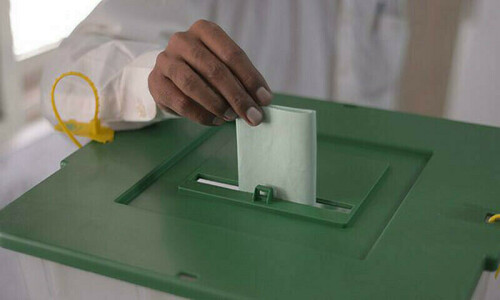
TIME has only reinforced the perception that the integrity of the last general election has never been a serious concern, not even for institutions whose entire raison d’être is to uphold the Constitution and the democratic system it envisages. After all, both the Election Commission and the section of the judiciary which has prevailed since the 26th Amendment have shown very little regard for the controversies that continue to surround it.
It is pointless to fault the government or the so-called establishment, because such is the nature of the beast. It was the ECP, constitutionally tasked with ensuring and safeguarding the fairness of the political process, that ought to have ensured that injustices were promptly addressed.
Likewise, the courts, mandated with protecting the Constitution and the constitutional scheme of order, should have kept a constant check on the Commission. Unfortunately, both institutions long ago resigned themselves to complacency. And that is a charitable view.
According to electoral watchdog Fafen, more than half of the many election disputes raised after the Feb 8, 2024, polls remain undecided. The law gives election tribunals 180 days to settle election disputes. The deadline was extended from 120 days — mere months before the last election. It has now been a year and a half since the last vote was cast. Article 225 states: “No election to a House or Provincial Assembly shall be called in question except by an election petition presented to such tribunal and in such manner as may be determined by Act of Parliament.”
Therefore, what the prolonged delays in issuing decisions essentially mean is that the tribunals are themselves the biggest hurdle in securing electoral justice. It must be noted that the entire purpose of appointing election tribunals is that cases regarding poll disputes can be heard and decided promptly. Otherwise, they would go to the courts, which are already burdened with a significant backlog.
This is why the tribunals’ failure to deliver is so egregious. To the suspicious mind, the sluggish pace of deliberations suggests that the tribunals were created merely to fulfil a formality and provide cover to the status quo.
Curiously, the ECP has felt no compulsion to prod them along in their work, even though the legal deadlines under which they are supposed to operate have long elapsed. The precedent that is being set will undermine future political transitions as well. The message being sent is that it does not matter whether electoral victory is secured through lawful or unlawful means, because the checks and balances meant to protect the public’s political rights can be rendered ineffective. This should alarm anyone who wishes to see Pakistan governed in accordance with the will of the public and not by the whims of a few powerful institutions and individuals.
Published in Dawn, August 10th, 2025