Iran moves to remove zeros from plunging national currency
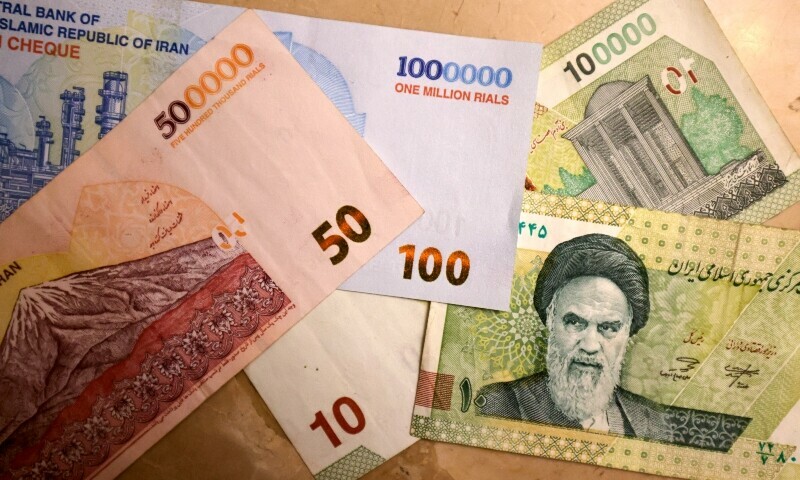

TEHRAN: The economic commission of Iran’s parliament revived long-delayed plans on Sunday to cut four zeros from the country’s plunging currency, as part of efforts to simplify financial transactions.
“Today’s meeting of the economic commission approved the name ‘rial’ as the national currency, as well as the removal of four zeros,” said the parliament’s website ICANA, quoting Shamseddin Hosseini, the commission’s chairman.
Under the proposed system, one rial would be equivalent to 10,000 at the current value and subdivided into 100 gherans, according to ICANA.
The proposed redenomination was first mooted in 2019 but then shelved. The current bill will have to pass a parliamentary vote and gain the approval of the Guardian Council, a body empowered to vet legislation.
It was not immediately clear when the parliamentary vote would take place.
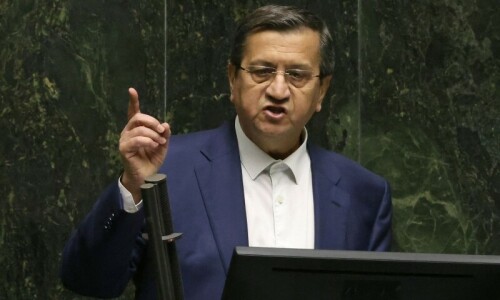
In May, Iran’s Central Bank Governor Mohammad Reza Farzin said he would pursue the plan, noting that the Iranian rial “does not have a favourable image” in the global economy.
The move comes as Iran faces deepening economic challenges, including runaway inflation, a sharply devalued currency, and the prolonged impact of international sanctions.
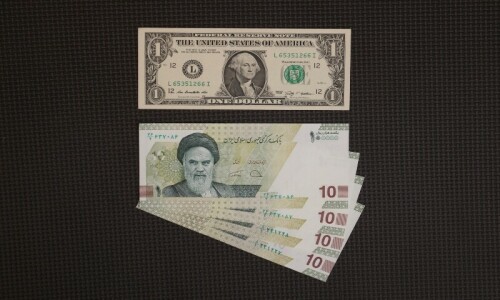
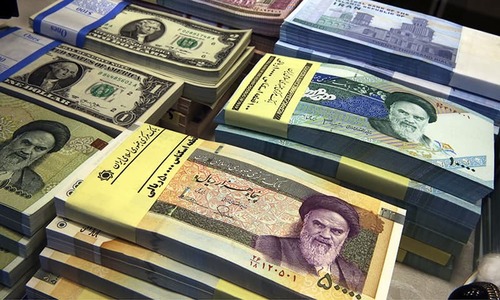
As of Sunday, the rial was trading at around 920,000 to the US dollar on the street market, according to local media and the Bonbast website that monitors unofficial exchange rates.
In practice, Iranians have long abandoned the rial in everyday transactions, using the toman instead. One toman equals 10 rials.
Iran’s economy has long been under severe strain due to sweeping US sanctions since Washington’s 2018 withdrawal from a landmark nuclear deal during US President Donald Trump’s first term in office.
Upon returning to office in January, Trump revived his “maximum pressure” sanctions campaign on Tehran. In June, Iranian lawmakers approved new economy minister Ali Madanizadeh after his predecessor, Abdolnaser Hemmati, was ousted in a no-confidence vote for failing to address the country’s economic woes.
The same month Israel launched an unprecedented attack on Iran’s nuclear and military infrastructure, beginning a deadly 12-day war.
Published in Dawn, August 4th, 2025