Industry faces threat from influx of used vehicles
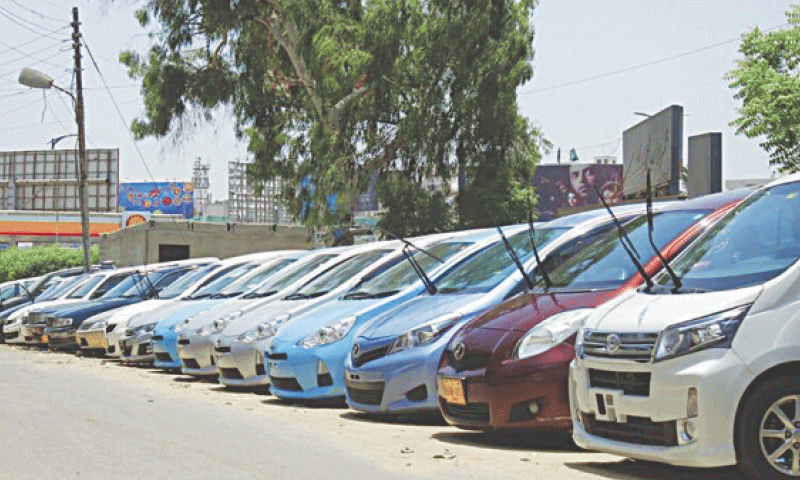


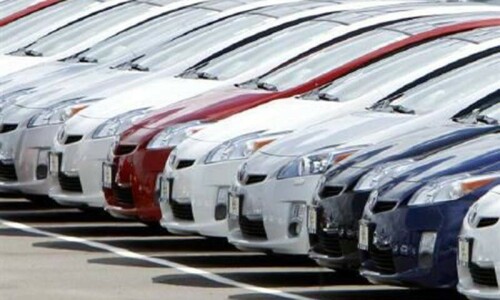
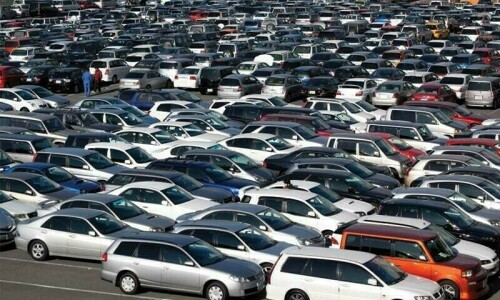
KARACHI: Local auto parts manufacturers have warned of a potential shutdown of Pakistan’s car assembly industry within the next two years if the government proceeds with plans to liberalise the commercial import of used vehicles from September.
Former chairman of the Pakistan Association of Automotive Parts and Accessories Manufacturers (PAAPAM), Aamir Allawala, raised concerns during a media briefing at various vending units, stating that used vehicles already account for 25pc of the market — over 40,000 units annually. In contrast, used car market share stands at zero in India, 0.3pc in Vietnam, and 1.2pc in Thailand, he noted.
Allawala said import duties on completely built-up (CBU) units in Pakistan range from 50–100pc, compared to 125pc in India, 52pc in Vietnam, and 80pc in Thailand. The negligible used car imports in these countries are the result of both tariff and administrative measures, he added.
He asserted that used vehicles, as a category, now form the second-largest segment of Pakistan’s car market, trailing only Suzuki, and have overtaken the collective sales of Toyota, Honda, Hyundai, Kia, Haval, MG, and Changan.
Highlighting a lack of transparency, Allawala said that imports and sales of used vehicles remain undocumented. “Remittances for imports are routed via hawala, while local sales are largely cash-based, bypassing formal channels,” he said. This informal trade, he warned, severely undermines local assemblers and vendors who rely on documented transactions and taxation compliance.
Based on an average value of Rs4 million per unit, the influx of used cars represents an annual volume of Rs160bn, he said. He estimated that this diverts about Rs60bn in potential revenue away from local auto parts manufacturers — given an average of Rs1.5 million in locally made parts per new vehicle — and could result in the loss of around 40,000 jobs in assembly and vending units.
“If imports are liberalised, global automakers operating in Pakistan may shift to importing completely built units, both new and used, while local parts vendors will be left without a market and forced to shut down,” he warned.
Referring to the Auto Policy 2016–21, he said 10 new entrants joined the market under favourable incentives, including a 50pc duty concession on already localised parts. This brought the total number of assemblers to 13.
However, vendors have suffered as these entrants have achieved minimal localisation. “One such assembler earned Rs36bn profit in FY25 without any localisation,” he claimed, adding that the assembler’s output surpasses that of the established players.
PAAPAM’s Senior Vice Chairman, Shehryar Qadir, urged the government to adopt models followed by Thailand and Vietnam to develop the vendor base and maximise export potential.
Senate panel backs auto sector
Chairman of the Senate Standing Committee on Industries and Production, Senator Aon Abbas, reaffirmed the government’s commitment to strengthening domestic manufacturing and promoting high-value investment in the auto sector.
During a visit to Indus Motor Company (IMC) on Friday, accompanied by other committee members, Senator Abbas underscored the critical role of the local automotive industry in driving industrial growth and generating employment.
CEO of IMC, Ali Asghar Jamali, expressed concern over the underutilisation of the industry’s production capacity, noting that more than 64pc remains idle despite substantial investments by leading global automotive brands.
Published in Dawn, Aug 2nd, 2025