0
0

PESHAWAR, May 17: The NWFP health department is facing difficulties in rebuilding the health infrastructure in the earthquake-affected areas of the province, officials said.
They cited lack of resources and technical support and said: “We are striving hard to ensure rationalised and seismically safe reconstruction of the health infrastructure,” adding that lack of resources was hampering their plans.
The department, they said, was looking for funds from donor agencies, especially the World Health Organisation, for assistance in rehabilitating the health services and management system besides putting in place an effective coordination network to ensure the availability of essential healthcare services during the transition phase. Lack of human resources was another area that needed donors’ support, the officials said.
They said that in the post-quake situation, the people were becoming more vulnerable to epidemics, because of the dilapidated and overcrowded conditions of the people.
They said that the department was looking towards the world health agency to make its disease surveillance system operational, enabling the department to take preventive measures against contagious diseases.
Officials conceded that the October 8 earthquake had exposed the government’s inability to cope with the disasters.
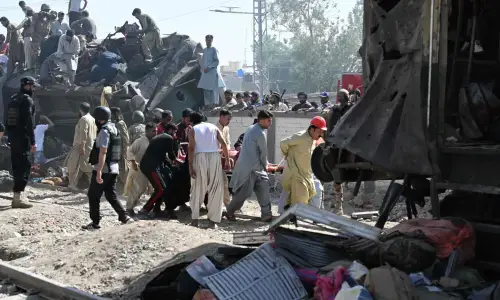
The earthquake had devastated areas in the Frontier province, including Balakot, Abbottabad, Kohistan, Mansehra and Battagram districts.
They said that there was an urgent need to make a disaster management plan.
“We are urging the donor agencies to devise an institutional mechanism in the health department that could respond to the natural calamities in future”, they said. Furthermore, they hinted at close coordination among Provincial Earthquake Reconstruction Authority (PERA) and Earthquake Reconstruction and Rehabilitation Authority (ERRA), provincial and district health authorities and all stakeholders.
Officials said that the WHO and United Nations Children’s Fund had agreed to establish 40 prefabricated structures for the provision of the healthcare services in the affected districts, including seven in Battagram, eight in Abbottabad, 13 in Mansehra, five in Shangla and seven in Kohistan, but said that more such structures were needed to cater to the needs of the affected population.
They said that feedback regarding the WHO’s response for the quake affected areas needs to be well coordinated to enable the health department to initiate steps for remedial measures.