Syria evacuates Bedouin from Druze-majority city
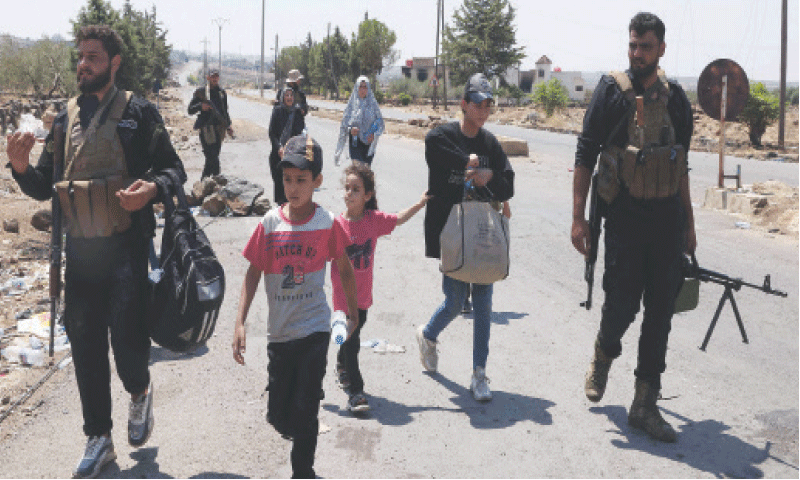

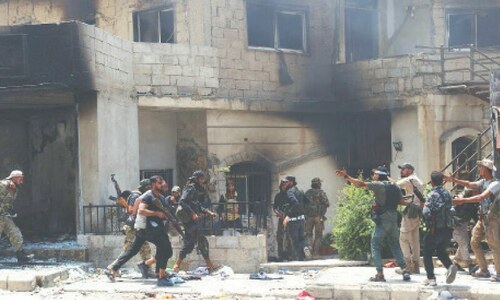
SWEIDA: Syrian authorities evacuated Bedouin families from the Druze-majority city of Sweida on Monday, after a ceasefire in the southern province halted a week of sectarian bloodshed that a monitor said killed more than 1,260 people.
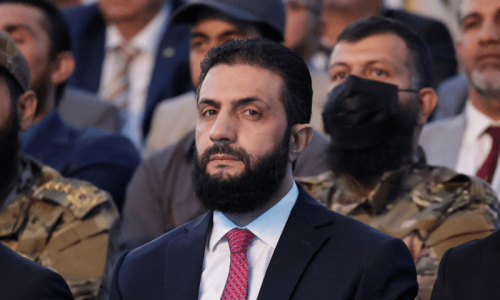
The violence, which followed massacres of Alawis in March and clashes involving the Druze in April and May, has shaken the rule of interim President Ahmed al-Sharaa, who has pledged to protect minorities in a country devastated by 14 years of war.
The Syrian Observatory for Human Rights monitor said the ceasefire was largely holding despite isolated gunfire in areas north of Sweida city, with no new reports of casualties.
A correspondent saw a convoy of buses and other vehicles enter the provincial capital and exit carrying civilians, including women and children. State news agency SANA quoted the governor of neighbouring Daraa, Anwar al-Zubi, as saying his province had “received about 200 Bedouin families who had been detained in Sweida”, sending them to local shelters.
Ceasefire holds despite isolated gunfire in areas north of Sweida
The ceasefire announced on Saturday put an end to the sectarian violence that killed more than 1,260 people — about 800 of them Druze fighters and civilians, including nearly 200 noncombatants “summarily executed” by government forces, according to the Observatory. The toll also includes more than 400 government security personnel.
Fatima Abdel-Qader, 52, a Bedouin who was leaving the city on foot, said her family had been surrounded during the fighting, “unable to leave or come back — anyone who wanted to go out risked gunfire and clashes”. “We were afraid that someone would come to our home and kill us all,” she said, adding they had no way of getting food or water.
Damascus has accused Druze groups of attacking and killing Bedouins during the clashes, which broke out on July 13 after a Druze vegetable seller was kidnapped by local Bedouins, according to the Observatory.
The Observatory’s toll includes 35 Bedouins, three of them civilians executed by Druze fighters. The Druze and Bedouin tribes have had tense relations for decades.
‘Unthinkable’
Witnesses, Druze factions and the Observatory have accused government forces of siding with the Bedouin and committing abuses when they entered Sweida last week. Sunni Arab tribes also converged on the area in support of the Bedouin.
The ceasefire effectively began on Sunday after Bedouin and tribal fighters withdrew from Sweida city and Druze groups regained control.
The US special envoy to Syria, Tom Barrack, said on Monday that what had happened in Sweida was “unthinkable”. “You have a Syrian government in effect. They need to be held accountable,” he told a press conference on a visit to neighbouring Lebanon.
The weekend ceasefire announcement came hours after Barrack said the United States had negotiated a truce between Syrian authorities and Israel, which had bombed government forces in both Sweida and Damascus earlier in the week.
Israel, which has its own Druze community, has said it was acting in defence of the group, as well as to enforce its demands for the total demilitarisation of Syria’s south.
The deal allowed the deployment of government security forces in Sweida province but not its main city.
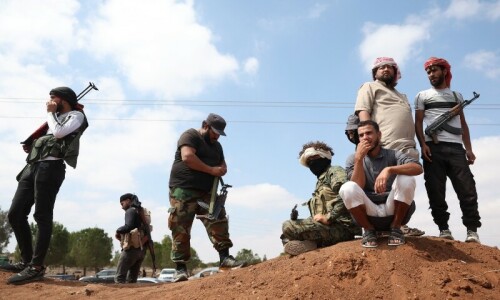
A correspondent said security forces had erected sand mounds to block some of Sweida’s entrances. Tribal fighters were sitting on the roadside beyond the checkpoints.
Aid convoy
At the main hospital in Sweida city, dozens of bodies were still waiting to be identified, with a forensic medicine official at the facility saying “we still have 97 unidentified corpses”.
According to the United Nations, the violence has displaced more than 128,000 people, an issue that has also made collecting and identifying bodies more difficult.
More than 450 of the dead had been brought to the Sweida national hospital by Sunday evening, with more still being recovered from the streets and homes.
“The dead bodies sent a terrible smell through all the floors of the hospital,” said nurse Hisham Breik, who had not left the facility since the violence began.
“The situation has been terrible. We couldn’t walk around the hospital without wearing a mask,” he said, his voice trembling, adding that the wounded included women, children and the elderly.
The United Nations’ humanitarian office said hospitals and health centres in Sweida province were out of service, with “reports of unburied bodies raising serious public health concerns”.
Humanitarian access to Sweida “remains highly constrained”, it said in a statement late Sunday. On Sunday, a first humanitarian aid convoy entered the city, which has seen power and water cuts and shortages of fuel, food and medical supplies. A Red Crescent official said the supplies included body bags.
Published in Dawn, July 22nd, 2025