Iran says it has replaced air defences damaged in Israel war
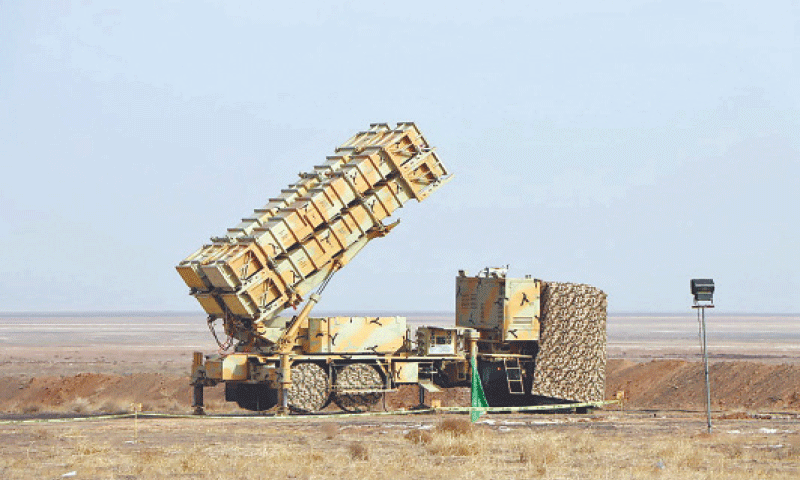

Iran has replaced air defences damaged during last month’s conflict with Israel, Iran’s Defah Press news agency reported on Sunday quoting the regular army’s deputy for operations, Rear Admiral Mahmoud Mousavi.
During the conflict in June, Israel’s air force dominated Iran’s airspace and dealt a heavy blow to the country’s air defences while Iranian armed forces launched successive barrages of missiles and drones on Israeli territory, successfully hitting strategic targets.
“The Zionist enemy sought to destroy Iran’s defence capabilities, and some of our defence systems were damaged in this war; But with the efforts of my comrades, the damaged systems were replaced and deployed in predetermined locations,” Mousavi said.
Admiral Mousavi added that Israel was not able to achieve its objectives and that the United States and NATO helped Tel-Aviv in the war.
Prior to the war, Iran had its own domestically-made long-range air defence system Bavar-373 in addition to the Russian-made S-300 system. The report by Defah Press did not mention any import of foreign-made air defence systems to Iran in past weeks.
Following limited Israeli strikes against Iranian missile factories last October, Iran later displayed Russian-made air defences in a military exercise to show it recovered from the attack.
Iran could hold nuclear talks with European powers next week: report
Iran, Britain, France and Germany could hold talks next week on Tehran’s nuclear programme, Iran’s semi-official Tasnim news agency reported, following warnings by the three European countries that failure to resume negotiations would lead to international sanctions being reimposed on Iran.
“The principle of talks has been agreed upon, but consultations are continuing on the time and place of the talks. The country in which the talks could be held next week has not been finalised,” Tasnim reported, quoting a source informed on the matter.
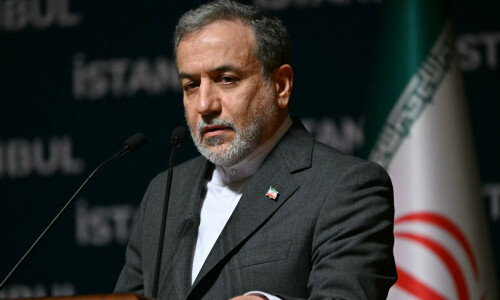
The report on possible talks comes a few days after the foreign ministers of the so-called E3 nations, as well as the European Union’s foreign policy chief, held their first call with Iranian Foreign Minister Abbas Araqchi since Israel and the US attacked Iranian nuclear facilities a month ago.
The three European countries, along with China and Russia, are the remaining parties to a 2015 nuclear deal reached with Iran — from which the United States withdrew in 2018 —that lifted sanctions on the Middle Eastern country in return for restrictions on its nuclear programme.
The E3 have said they would restore UN sanctions on Tehran via the so-called “snapback mechanism” by the end of August if nuclear talks that were ongoing between Iran and the US before the Israel-Iran air war do not resume or fail to produce concrete results.
“If EU/E3 want to have a role, they should act responsibly, and put aside the worn-out policies of threat and pressure, including the ‘snap-back’ for which they lack absolutely [any] moral and legal ground,” Araqchi said earlier this week.
The snapback mechanism can be used to restore UN sanctions before the UN Security Council resolution enshrining the deal expires on October 18.
Prior to the Israel-Iran war, Tehran and Washington held five rounds of nuclear talks mediated by Oman but faced major stumbling blocks such as uranium enrichment in Iran, which Western powers want to bring down to zero to minimise any risk of weaponisation.
Tehran maintains its nuclear programme is solely meant for civilian purposes.