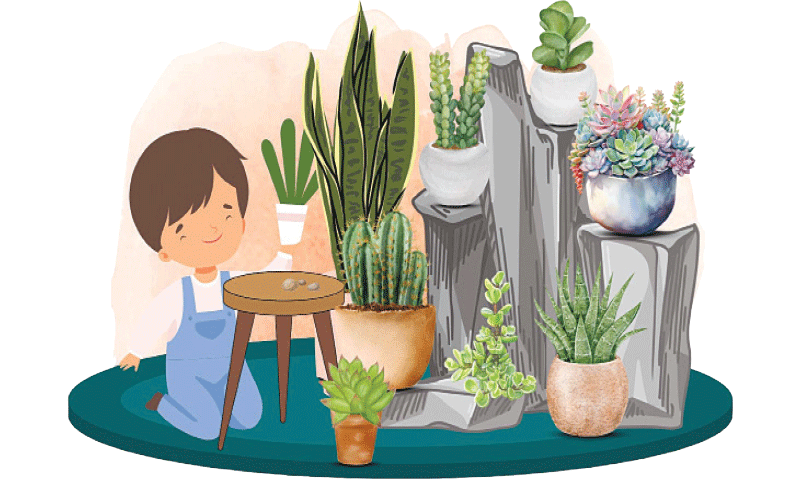
With the growing many social media trends, the one I am in love with is keeping greenery around you in any form you like. By greenery I mean all kinds of plants, hydroponics, vines, climbing plants, cacti or succulents — all of which come in a variety of sizes, shapes and colours for both indoors as well as outdoors.
And as long as we’re on this planet, greenery is something we’ll always need, not just for ourselves, but for all living beings and future generations. While every plant has its own charm, succulents are a bit special. They’re becoming more popular these days for their appearance and health benefits. But with all the good they are offering, they come at a hefty tag at first. But guess what, they are easy to propagate, so you can grow dozens from just one pot!
The difference between cactus and succulents?
Cacti are plants that have thick stems, pads or branches with scales and spines instead of leaves. Because they store water in them, they are the survivors of the harshest of weather.
While succulents just have thick leaves and stems to store water, they get a plump, fleshy appearance, but they don’t have spikes. They can also withstand extreme weather conditions. For example, aloe vera — yes, with its pulpy and thick leaves — survives the harshest of weather. Others may include the jade plant, echeveria, elephant plant and ox tongue.
Visual appeal
One of the most popular succulents is echeveria, known and loved for its symmetrical, geometric shape and ranging from green to purple, red and even blue. Most succulents have unique textures, so they look more like a decoration item than a real plant.
Perfect for small spaces
Succulents can thrive in small pots. A few of them need re-potting as they outgrow their containers, like the snake and ZZ (Zamioculcas zamiifolia) plant; but most, like jade, echeveria, elephant plant and ox tongue, don’t require large pots and can easily thrive in compact pots.
Low maintenance
With their thick, fleshy leaves, succulents store so much water that it allows them to go without water for a very long period of time. In fact, overwatering is one of the most common mistakes people make with succulents — they actually prefer dry soil.
Improve indoor air quality
Honestly, when the air quality index in many cities is far from ideal these days, we need more solutions to purify the air we breathe. The good thing is, now we have options to choose plants according to the space we have and purify the air we breathe.
For instance, succulents like the jade plant, snake plant or even the ZZ plant (known for being semi-succulent) absorb harmful toxins from our air, like carbon dioxide, formaldehyde and benzene — all found in household products like cleaning supplies, furniture, carpet, varnish, paint, cigarettes, plastic, synthetic fibres, etc.
These plants can be put in small pots around the house in enclosed or air-conditioned spaces, where fresh air doesn’t come in, and can make the overall atmosphere oxygen-rich and contribute to an overall healthy environment.
Easy to propagate and share
Most plants need attention and care to grow, let alone to propagate them. However, it’s the opposite with succulents. Did you know that you can regrow an echeveria, a jade plant and an aloe vera from a single leaf cutting?
So why not try it out and see for yourself. But yes, the process is slow and takes weeks. Once the small shoot comes out, know that you are successful, and you can multiply your collection or share your favourite plants with friends and family, spreading a bit of green joy with ease.
Key points to take care of your succulents:
• Overwatering succulents can damage them; water only when the soil is completely dry. Also, if the pot doesn’t have a good drainage hole in its bottom, the roots will die out quickly.
• Most succulents thrive in indirect light. But some varieties, like aloe vera or agave, can tolerate direct sunlight. It is better to give them shade for a few days and then sunlight — this way, the succulent thrives healthily.
• Choose snake plant, ZZ, jade or zebra haworthia, etc., for more shady places.
• Succulents prefer warm temperatures, generally between 60–80°F (15–27°C). Avoid placing them in areas with draughts or extreme temperature fluctuations.
Published in Dawn, Young World, July 19th, 2025