In deeply Christian Georgia, a Muslim minority upholds its patriotism
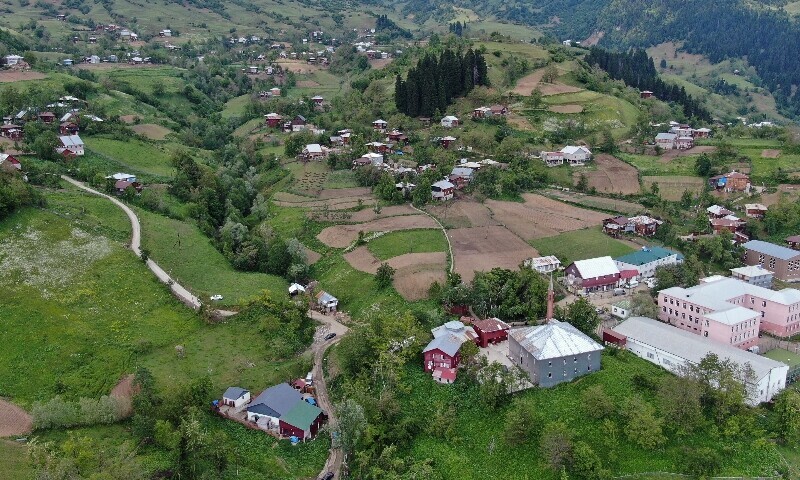

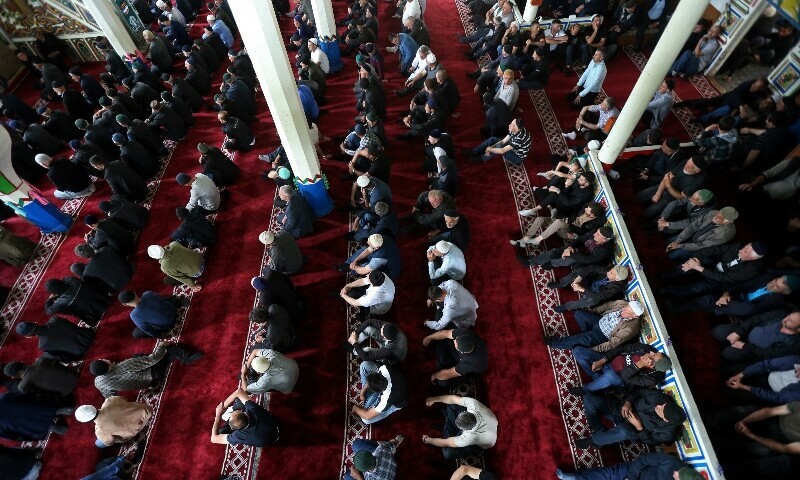
In the Georgian highland village of Ghorjomi, Friday prayers in the local mosque are always packed, says Imam Tamaz Gorgadze.
Tucked away in the remote valleys close to the Turkish border, Ghorjomi — and the surrounding region of Upper Adjara — are a rare outpost of Islam in one of the world’s most devoutly Christian countries.
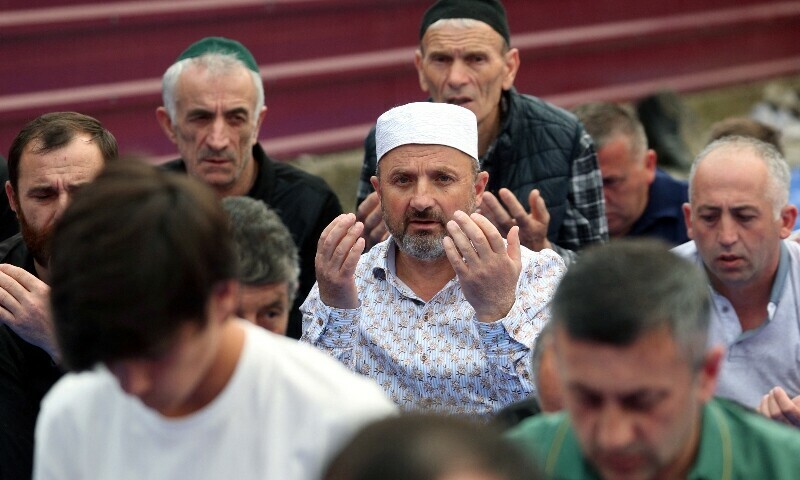
“We live in Georgia, a multiconfessional country,” he told Reuters in June, after prayers for Eidul Azha.
Georgia was the second country in the world to adopt Christianity as its state religion around the year 319, behind only neighbouring Armenia.
It remains devoutly Christian, and its national identity is closely linked to centuries of struggle against Muslim Persian and Turkic invaders.
Still today, Adjara’s Muslim Georgians are derisively dubbed “Tatars” by some, referring to a Muslim ethnic group in Russia.
According to census data, around 10 per cent of Georgia’s 3.6 million people are Muslims. The bulk of them belong to the mostly Shia Azerbaijani minority.
But ethnically Georgian Muslims, unique to Adjara, are rarer and more controversial in a country whose national flag consists of five Christian crosses.
The country’s powerful Orthodox Church is seen as a custodian of Georgian identity, and for many, membership of the church is a prerequisite for being truly Georgian.
However, for the Georgians of Upper Adjara, who were converted to Islam during centuries spent as part of the Ottoman Empire, there is nothing contradictory in being both a practising Muslim and a patriotic Georgian.
“We are proud that we are Georgians. We have a shared past,” said Tariel Nakaidze, a Ghorjomi native and head of the Georgian Muslims Union.
Nevertheless, said Nakaidze, Georgian Muslims experience social pressures he likened to anti-religious campaigns under the Soviet Union.
He said: “During the Soviet Union in Georgia, both Christians and Muslims had to live a double life. On the outside, you were an atheist. But at home, you were a believer.”
“Unfortunately, after the collapse of the Soviet Union, that problem was replaced by the Orthodox Christian religion.”
Adjaran Islam comes with a distinctly Georgian flavour, though few locals indulge in the dry wines and pork kebabs favoured by their Christian cousins.
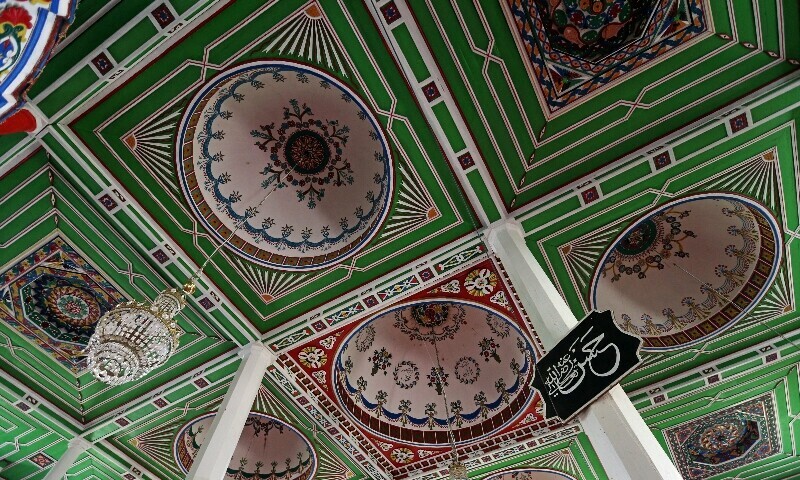
Central to local Muslim life are Adjara’s distinctive wooden mosques.
Their outsides sheathed in corrugated iron to protect from mountain winters, on the inside, Adjaran mosques feature intricate wooden carvings, vividly painted in a medley of traditional Ottoman and Georgian designs.
Down on the Black Sea coast, 100km (62 miles) from Ghorjomi, sits Batumi, Adjara’s capital and Georgia’s second city.
A raucous seaside resort town with casinos and nightclubs catering mostly to tourists from the former Soviet Union, Batumi’s mosque congregations are swollen by visitors from across the Turkish border, 20km (12 miles) away, as well as by Middle Eastern tourists.
Space is so limited that worshippers are often forced to pray on the street outside.
Batumi imam Tamaz Geladze has been trying to expand his rudimentary, lean-to mosque for years. Though permission has been granted by the authorities, the project remains tied up in bureaucracy.
Even so, Geladze said he valued Georgia’s history of tolerance towards religious minorities.
“We have coexisted for centuries here, in friendship and in dialogue.”
“Georgia’s diversity is a treasure,” he added.