LAHORE: Once booming cotton sector of the country is in a severe crisis, with production plummeting by around 50 percent from 11.7 million bales in 2010-2012 to below 7.5m bales in 2024-2025. This drastic decline, coupled with a surge in imports to over 5m bales and near-zero exports, warns of a collapsing domestic industry.
Farmers are battling with unprecedented cost increases. The prices of essential fertilisers like DAP, NP, Urea, and SOP have skyrocketed by an average of nearly 300pc since 2010. Diesel prices have also surged by 211pc, and of electricity for irrigation by a staggering 950pc. Simultaneously, cotton prices in dollar terms have fallen by 250pc (from $70 per maund in 2010-11 to $27 per maund in 2024-25), rendering cultivation nonviable, especially for small and medium landholders.
Additional burdens like sales tax on local cotton and a tenfold increase in cotton-picking charges (from Rs100 to Rs1,000 per maund) has further erode farmers’ income.
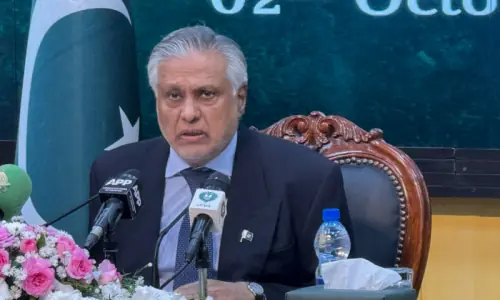
Pakistan Kisan Ittehad (PKI) President Khalid Khokhar argues that the government policies have prioritised imports and neglected crucial support for farmers, including fair support prices and input subsidies.
PKI head suggests establishment of ‘commodity price commission’ and other reforms
The recent imposition of sales tax on imported cotton and yarn, intended to boost local prices, has been overshadowed by adverse weather conditions impacting cotton quality and leading to disinterest from textile mills. This has caused further price drops, resulting in inactivity of many ginning factories and oil mills.
Cotton Ginners Forum Chairman Ihsanul Haq is urgently demanding the abolition of sales tax on cotton and its by-products to revive the industry, highlighting the debilitating 86pc sales tax on the ginning industry, which has led to undocumented trade of 2m to 2.5m bales annually.
To avert a national crisis in agriculture, Mr Khokhar has put forth several recommendations.
He recommends establishment of a ‘commodity price commission’ to ensure a transparent pricing mechanism and guarantee a minimum of 25pc return on investment for farmers, timely export of the surplus produce to stabilise commodity prices, removal of 14pc GST on tractors, 18pc GST on locally-manufactured tractor-mounted implements and 18pc GST on cotton “Khal Banola”, announcement of a uniform electricity tariff of Rs10 per unit for irrigation tube-wells and upgrade of the meteorological department for timely and accurate weather forecasts for farmers.
He says that the future of Pakistan’s food security, rural employment and economic stability hinges on urgent reforms and a renewed focus on the agricultural sector, particularly cotton.
Published in Dawn, June 30th, 2025