US sanctions on Sudan over alleged chemical weapons use begin

WASHINGTON: US sanctions on Sudan’s government — imposed over what Washington says was the use by Khartoum’s military of chemical weapons in the country’s bloody civil war last year — have taken effect.
The sanctions — which include restrictions on US exports, arms sales and financing to the government in Khartoum — are to remain in place for at least one year, the US government said in a notice published on Friday in the Federal Register.
Assistance to Sudan will be terminated “except for urgent humanitarian assistance and food or other agricultural commodities or products,” it said. However, certain measures will be partially waived because “it is essential to the national security interests of the United States” to do so, it added.
“The United States calls on the Government of Sudan to cease all chemical weapons use and uphold its obligations” under the Chemical Weapons Convention, an international treaty signed by nearly all countries that prohibits their use, the State Department said last month when it announced the sanctions.
The New York Times reported in January that Sudan’s military had used chemical weapons on at least two occasions in remote areas its war with the paramilitary Rapid Support Forces (RSF).
Citing anonymous US officials, the newspaper said that the weapon appeared to be chlorine gas, which can cause severe respiratory pain and death. Khartoum has denied using chemical weapons.
In practical terms, the effect will be limited as both Sudan’s military chief Abdel Fattah al-Burhan and his adversary and former deputy, RSF leader Mohamed Hamdan Daglo, are already under US sanctions.
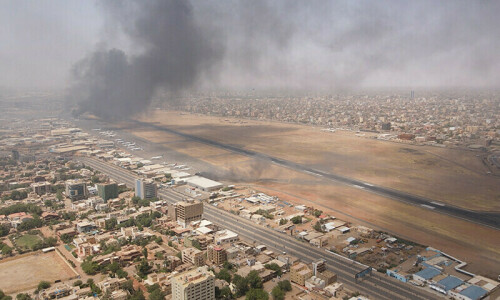
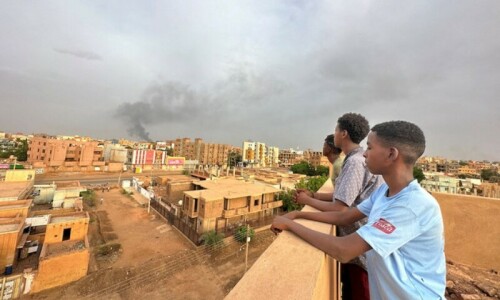
A power struggle between the army and RSF erupted into full-scale war in April 2023 with devastating consequences for the already impoverished country.
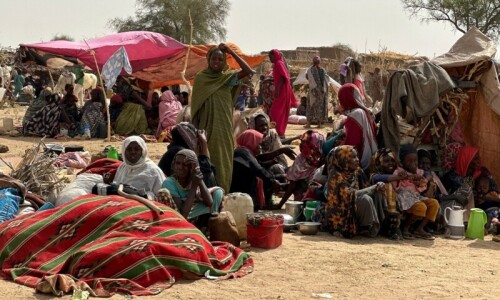
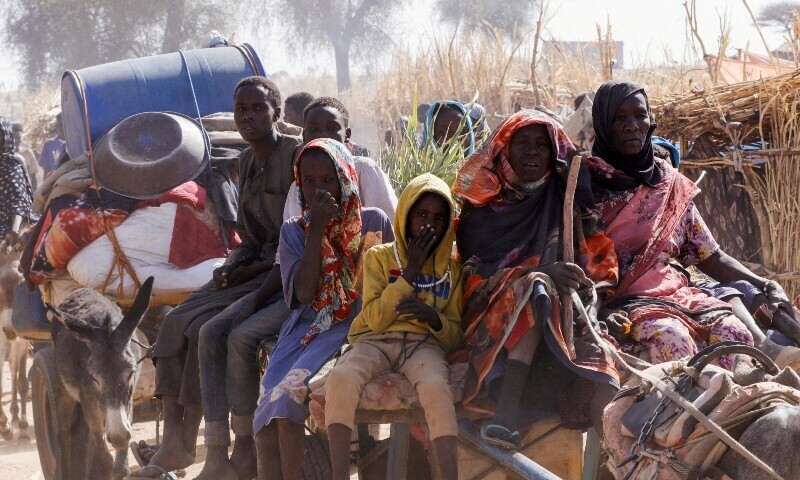
The conflict has killed tens of thousands of people and displaced 13 million, creating what the United Nations describes as the world’s worst humanitarian crisis.
Since April 2023, the war between the army and the Rapid Support Forces has drawn widespread accusations of war crimes, with the US determining in January the RSF had committed genocide.
The State Department in May notified Congress of its determination that “the Government of Sudan used chemical weapons in 2024”, in violation of the Chemical Weapons Convention, which Khartoum ratified in 1999.
Washington did not provide details on where or when the chemical attacks occurred. Sudan’s army-aligned government immediately denied the US allegations, calling them “baseless” and “political blackmail”. Washington’s sanctions, initially intended to go into effect on June 6, restrict US exports and financing.
Urgent humanitarian aid will be exempted from the sanctions on Sudan, where nearly 25 million people are suffering dire food insecurity in the world’s largest hunger crisis. The army, which has been in control of Sudan for most of its post-independence history since 1956, has been accused of carrying out chemical attacks before.
In 2016, an Amnesty International investigation accused the army — then allied with the RSF — of using chemical weapons on civilians in the western region of Darfur.
Khartoum denied the accusations.
In 1998, the US claimed the Al Shifa pharmaceutical factory in Khartoum was producing chemical components for Al Qaeda, before destroying the factory in a missile attack.
Past sanctions
Relations between the US and Sudan were strained for decades under the rule of Omar al-Bashir, who came to power in 1993 and whose Islamist-military rule was long accused of supporting terrorism.
US sanctions imposed in the early 1990s were tightened in 2006 following accusations of genocide in the Darfur region, carried out on behalf of Khartoum by the RSF’s predecessor militia, the Janjaweed.
After a popular uprising ousted Bashir in 2019, the US removed Sudan from its list of state sponsors of terrorism and began to lift sanctions. Some were reintroduced following a 2021 coup, led by Burhan alongside his then-deputy, RSF commander Mohamed Hamdan Daglo, before the allies’ power struggle erupted into all-out war in April 2023
Published in Dawn, June 29th, 2025