0
0
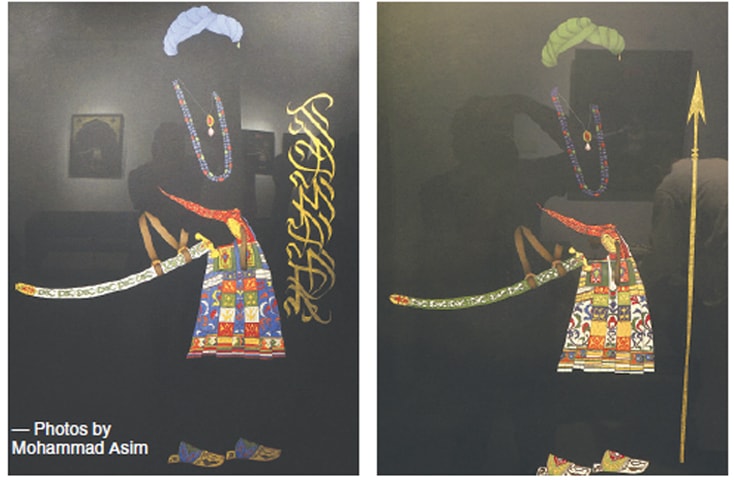

ISLAMABAD: Tanzara Gallery on Wednesday presented “The Brown Sahib” — a thought-provoking exhibition by Shoaib Mahmood that delves into the lasting impact of colonialism on South Asian culture.
Through a series of works that re-imagine historical figures alongside colonial-era titles, Mahmood sheds light on the complex dynamics of identity, power and history.
The exhibition explored how certain words and phrases, once used to exert control and dominance, had evolved over time to take on new meanings and connotations. By placing Mughal figures in unexpected contexts, Shoaib Mahmood highlighted the tension between the grandeur of pre-colonial heritage and the awkward legacy of colonialism.
“The Brown Sahib” was a nuanced and thought-provoking exhibition that challenged the viewer to consider the ways in which cultural narratives continued to be shaped by the past, said Noshi Qadir who was the curator of the show. Shoaib Mahmood’s works offered a powerful commentary on the ongoing relevance of colonialism in contemporary society, making this exhibition a must-see for anyone interested in art, history and cultural critique.
“My work explores the enduring power of language, particularly how words and titles rooted in colonialism continue to shape our perceptions of identity, class and race. I’m fascinated by the transformation of colonial-era titles in South Asia, which have evolved from instruments of mockery and control to markers of aspiration and status. This shift reveals the profound impact of colonial values on our cultural psyche,” the artist said on the opening day.
Through satirical reinterpretations, he juxtaposed Mughal figures — symbols of pre-colonial sovereignty and refinement — with these inherited titles, the artist said in his statement.
The deliberate contrast created a visual tension between historical grandeur and the imposed absurdity of colonial labels, highlighting the complexities of cultural identity and the legacy of colonialism.
This artistic inquiry invited viewers to reflect on the ways in which language continued to influence our understanding of ourselves and our place in the world.
“By recontextualising these titles, I aim to spark a conversation about the ongoing impact of colonialism on our cultural narratives and the ways in which we navigate identity, power and history,” he said.
The show was based on his research project, and most of the titles were taken from “Farang-e-Asfia,” a text that provides a fascinating glimpse into the colonial-era lexicon, he said, adding, “By drawing from this source, I aim to underscore the ways in which language continues to shape our perceptions of ourselves and our cultural heritage.”
Published in Dawn, June 26th, 2025