0
0

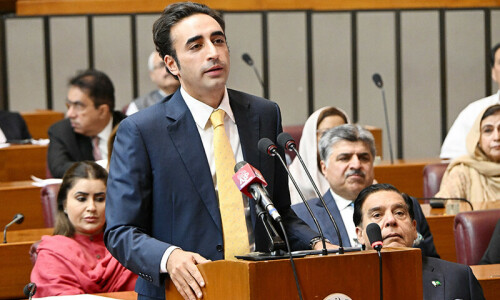
ISLAMABAD: Prime Minister Shehbaz Sharif on Monday paid rich tribute to PPP Chairman Bilawal Bhutto-Zardari and other members of Pakistan’s diplomatic delegation for effectively exposing India’s recent unprovoked military and water aggression before the international community, and for the success of their diplomatic engagements in the United States and Europe.
The prime minister made these remarks during a meeting with Minister for Climate Change Dr Musadik Malik, who was part of the delegation. Mr Malik briefed the prime minister on the delegation’s diplomatic engagements and outcomes of the tour.
The two leaders also discussed government climate policies, as well as recent diplomatic efforts undertaken in the wake of heightened tensions between Pakistan and India.
During the meeting, the prime minister was also briefed on the initiatives taken by the Ministry of Climate Change to mitigate the adverse effects of climate change under the government’s ongoing programmes.
Minister briefs premier on diplomatic engagements, outcomes of the tour
During its overseas visits, the delegation had urged the international community to support dialogue between Pakistan and India, stressing that sustained communication was essential to curbing regional instability.
The delegation emphasised the urgent need for a structured dialogue process, warning that the absence of communication between the two nuclear-armed neighbours only emboldens terrorist elements and exacerbates regional insecurity.
During their engagements with officials from the United States, the United Kingdom and European Union, the delegation conveyed Pakistan’s position that India was attempting to politicise terrorism to damage Pakistan’s global reputation.
The prime minister was informed that, despite India’s aggressive lobbying efforts to undermine Pakistan’s progress on the Financial Action Task Force front, Islamabad had successfully transitioned from the FATF grey list to the white list.
Pakistan’s delegation also strongly criticised what it described as “Indian Prime Minister Narendra Modi’s dangerous doctrine of escalation”, calling it a threat to peace and stability in the region.
Delegates further highlighted that Pakistan has borne the brunt of terrorism far more than India — suffering attacks ten times greater in number — many of which, they claimed, could be traced back to Indian funding or involvement.
The delegation also conveyed a firm message that Pakistan will not compromise on its share of water and will take all necessary steps to ensure its people receive their rightful allocation from all six rivers, including the River Indus.
Published in Dawn, June 24th, 2025