Either India shares water fairly or we will secure it from ‘all 6 rivers’: Bilawal
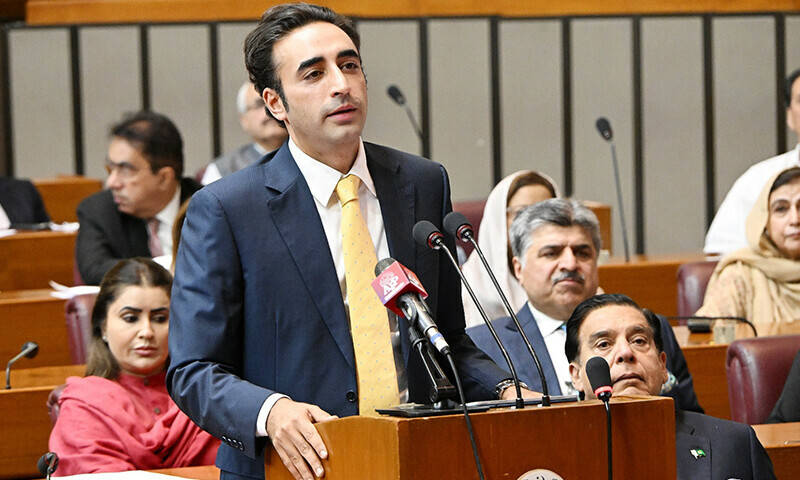
Former foreign minister and PPP Chairman Bilawal Bhutto-Zardari on Monday said India has the option to either share water fairly or “we will deliver water to us from all six (Indus river system) rivers”.
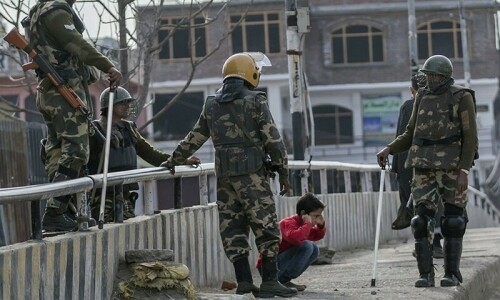
Delhi unilaterally suspended its participation in the 1960 Indus Waters Treaty (IWT), which governs the usage of the Indus river system, on April 23, shortly after 26 civilians were killed in India-held Kashmir. Delhi, without evidence, blamed Islamabad for the attack. The latter has denied the allegations and called for a neutral probe. The accord remains dormant despite a ceasefire agreed upon by the two nuclear-armed neighbours last month following their worst fighting in decades.
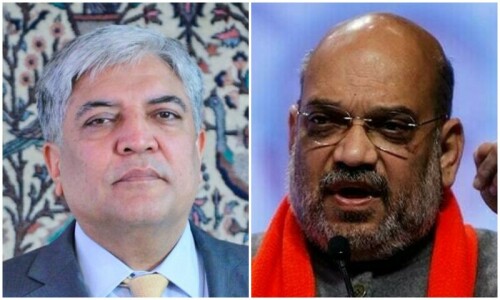
The Foreign Office (FO) on Saturday had slammed Indian Home Minister Amit Shah’s “brazen disregard” for international agreements after the latter said New Delhi would never restore the IWT with Pakistan.
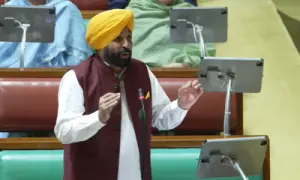
Speaking in the National Assembly during a session on the federal budget, Bilawal said, “India has two options: share water fairly, or we will deliver water to us from all six rivers.”
“The attack on Sindhu [Indus River] and India’s claim that the IWT has ended and it’s in abeyance, firstly, this is illegal, as the IWT is not in abeyance, it is binding on Pakistan and India, but the threat itself of stopping water is illegal according to the UN charter,” the former foreign minister said.
He continued that if India decides to follow through on the threat, we will have to wage war again.
He added that hopefully Pakistan won’t have to, but if it does have to, it is in the position to defeat India the same way it just did.
Bilawal further told lawamkers that peace between the two nuclear neighbours is impossible without cooperation, especially in counterterrorism efforts. “If India and Pakistan refuse to talk, and if there is no coordination on terrorism, then violence will only intensify in both countries,” he warned.
He said India was weaponising terrorism for political purposes. “India seeks to exploit terrorism as a political tool to harm Pakistan’s international standing,” he said, adding that during his diplomatic visits to the United Kingdom and European Union as foreign minister, it became evident that India had lobbied hard to reverse Pakistan’s progress on the Financial Action Task Force (FATF) front.
“At a time when Pakistan had successfully moved from the FATF grey list to the white list, India made every effort to drag us back to the grey list using false narratives and diplomatic pressure,” he said. “But thanks to our Foreign Office, the prime minister, and his team, those efforts failed. Once again, Pakistan won — and India lost.”
Bilawal also urged renewed dialogue between Pakistan and India to curb regional instability. He added, “We are fighting not only for the public of Pakistan but also of India as well.”
He strongly criticised what he called Indian Prime Minister Narendra Modi’s dangerous doctrine of escalation. “Under Modi’s new ‘abnormal’, any terrorist incident in India becomes an automatic pretext for launching hostilities against Pakistan,” Bilawal warned.
He questioned what would happen if Pakistan were to adopt the same policy. “We suffer from terrorist attacks ten times more than India, many of which are traced back to Indian funding or involvement. Should we then adopt a policy of automatic retaliation, too? That would mean surrendering our future to the will of terrorists.
“That might be Modi’s vision, but it is not ours. We will not let terrorists dictate regional peace,” he declared.
Last week, addressing a crowd of supporters, Bilawal had said that New Delhi must accept the IWT. Pakistan’s narrative had prevailed, not only in diplomatic circles, but also across international media, he claimed.
Earlier in the month, Prime Minister Shehbaz Sharif also condemned India’s unilateral suspension of the IWT, describing it as a “blatant violation and act of water aggression”, and warned that Pakistan would give a befitting response in line with decisions made at the National Security Committee (NSC) meeting held on April 24.