0
0

WASHINGTON: As Chief of Army Staff (COAS) Field Marshal Asim Munir concluded his four-day visit to the United States on Friday, the diplomatic choreography surrounding the trip offered fresh clues to a quiet realignment in US-Pakistan relations — and signaled Washington’s interest in assigning Islamabad a new regional role.
The Trump administration, which welcomed Field Marshal Munir with uncharacteristic warmth, appears to want Pakistan to act as a potential peacemaker in the ongoing Iran-Israel conflict. President Trump hinted at this during a White House luncheon, saying Pakistanis “know Iran better than most” and noting they were “not bad with Israel” either.
The COAS’ next stop — Turkiye — added weight to this emerging role. He flew directly from Washington to attend an Organisation of Islamic Cooperation (OIC) conference on the Iran-Israel crisis, underscoring Pakistan’s willingness to be seen as a regional stabiliser.
Diplomatic sources in Washington say that while Pakistan is expected to engage Iran, the Trump administration will deal with Israel as Islamabad does not recognise the Jewish state.
Army chief’s rare White House luncheon, meetings point to a thaw in bilateral ties
Field Marshal Munir’s tour marked the highest-level engagement between the Pakistani military and the Trump administration since Trump’s emphatic 2024 return to the White House.
His itinerary included strategic meetings at the Pentagon and Capitol Hill, culminating in a private luncheon in the White House Cabinet Room — hosted personally by President Trump. Such an honor is rarely extended to foreign military officials, typically being reserved for visiting heads of government.
After the White House lunch, Pakistani officials were content enough to drop certain items from the remaining schedule. “We were heard in Washington’s most powerful room,” one official said. “That was the message we wanted to carry home.”
The army chief’s discussions with senior US officials — including Secretary of State Marco Rubio and Trump’s Iran negotiator Steve Witkoff — covered familiar terrain: regional security, counter-terrorism, and strategic cooperation. But it was the optics — especially the White House invitation — that signaled a dramatic thaw after years of diplomatic chill.
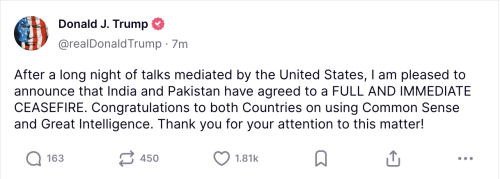
The visit followed a tense India-Pakistan standoff in May, which Trump claims he helped defuse — though New Delhi has denied any outside role. More broadly, it unfolded against a backdrop of rising tensions in the Middle East, where Israel’s strikes against Iran have roiled the region. Pakistan’s concurrent ties with both Tehran and Riyadh position it uniquely to mediate.
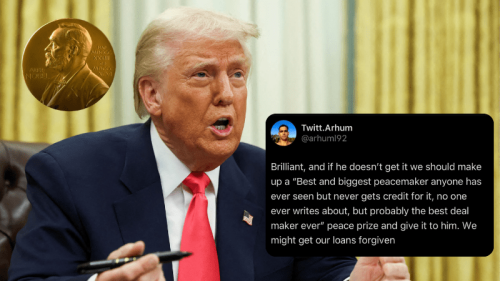
Just hours after Field Marshal Munir’s departure, Islamabad confirmed it was nominating President Trump for the 2026 Nobel Peace Prize — citing his role in preventing a potential nuclear conflict between India and Pakistan.
The announcement landed well in Washington, bolstering Trump’s foreign policy narrative. In New Delhi, however, it caused unease. Indian officials have consistently downplayed both the crisis and any external involvement in de-escalating it.
Trump, undeterred, repeated his claims both before and after the White House lunch, describing how he helped avert “a possible nuclear war” in one of the world’s most volatile regions. Pakistani diplomats welcomed these remarks, particularly his reiteration that the Kashmir conflict remains unresolved and dangerous — views aligned with Islamabad’s longstanding stance.
Most significantly for Pakistan, Trump once again offered to mediate on Kashmir — breaking with years of US policy restraint. While India firmly rejected the suggestion, the offer was music to Islamabad’s ears.
Confidence and long-term plans
While in Washington, Field Marshal Munir addressed two select groups — one comprising Pakistani American professionals and the other of US scholars and journalists. Participants in both sessions noted the general’s confidence and clarity. His expressions and body language, they said, reflected a man focused on a long-term plan.
On one occasion, the COAS even hinted that he hoped to bring political and diplomatic stability to Pakistan “before I leave” — adding, with a smile, that this could happen “by 2035.”
Whether this visit marks a deeper reset or merely a tactical recalibration remains to be seen. But some trends are evident: Pakistan’s military and civilian leadership appear more coordinated in their messaging, and Washington’s tone reflects a broader shift in how it views South Asia.
Published in Dawn, June 22nd, 2025