Pakistan has a strong tradition of closely guarded family recipes, handed down over generations, and which are exclusive to certain households that can date them back to before Partition. They prize them with a strong sense of ancestral pride, literally guarding these heirloom food preparation secrets with their lives and not letting them leak out or be stolen, except by way of handing them down to the womenfolk of their successive generations.
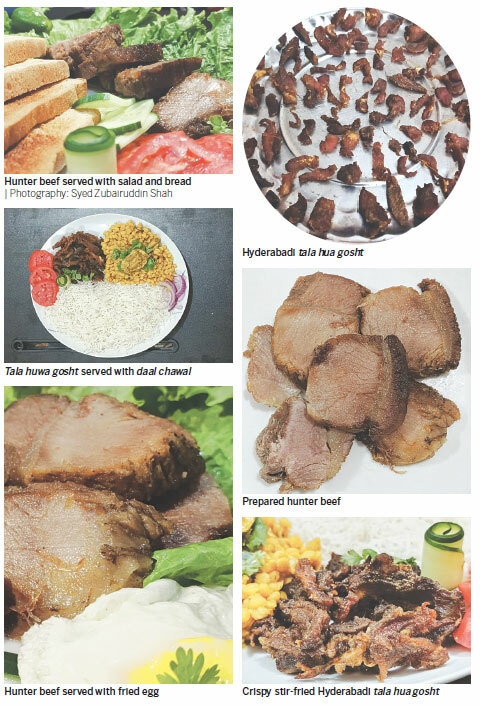
Recently, I came across one such exclusive piece of culinary excellence on Eidul Azha, when I received an image from a friend of what had been prepared at his home. It appeared to be thinly sliced parchments of dried meat spread in a circular pattern over a very large silver dish.
Somewhat disgusted, I asked him what it was. He told me that it was a delicacy known as Hyderabadi tala hua gosht [fried meat]. Immediately, I was all ears. Upon asking how it was prepped, he told me that would ask his paternal aunts who he lives with and let me know.
Eidul Azha is not just about karrhais, tikkas and kebabs. There’s more that can be done with the sacrificial meat
Over the next few days, I kept pestering him and finally got to know that the special family recipe was handed down to his aunts by his paternal grandmother, who was particularly proud of their Hyderabad Deccan lineage and roots, and who has sadly passed away. It is a Bakra Eid specialty in their household and involves taking choice cuts of fresh qurbani [sacrificial] goat’s meat and pat drying it after a good wash. It is then sliced into small slivers along the grain, seasoned with salt and left to dry in the shade for a couple of days until it looks totally dehydrated and ready to store over a long period of time.
Earlier, in pre-Partition India, tala hua gosht would be served as a side dish with a spicy South Indian soup-like dish made with tamarind known as rasam. However, now it’s served crispy stir-fried with secret spices, and/or crushed by hand and sprinkled over the popular staple daal chawal [lentils and rice]. Overall, it resembles and tastes somewhat like fried beef bacon.

The other specialty in their household during this season is hunter beef made in the traditional manner, without any of the shortcuts widely exercised these days by commercial producers of hunter beef. The process calls for patience over the next few days, as the meat is tenderised and undergoes a process of dehydration to lengthen its shelf life. But, by the end, the result is totally worth it. I am fortunate enough to attest to this.
Mind you, you will need a large chunk of meat to start off with because, by the end of the process, all you will be left with is a fraction of what you initially started out with — much like the contents of a salaried person’s wallet at the end of every month.
The writer is a member of staff. He can be contacted at quraishi.faisal@gmail.com
Published in Dawn, EOS, June 22nd, 2025