0
0

Greenpeace on Thursday warned that an oil spill resulting from a tanker collision off the coast of the United Arab Emirates (UAE) could have grave environmental consequences, after authorities reported a “small” slick.
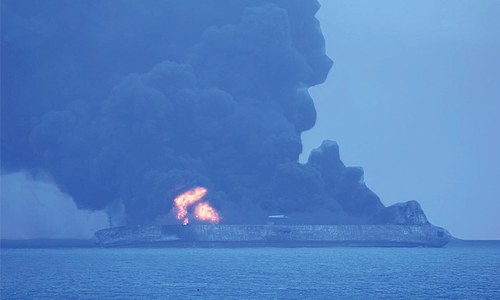
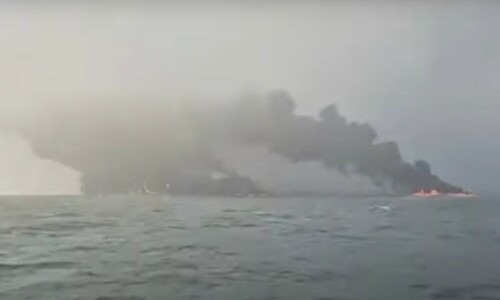
On Tuesday, the Emirati coastguard said it rescued 24 crew members of the Adalynn oil tanker after it collided with the Front Eagle vessel in the Gulf of Oman, off the coast of the Khor Fakan area of the UAE.
“Greenpeace Middle East and North Africa (MENA) has warned of a potential environmental disaster after two crude oil tankers collided,” the group said in a statement.
The environmental campaign group said satellite imagery indicated a “large plume of oil stretching up to around 1,500 hectares from the site of the crash”.
The group said the Adalynn was part of a Russian “shadow fleet”, which it described as “a collection of partially obsolete tankers that operate below basic security standards and carry Russian oil”.
Security analysts say Russia uses the fleet of ageing vessels to circumvent international sanctions that ban it from selling oil.
Greenpeace stated that the Adalynn could be carrying approximately 70,000 tonnes of crude oil, despite being officially listed in ballast condition, and therefore should not have been carrying cargo.
The Front Eagle is owned by the shipping company Frontline.
Farah Al Hattab of Greenpeace urged authorities to “act swiftly to contain the spill and assess its ecological impact”.
“Oil spills endanger marine life, disrupt delicate ecological balances and possibly the entire food web, and carry the potential to spark widespread environmental damage,” she said.
On Wednesday, the Emirati Ministry of Energy and Infrastructure said the accident was “caused by a navigational misjudgment by one of the vessels”.
The accident caused “minor surface damage to the outer hulls of both ships, a small oil spill, and a fire that broke out in the fuel tank of one of the ships”, according to the statement.
The incident took place close to the strategic Strait of Hormuz, a waterway between the Arabian Peninsula and Iran that carries one-fifth of global oil output.