Panel on food safety calls for science-led approach, fiscal reforms
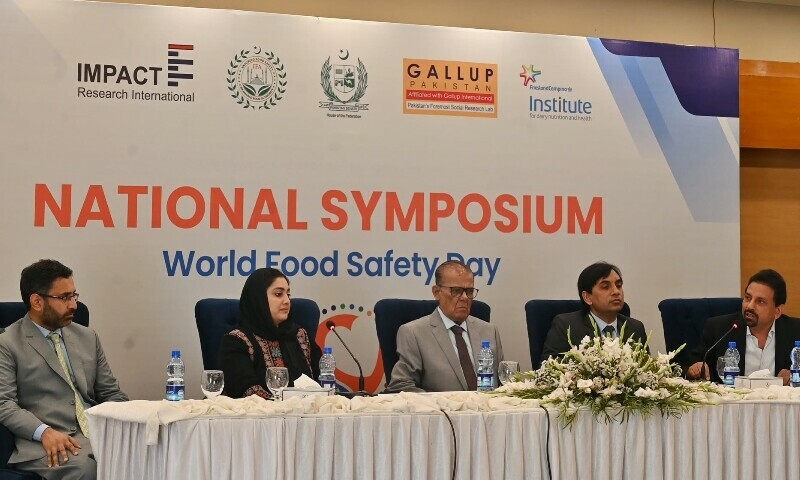
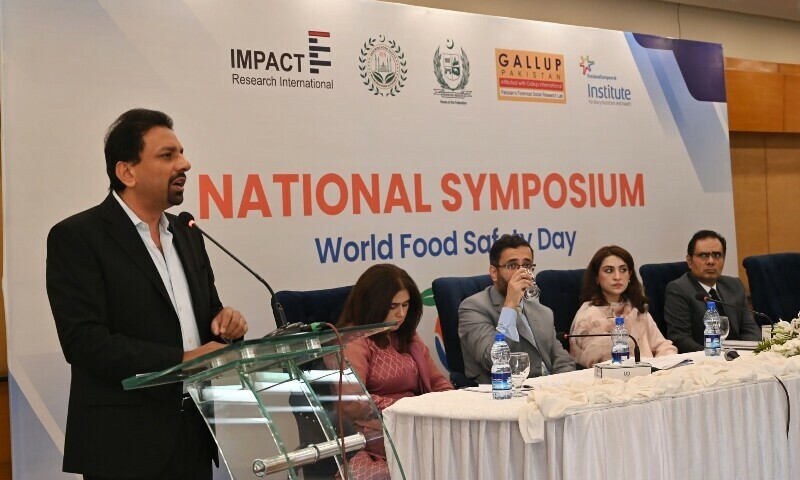


A panel of government officials and health experts on Tuesday stressed the need for a science-based approach and comprehensive fiscal reforms in the food sector, as part of efforts to improve food safety and public health on World Food Safety Day.
The panel called “Science in Action and Fiscal Governance for Safe Food” was jointly organised by the Senate, Gallup Pakistan, Impact Research International, and Islamabad Food Authority in the federal capital, according to a press release.
“The event underscored the critical need for a science-led approach to food safety and called for urgent fiscal reforms, particularly in taxation policy to support the formal food sector,” the press release said.
Senator Syed Masroor Ahsan, Chairman of the Senate Standing Committee on National Food Security and Research, presided over the panel. According to the release, he stressed the urgent need to design and implement evidence-based policies that ensure access to safe, traceable food in line with international standards.
“Food safety and security are not just issues of today, they are challenges for the future. Our systems must evolve to guarantee compliance, traceability, and public trust,” he was quoted as saying.
Another panellist Rida Qazi, Advisor to the Senate on Special Initiatives, reiterated the message, the press release said. She was quoted as saying, “Safe food deserves to be called food. Food safety must begin at the farm and extend all the way to our dining tables.”
Special Investment Facilitation Council (SIFC) Secretary Jamil Ahmed Qureshi urged the need for alignment between fiscal policies and health priorities. “We must incentivise formalisation of the food sector,” he was quoted as saying.
“[The] public welfare should be the priority and taxing safe packaged milk is counterproductive. Instead, our policies should reflect our national commitment to providing safe, nutritious food for all,” he further added, per the release.
A food industry expert addressed fiscal hurdles, highlighting the disconnect between policy and public health goals. “Our taxation framework should enable, not obstruct, the availability of safe food. Taxing the formal sector only pushes consumers toward unsafe, unregulated options and undermines food security,” he was quoted as saying.
Gallup Pakistan CEO Bilal Gillani said that true food security can only be achieved through the commitment and collaboration of a strategic triad: science, economy, and culture, the press release said.
“He explained that scientists must lead with data-driven research, economists must design budgets that support both providers and consumers of safe food, and a cultural shift must be fostered where the consumption of safe, nutritious food becomes a natural part of daily life.”
Hana Mehmood, another panellist, emphasised the role of science in policymaking, according to the press release.
She was quoted as saying, “Public health protection and consumer empowerment start with food safety and transparent nutritional information. Our decisions must be grounded in scientific evidence, not assumptions.”
The press release said that the consensus of the panel was that the formal food sector ensures “traceability, transparent nutritional labelling, and regular monitoring for microbial and chemical safety”.
Zubair Faisal Abbasi from Impact Research International said, “These products adhere to Codex Alimentarius standards and are regulated by national and provincial food safety authorities. Therefore, our fiscal governance must be structured to actively incentivise the formal and documented sector,” according to the press release.
It added, “One of the strongest messages of the day resonated clearly: ‘It’s not food if it’s not safe.’
“… Unfair taxation policies make this safer option less accessible to consumers. Experts from government, academia, and industry stressed that adopting equitable taxation aligned with global best practices will ensure fair access to safe nutrition and foster a healthier, more resilient nation.”